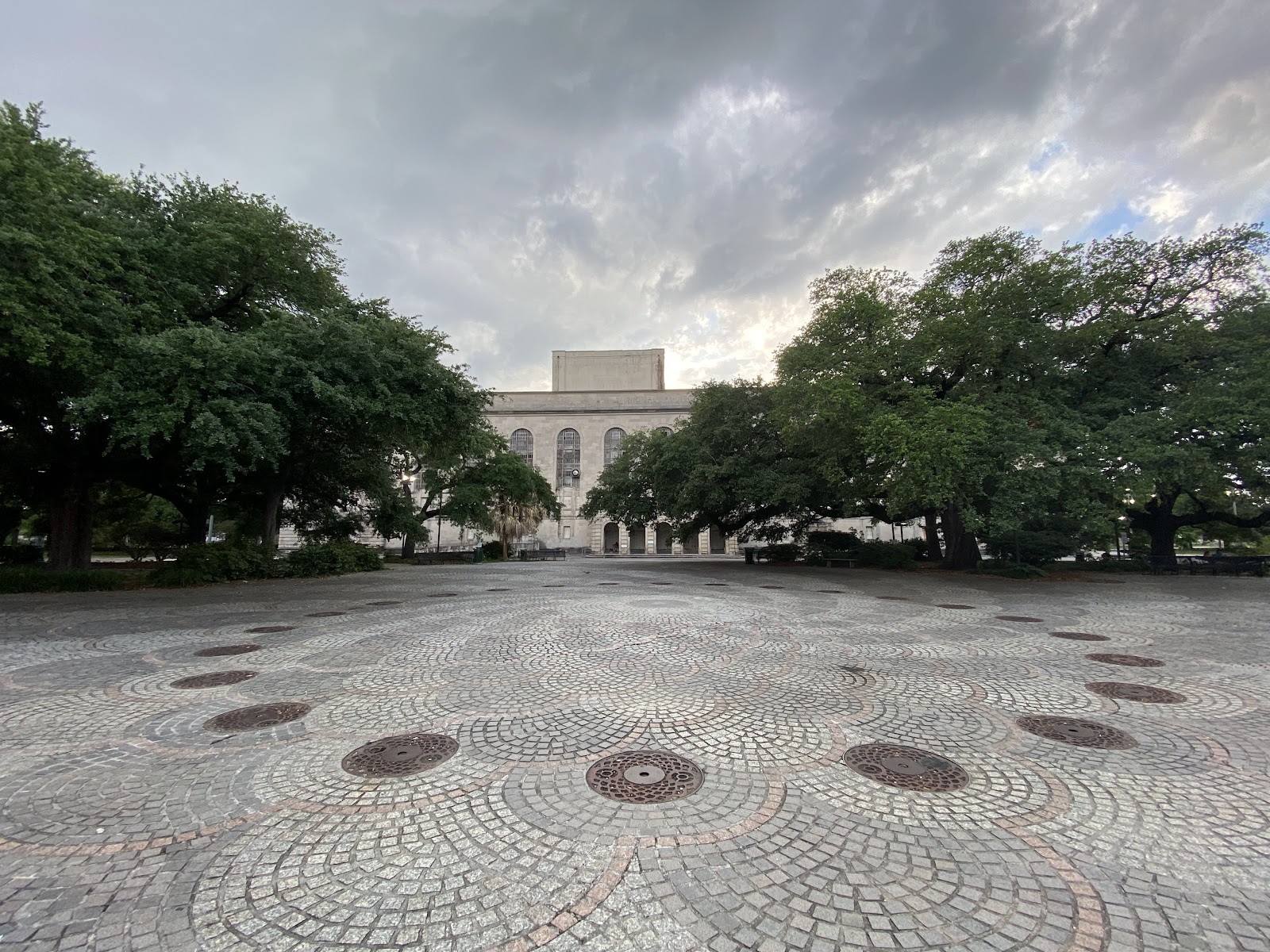
In 1817, the mayor signed an ordinance restricting all gatherings of enslaved Africans to this square on Sundays only. The punishment for gathering elsewhere was 10-25 lashes. The law accidentally created the only place on the continent where African drumming was legally permitted.
In 1819, architect Benjamin Latrobe described 500-600 people gathered in circles. He saw a man playing an early banjo who was 80-90 years old — likely born in Africa.
The bamboula rhythm — 3+3+2 — is the same pattern in modern jazz funerals, second-line parades, and brass bands.
Women sold calas — deep-fried rice cakes — at this square. Many enslaved women earned enough to buy their families' freedom.
In 1786, the governor required free women of color to cover their hair. They decorated the mandated tignons with finest silks and jewels, turning oppression into high fashion.
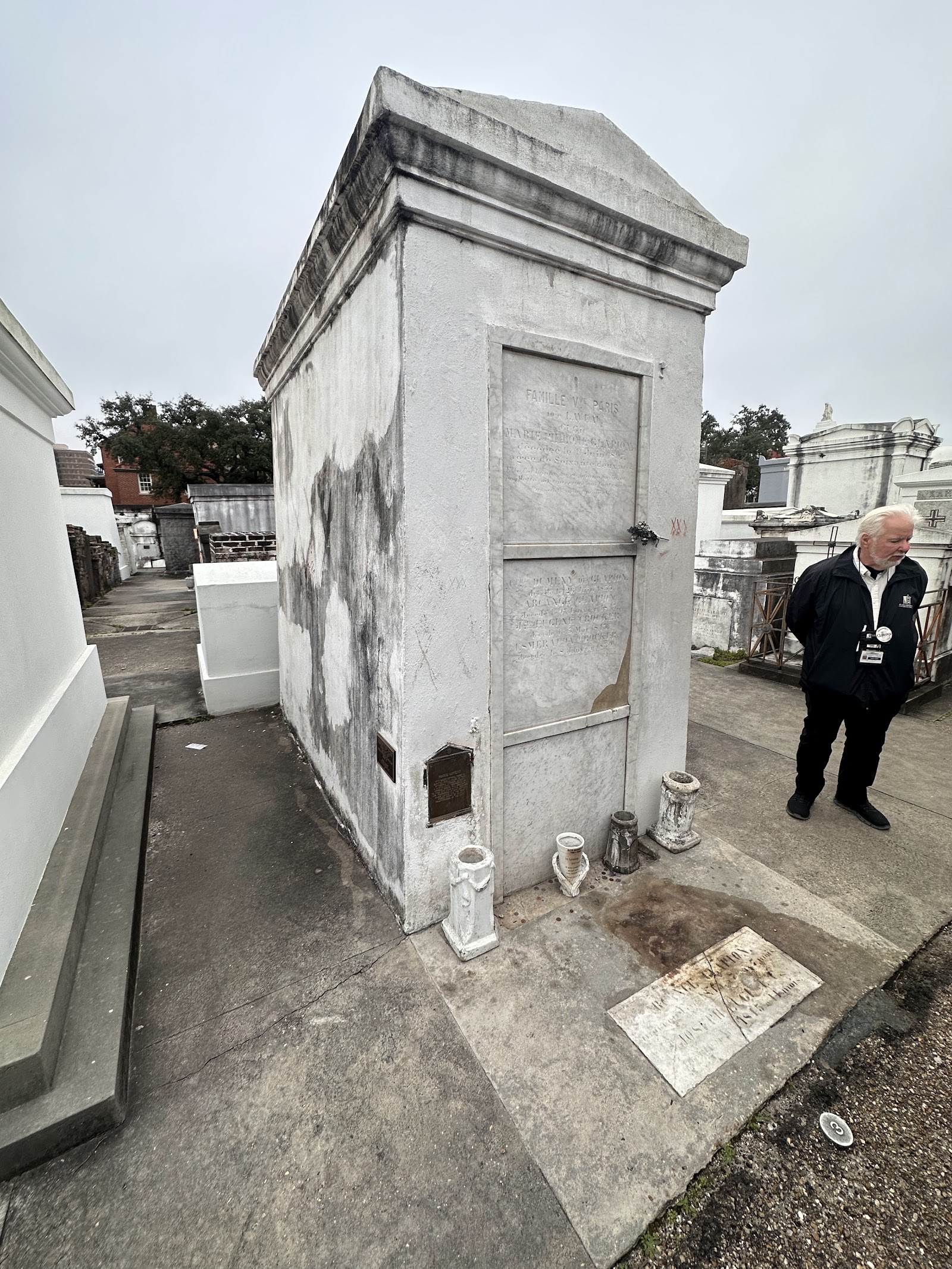
Marie Laveau performed here with a snake called Grand Zombi — named for Nzambi, the Kongo supreme creator deity. The word "zombie"
originally meant God.
The square was renamed Beauregard Square in 1893. It took 118 years to restore the name Congo Square in 2011.
— From the tour: Ghosts, Graves & the Voodoo Queen