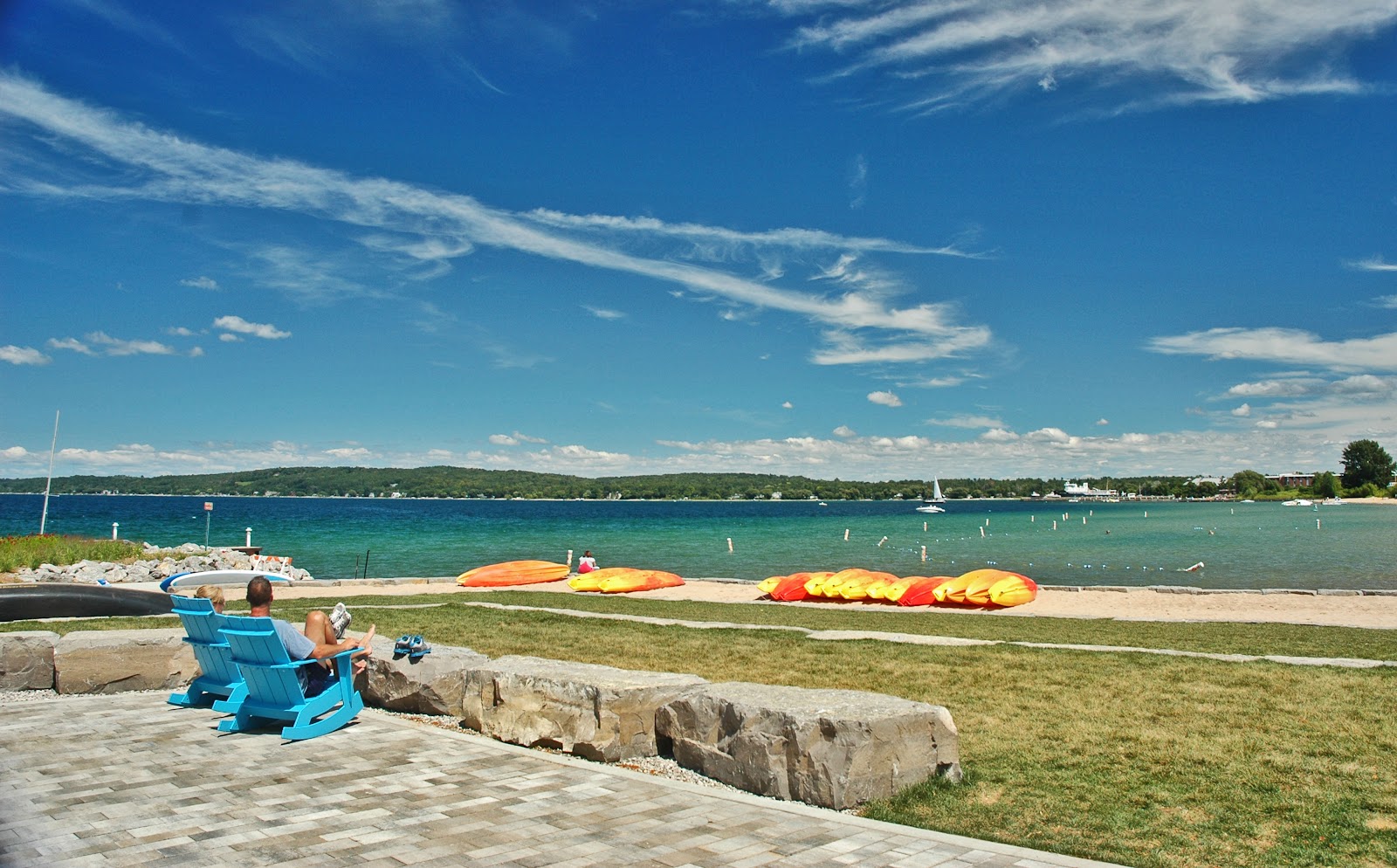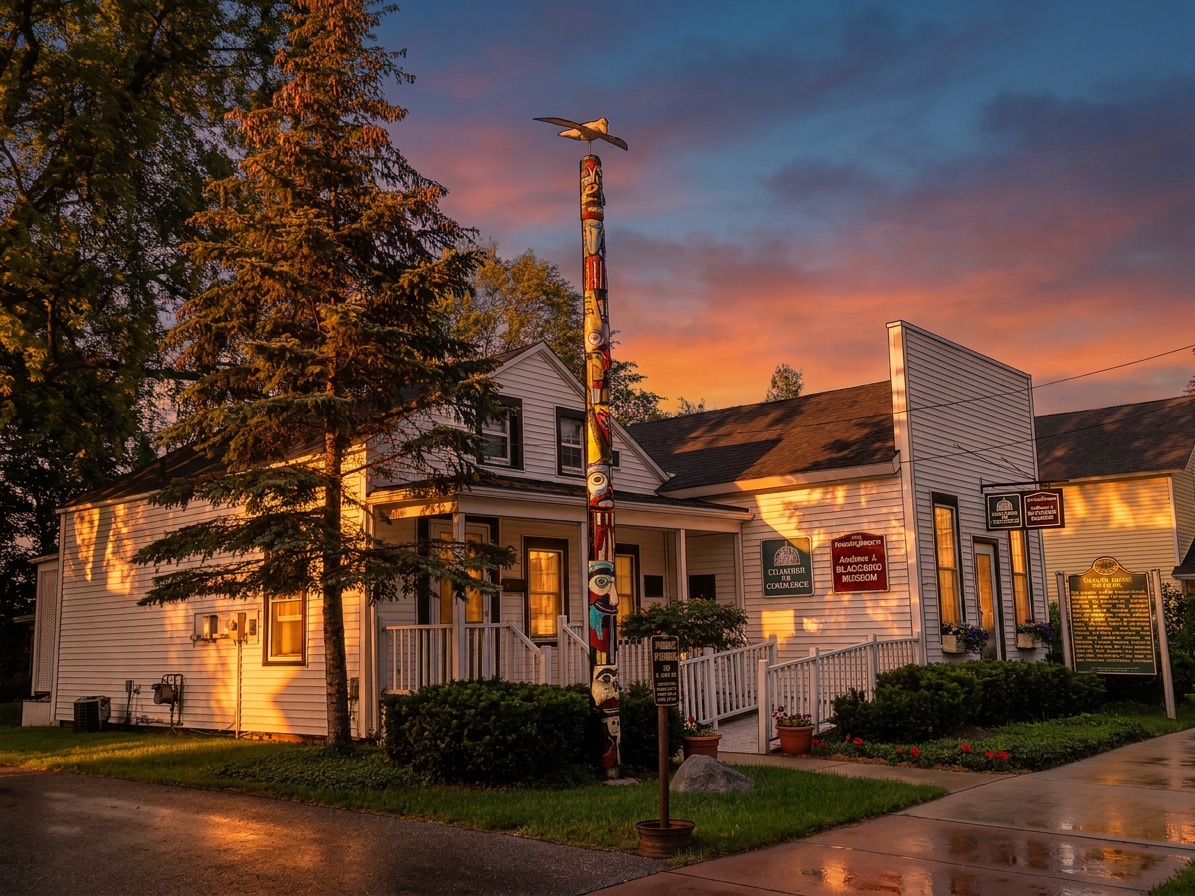
You're on Main Street in Harbor Springs — flower baskets, boat masts down at the marina, a genteel little resort town that's also, and this is the part that matters, the historic capital of the Odawa people in this region. And two doors apart on this street sit two small museums that belonged to two of the most interesting men northern Michigan ever produced. We're starting with them, because they tell you what this road is really about.
The first is Andrew Blackbird. His Odawa name was Mack-e-te-be-nesse — Black Hawk. He was born right around here in the early eighteen hundreds, an Odawa leader and interpreter, and he did something that almost nobody in his position, in his era, got the chance to do: he wrote the history down himself. In eighteen eighty-seven he published a book called the History of the Ottawa and Chippewa Indians of Michigan — one of the first real histories of these nations written by a Native author, not a passing anthropologist. He put an Odawa-language grammar
in it. He put his own life story in it. At a moment when the whole weight of the country was pushing to erase this history, Andrew Blackbird sat down and made sure it survived in his own words.
He was also, for years, the postmaster of Harbor Springs. His house is a museum now, and inside it you can still see the original bank of post office mailboxes he worked behind — the Odawa historian who ke