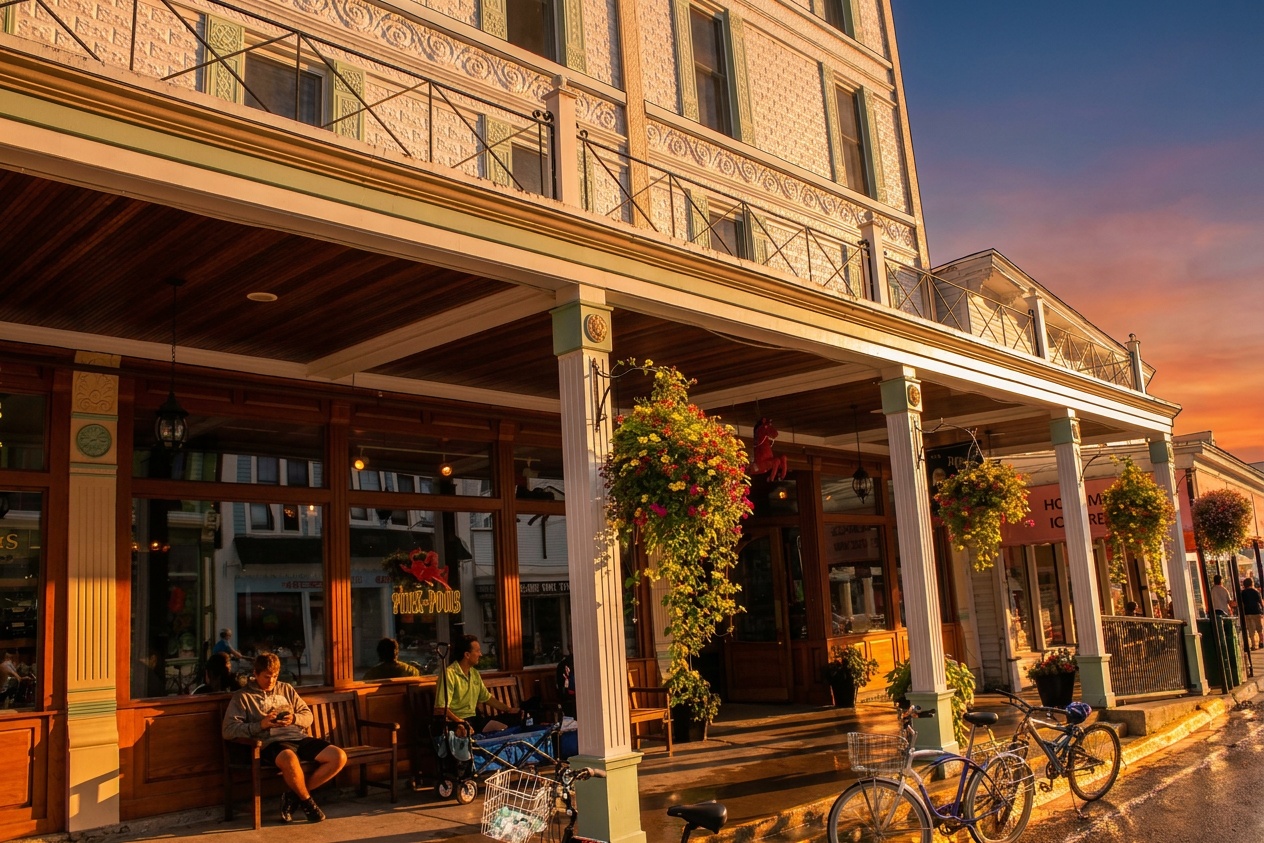
You've closed the loop. You're back on Main Street, back at the harbor, eight miles all the way around the island and you're standing right where you started. And now that you've seen the whole place, I want to end on the thing that quietly runs it — because a town with no cars still needs everything a town needs, and somebody has to move it all. On this island, that somebody has four legs.
Listen for a second. That's hooves, all day, every day. In the summer there are around five hundred working horses on this island, and they are not a tourist gimmick. They are the infrastructure. When a package comes off the ferry for delivery, it goes onto a flat horse-drawn wagon called a dray — those drays are, functionally, the island's delivery trucks. Your online order arrives by horse. Now here's where it gets genuinely great. The island's landfill was ordered closed back in nineteen ninety-two, which means all the garbage has to leave by boat — and to get it to the boat, it moves by horse t
oo. There are dedicated horse teams that haul the trash. And the island runs the smartest recycling nudge I've ever heard of: a bag of regular garbage costs you four dollars and fifty cents to throw out, but a bag of compost costs two. They literally price it so that sorting your scraps is the cheap option. There's even a special wagon, the slop wagon, that swings by the big hotels to collect kitc