This stop is the quiet one. Pull off at Middle Village, and I want you to slow everything down, because you've arrived at the heart of this whole coast.
The Odawa have a name for this shoreline — Waganakising. It means, roughly, the land of the crooked tree. And it comes from a real thing: a great bent tree that once stood on a bluff here, leaning out over the water, visible for miles to anyone traveling the lake. Trees like that were sometimes shaped deliberately when they were young, bent to grow crooked so they'd serve as markers — a living signpost pointing the way to a gathering place. The French translated the name to L'Arbre Croche. This stretch, from Harbor Springs up to Cross Village, was the largest Odawa settlement in the Great Lakes. Not a memory. A capital.
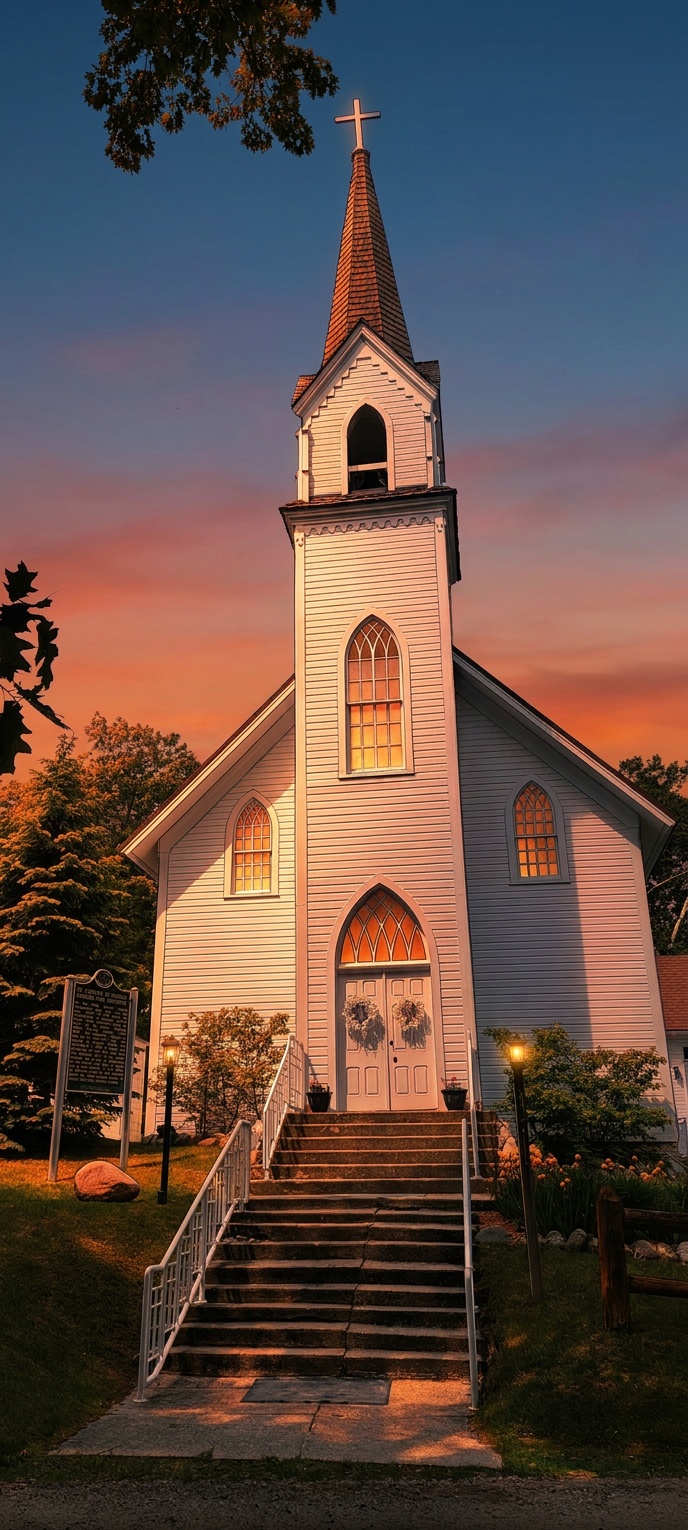
Middle Village — the Odawa called it Apatiwaing, roughly "the halfway place," because it sits between Harbor Springs and Cross Village — has been a community here since at least the seventeen hundreds. The little whit
e wooden church on the bluff is St. Ignatius. A chapel was first established on this ground in the seventeen forties, in a bark longhouse. The building you see went up in the eighteen eighties, after fire took the one before it.
And then there's the cemetery, and this is where I need you to pay attention, because the story most tourists assume is wrong. You'll see rows of simple white crosses run