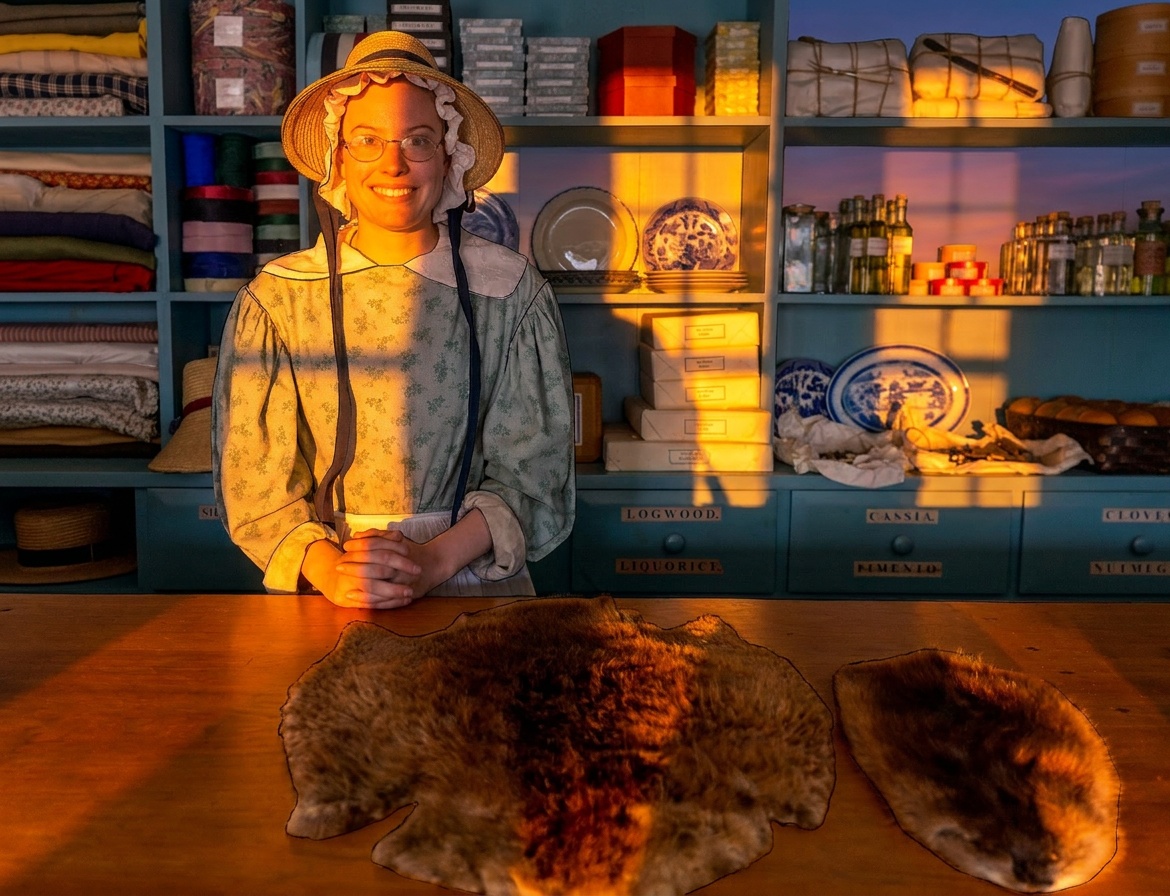
One street back from the water, away from the fudge crowds, you're looking at a plain white building on Market Street. It's a small museum now. It does not look like the headquarters of the richest man in America, but for a while, that is exactly what it was — and it's also the building where a man got shot in the stomach and accidentally invented modern medicine. Both things happened here. We're going to get to the stomach. Be patient.
Start with the money. Before the tourists, before the fudge, this island was the capital of the Great Lakes fur trade, and the man who ran it was John Jacob Astor. Astor was the wealthiest person in the country, and he built his American Fur Company into the operation that moved a fortune in pelts through this exact street every season. He got that rich the way people get that rich, which is by paying as little as possible and charging as much as he could get away with. Goods sold to the trappers out here were marked up several times over what they cos
t on the mainland — and the voyageurs, who were not stupid, had a name for it. They called it the water tax. Because as far as they could tell, the only thing they were paying extra for was the lake sitting between this island and everywhere a person could buy anything cheaper.
Now, Astor did not have the island to himself, and my favorite thing about this whole fur economy is the person who beat