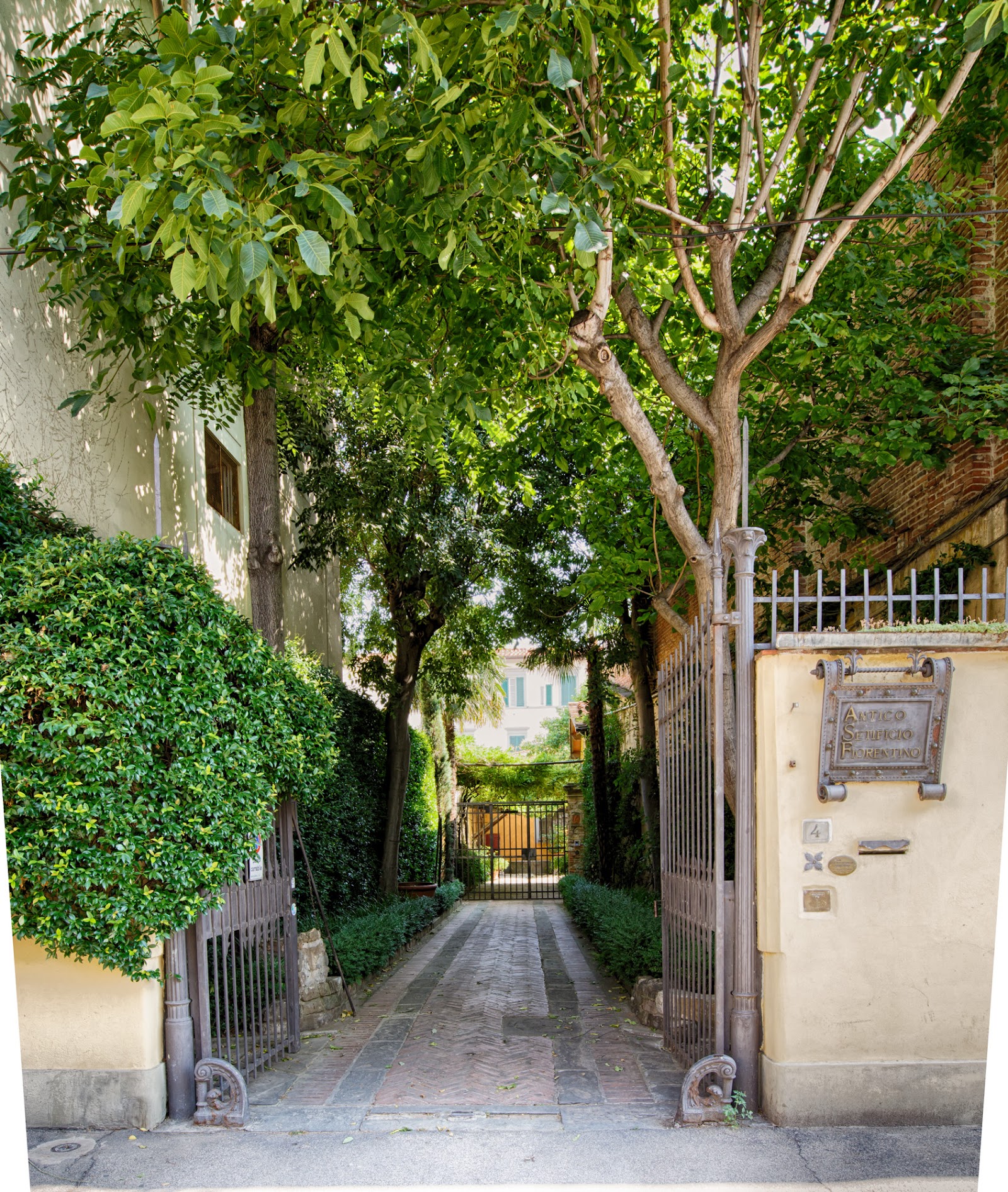
Listen, before you look. On this quiet Oltrarno lane, away from the crowds, if the workshop door is open you can sometimes hear it — a soft, rhythmic clack and thump, over and over. That's a hand loom. And behind that plain door is the Antico Setificio Fiorentino, the old Florentine silk works, where they are, at this moment, weaving silk on wooden looms by hand, the way it was done before there was electricity, before there was an Italy, before almost anything you've seen today.
We started this walk on wool. We're ending it on silk, because silk was the other half of what made Florence rich — the luxury half, the shimmering cloth the guilds sold to kings. And this workshop is what happened to that craft when the world moved on. It was founded in seventeen eighty-six by a group of noble Florentine families who could see, even then, that industrial machines were going to bury hand-weaving, and who decided, essentially, that they would not let it die on their watch. They pooled their pr
ivate looms into one workshop to keep the old skill breathing.
And it worked. It's still here. It still runs looms from the sixteen and seventeen hundreds — actual centuries-old machines, worked by hand, producing a few careful meters of silk a day, the kind that ends up on the walls of palaces and in restorations of rooms that have to look exactly as they did three hundred years ago.
Half the p