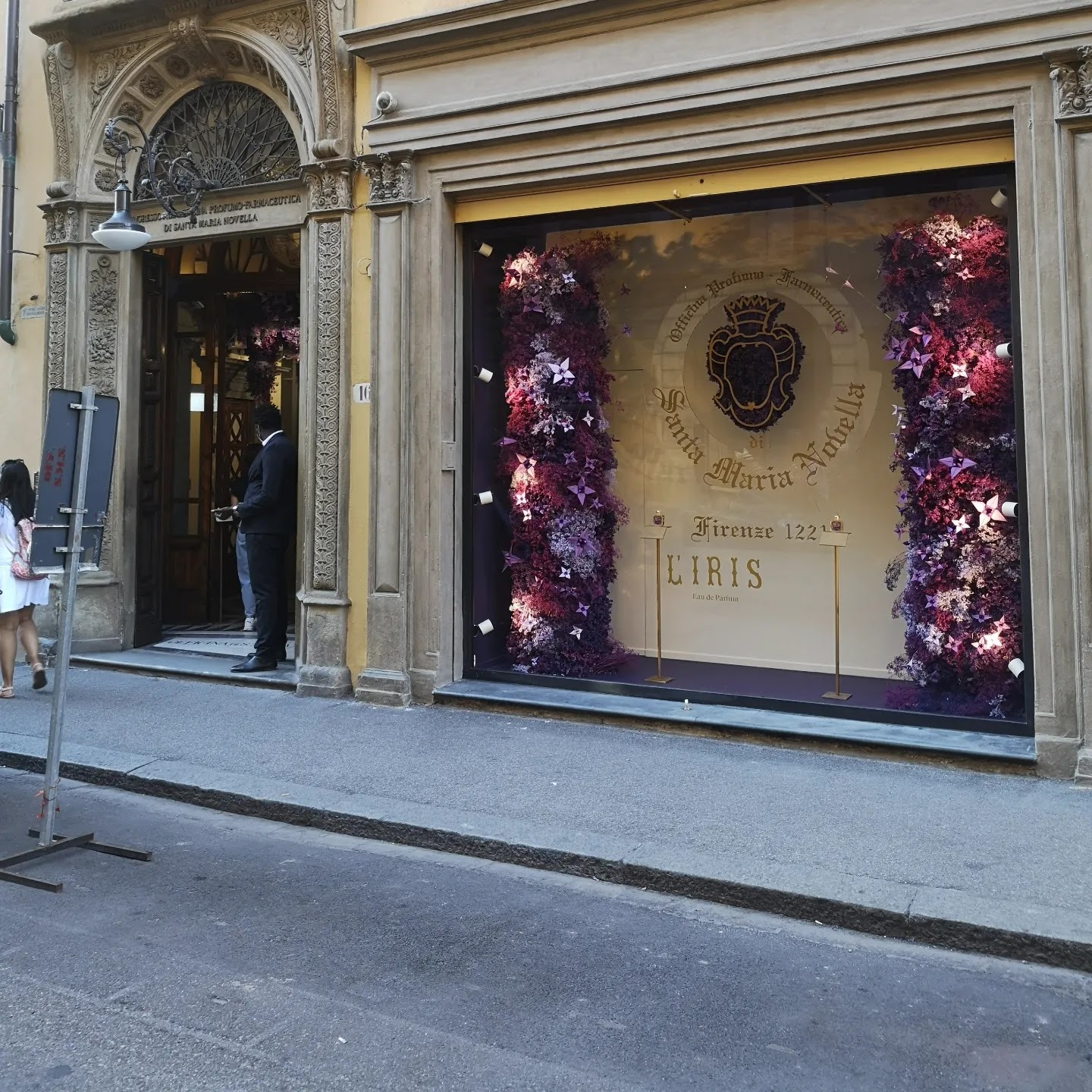
Step inside the doorway ahead of you, if it's open, and the first thing that hits you isn't a sight, it's a smell — a wall of it, herbs and rosewater and something older underneath. This is the Officina Profumo-Farmaceutica di Santa Maria Novella, and it is, by most reckonings, the oldest pharmacy on earth. Because fashion isn't only what you wear. It's what you leave in the air behind you when you go. And Florence was inventing that, too.
The story starts in twelve twenty-one, when Dominican friars settled on the edge of the city and did what Dominican friars did — they planted a garden. Herbs, flowers, roots. They ground them into balms and tonics and salves, first for the sick monks, then for the neighborhood, and they kept at it, quietly, for three hundred years, in the same rooms, refining the recipes.
Then, in fifteen thirty-three, they made the thing that put them on the map, and to explain it I have to hand you one of Florence's daughters. Her name was Caterina de' Medici, Ca
therine, and at fourteen she was married off to the man who'd become the king of France. She left Florence for Paris and took her whole world with her, because she found the French court, frankly, a bit rustic. She's the reason a lot of people credit Florence with teaching France how to eat at a table. And the friars here made her a perfume to carry north — a bright, citrusy scent they called the