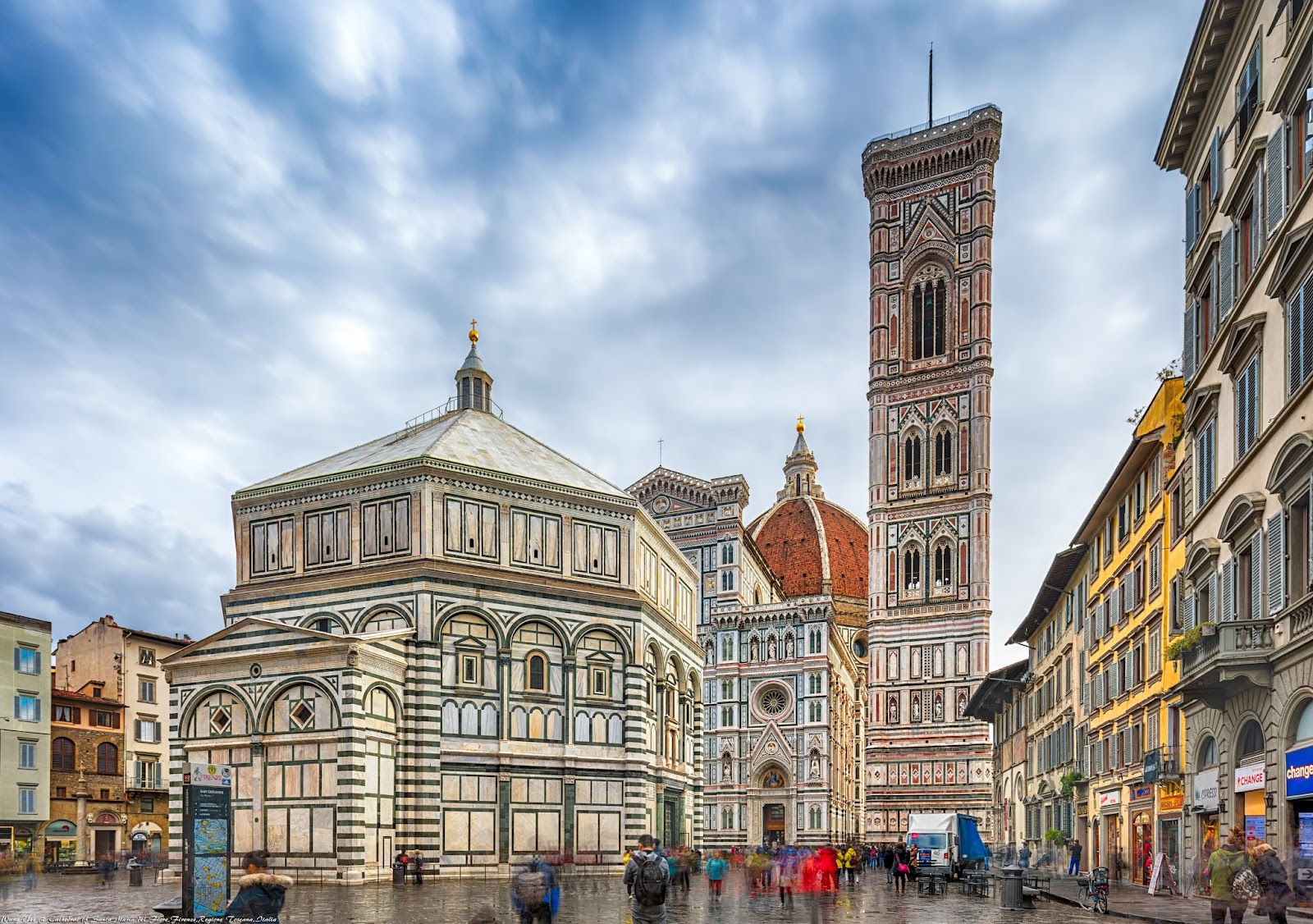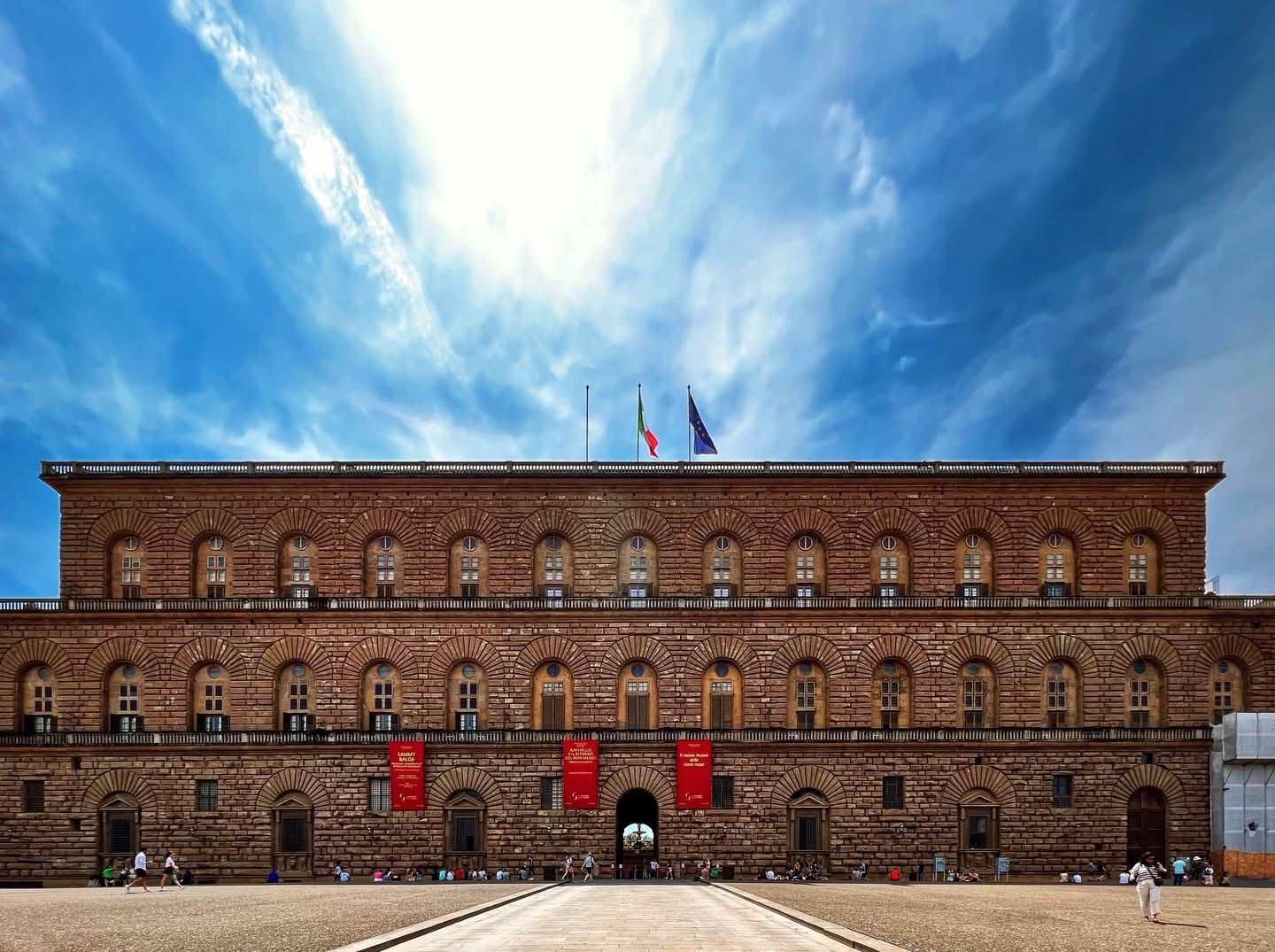
You've crossed the river and you're standing in front of the Pitti Palace — and there is no missing it. A wall of rough, rusticated stone the length of a city block, the biggest palace in Florence, built by a merchant who wanted to out-Medici the Medici and went bankrupt trying. The Medici bought it out from under his family and made it home. It is a monument to raw Florentine ambition. Which is the correct address for the second time this city invented fashion, because that happened in a room right inside this building.
To get there I need to introduce the quiet hero of the whole modern story. His name was Giovanni Battista Giorgini, and he was not a designer. He was a buying agent — a middleman who sold Italian craft goods to big American department stores. And after the war, working with those American buyers, he noticed something nobody in Italy had dared to act on. Italian clothes were beautiful. But the whole world, including Italians, assumed that real fashion came from ONE pla
ce — Paris — and that everyone else, at best, made cheaper copies of what Paris decreed. Giorgini thought that was nonsense, and he had a hunch he could prove it.
So on the twelfth of February, nineteen fifty-one, he took a gamble that sounds too small to matter. He invited a handful of American department-store buyers — the people who actually decided what would hang in Bergdorf Goodman and I. M