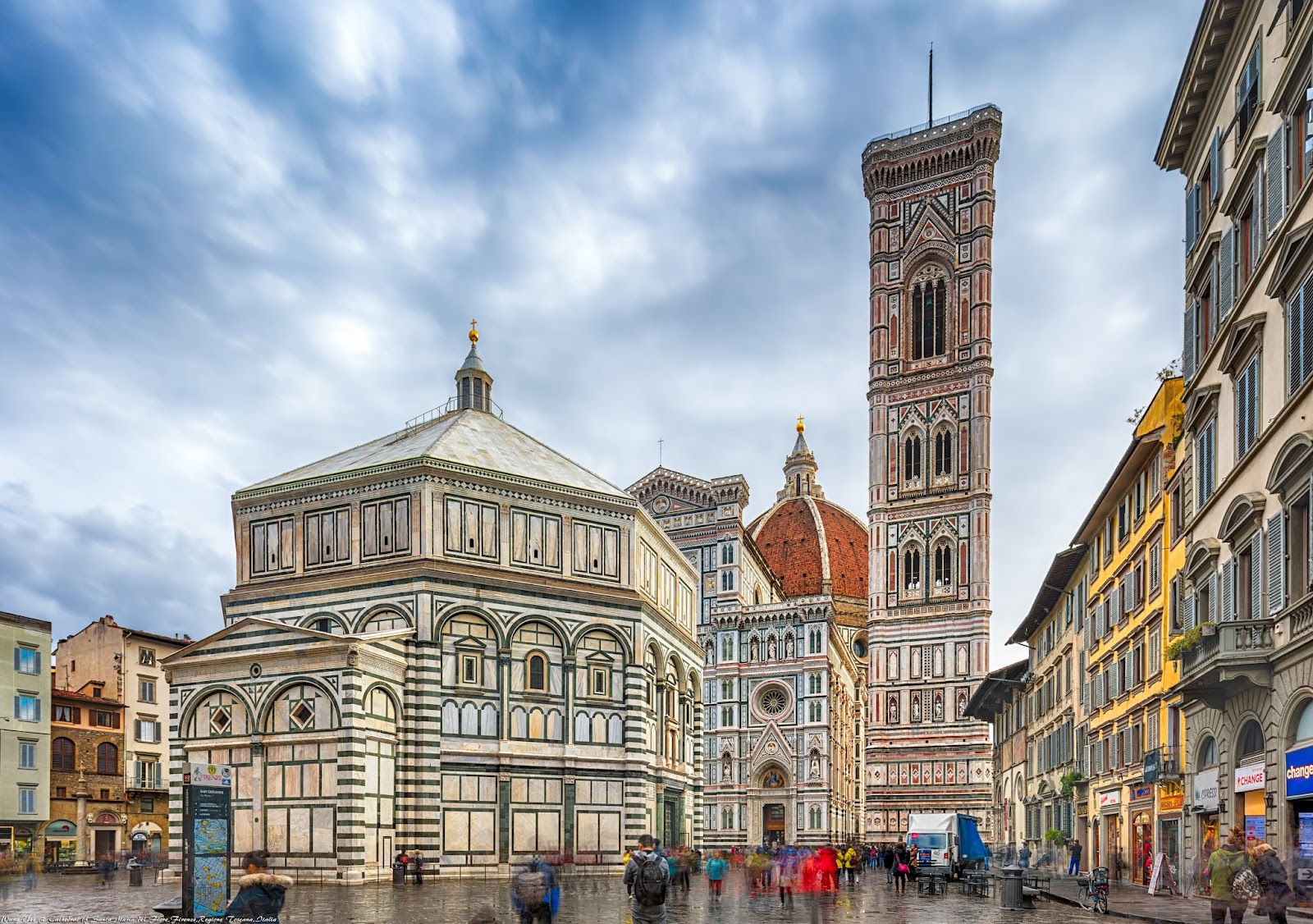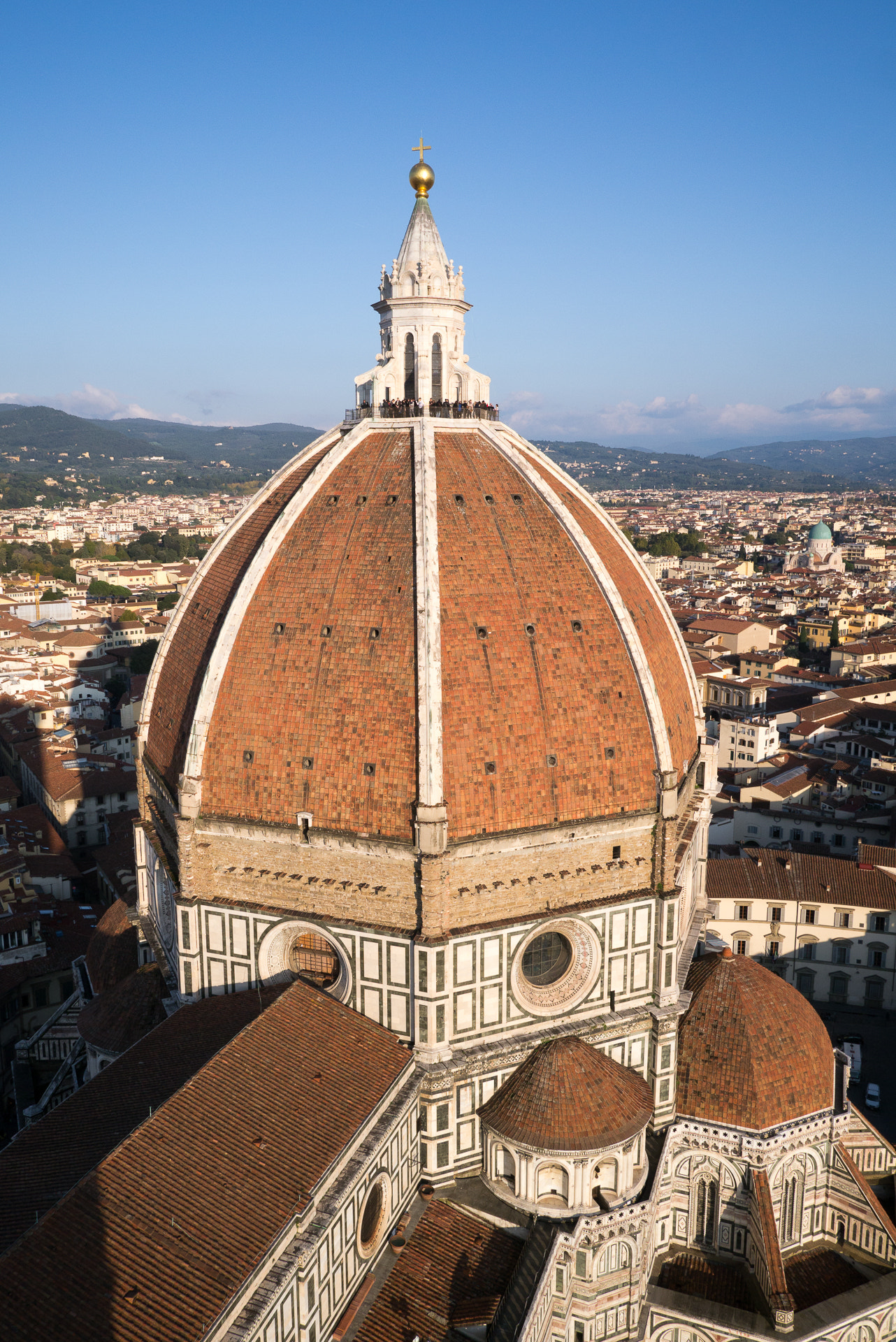
Stand back and look up, past the striped marble, to the enormous brick-red dome sitting on top of the cathedral. That is the largest masonry dome ever built, and it has held that title for six hundred years. And when this cathedral was begun, not one person alive knew how it would ever be closed.
That's literal. They started the church in the twelve nineties, made the crossing gigantic on purpose, and left an octagonal hole at the top about a hundred and forty feet across, with no known way to roof it. The technology did not exist. They built a whole cathedral around a gap they couldn't span, left it open to the sky, and bet the future would sort it out. For decades, when it rained on Florence, it rained inside the cathedral.
The someone who finally solved it was our sore loser from the Bargello. Brunelleschi came home from Rome, won the commission, and then refused to explain his plan — which nearly got him thrown off the job as a lunatic, right up until nobody else could offer anyt
hing better.
His problem was brutal in its simplicity. A dome that enormous normally needs a forest of wooden scaffolding underneath it, holding the curve in place while the masonry sets — and there was not enough timber in all of Tuscany to build that scaffold. So he built the dome with nothing supporting it from below. You are looking at four solutions stacked on top of one another.
First, the