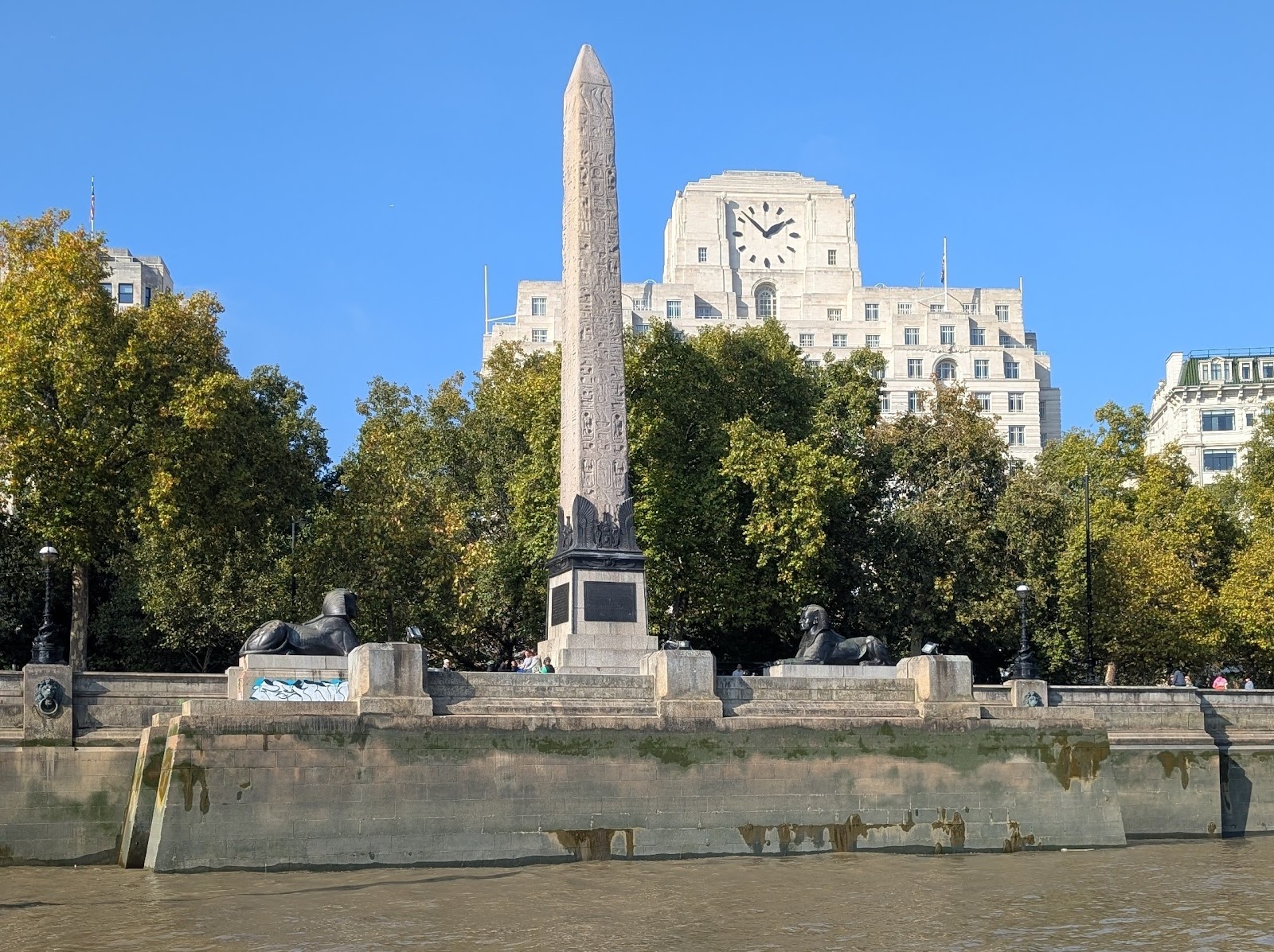
That tall pink granite spike by the river, with a bronze sphinx crouched on either side, is Cleopatra's Needle. And almost everything about that name is a lie. It has nothing to do with Cleopatra. It was already a thousand years old when she was born. It was carved for an Egyptian pharaoh around fourteen hundred BC, which makes it about three and a half thousand years old, standing on a road in London, next to a sandwich shop.
Egypt gave it to Britain as a gift in eighteen nineteen. And Britain, offered a priceless ancient monument for free, took one look at the shipping cost and said no thank you. So it lay on its side in the sand for nearly SIXTY years, because nobody wanted to pay the delivery fee. It only got here because one surgeon eventually funded the trip himself.
And what a trip. You cannot exactly put a two-hundred-ton stone needle in a crate. So they built a giant iron cylinder around it — basically a floating metal tube with the obelisk sealed inside — and towed it behin
d a ship, across the Mediterranean and out into the Atlantic. Then, in the Bay of Biscay, they hit a storm. The cylinder started rolling uncontrollably, six men drowned trying to save it, and the crew cut it loose. It drifted alone for days before a passing steamer found it bobbing in the open sea and dragged it back. Three and a half thousand years old, and its closest brush with death was a bad