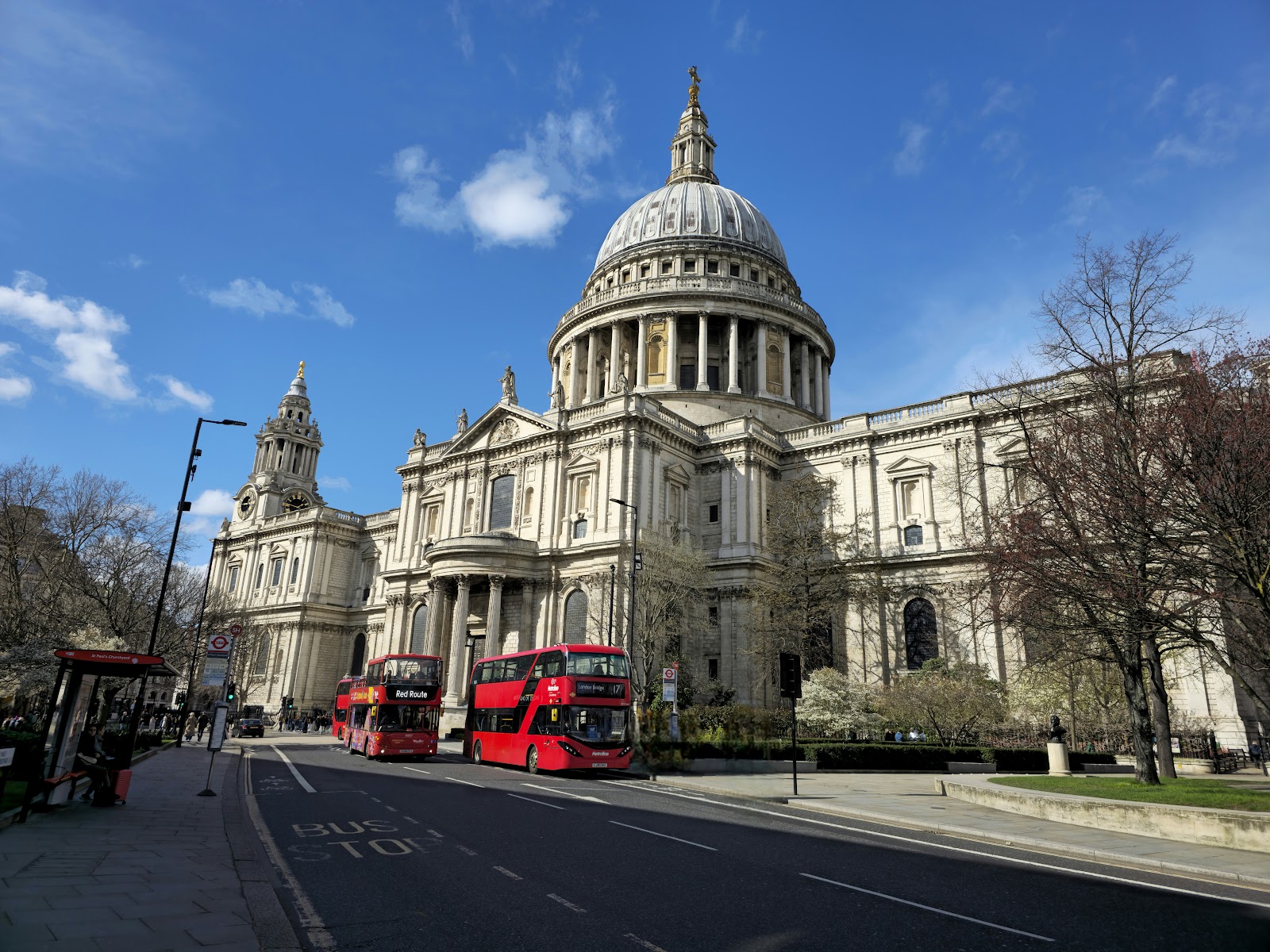
Stand here and look up at that dome, because on one night in nineteen forty, it became the most important object in Britain — and it nearly didn't survive to see the morning.
Wren's cathedral had already stood for over two hundred years when the German bombers came. And on the night of the twenty-ninth of December, nineteen forty, they came for the City. So many incendiary bombs fell that the whole square mile caught at once — people called it the Second Great Fire of London, because for the second time in history you could stand out here and watch the city burn. The fires were so bright that night that the bombers behind didn't need flares. They could see London by the light of London.
And Churchill sent a specific order that night. Not "save the docks," not "save the factories." He ordered that Saint Paul's be saved at all costs — because he understood that if the dome came down, something in the country would come down with it. Losing the cathedral, he said, would sap the morale o
f the nation. It had become the thing people looked at to know they were still standing.
So a group of ordinary people saved it by hand. The Saint Paul's Watch — volunteers, hundreds of them, including retired architects who knew every beam and passageway of the building — spent the war patrolling the roofs, the galleries, the dark spaces under the lead. When an incendiary bomb landed, they didn'