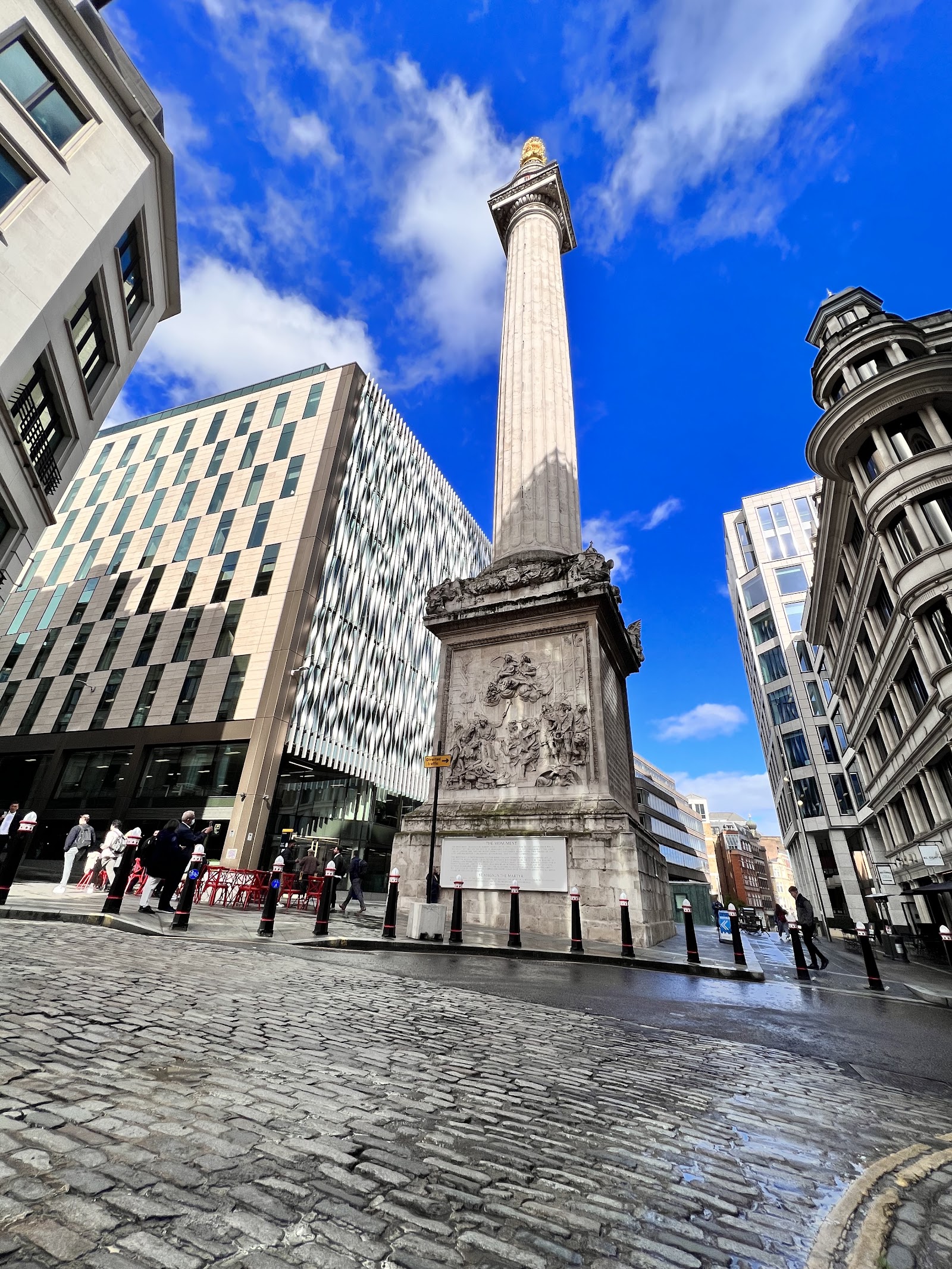
That column is the Monument, and it's exactly two hundred and two feet tall — which is exactly its own distance from a spot just up the road called Pudding Lane. Lay the whole thing down flat, and the golden flames on top would land on the doorstep of the bakery where, shortly after midnight on the second of September, sixteen sixty-six, the Great Fire of London began.
It started small, in the ovens of a baker named Thomas Farriner. And it could have stayed small, except for the man in charge. The Lord Mayor, Sir Thomas Bloodworth, was dragged out of bed to look at it, and firefighting in those days meant one thing: pulling down the houses around a fire so it couldn't spread. That meant waking rich homeowners and destroying their property, and Bloodworth did not want that headache at one in the morning. So he looked at the flames, and he delivered a line that history has refused to let him forget. He said, "A woman might piss it out." Then he went back to bed.
A woman did not piss it
out. The wind picked up, the timber houses went like matchsticks, and the fire burned for four days, ate thirteen thousand houses, and destroyed most of the city. Samuel Pepys, the great diarist, watched it coming and made a series of decisions that tell you exactly what a person values in a crisis. He buried his official government papers in the garden. Then he buried his wine. And then — and he