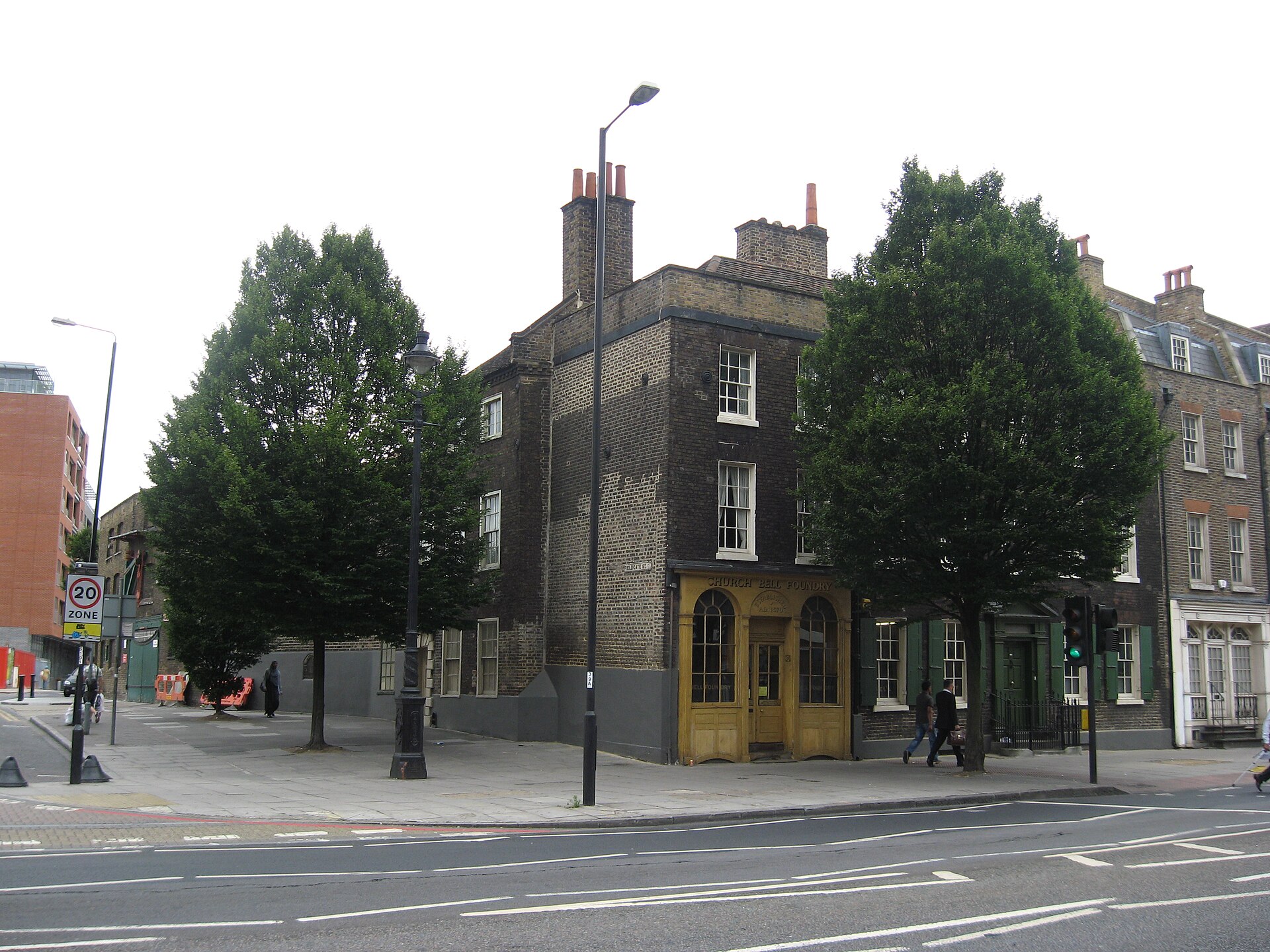
This modest building on Whitechapel Road, with a front doorway cut in the curved outline of a bell, was the Whitechapel Bell Foundry. Walk up to that doorway and you literally step through the profile of a bell — and until a few years ago, this was the oldest manufacturing company in all of Britain, casting bells continuously since fifteen seventy, on this road since seventeen thirty-nine. Nearly four and a half centuries of pouring molten bronze in the same small yard. And two of the bells that came out of it will stop you dead.
The first is Big Ben. The great thirteen-and-a-half-ton bell in the tower by Parliament — the sound of Britain itself, on the news, at midnight on New Year's, in a thousand films — was cast right here, in this cramped East End workshop. It was the biggest bell they ever made; they had to widen the gates to get it out. The final bill came to five hundred and seventy-two pounds. And here's the thing nobody remembers: it cracked. A few months after it was hung,
someone used a hammer more than twice the proper weight, and it split. That flawed, cracked bell is the one you've heard your whole life. Whitechapel's masterpiece is famous for the sound of its own damage.
The second bell is on the other side of the Atlantic. In seventeen fifty-two, this same foundry cast the American Liberty Bell — the symbol of United States independence, the one with the famo