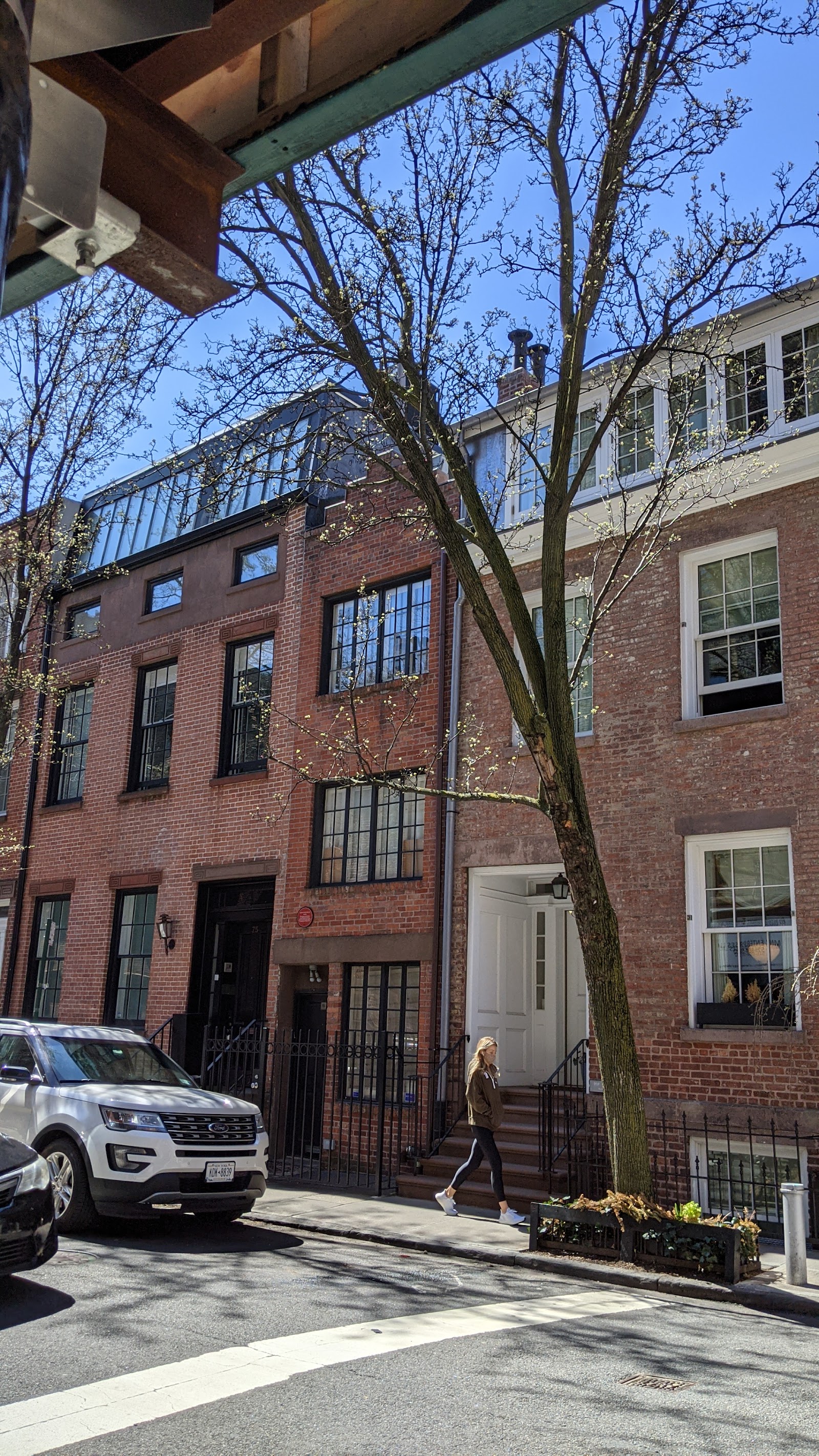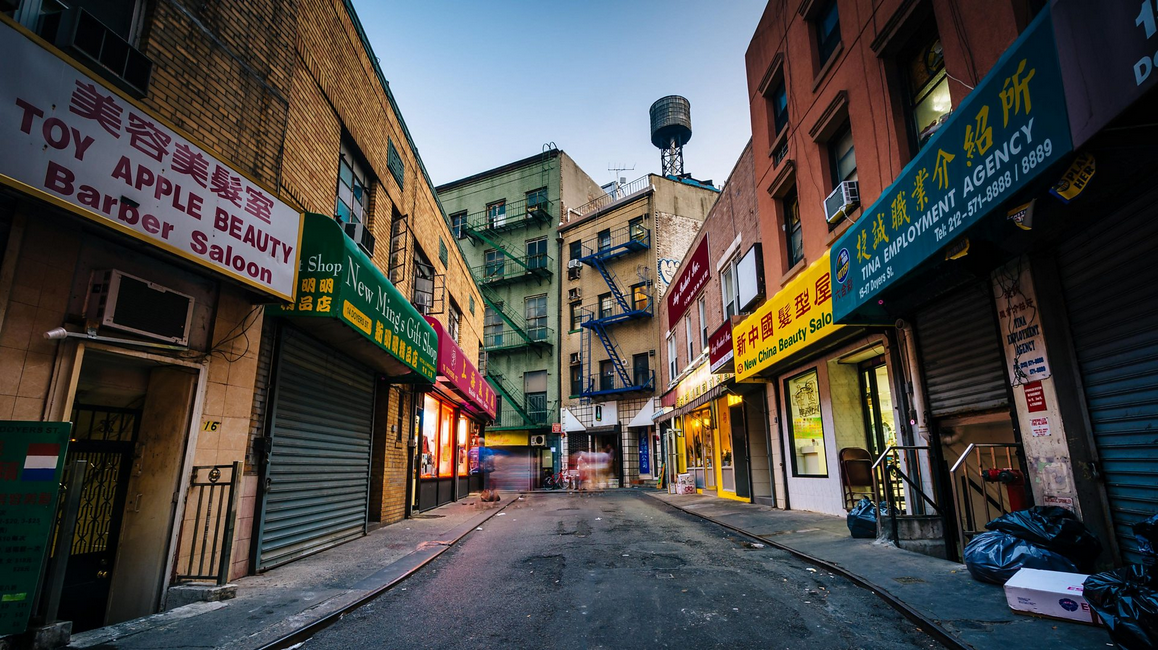
Doyers Street. Two hundred feet long, one block, with a hard bend in the middle that swings the whole street almost ninety degrees. It follows the path of an old stream, which is why it wanders like that. And that wander made it, for a while, the most dangerous forty feet in America.
They call it the Bloody Angle. In the early nineteen hundreds, police claimed more people were murdered on this bend than at any other intersection in the entire country. Now — that's a police claim, repeated for a century, and nobody ever produced the actual body count, so treat it as legend with a lot of blood behind it. But the reason the bend was useful is not legend at all. It's geometry. A man with a hatchet waits on the far side of the corner, where you can't see him. You come around. He does his work. And by the time anyone rounds the bend behind you, he has vanished into a doorway. The street was a weapon, and the weapon was the shape of the street.
That word — hatchet man — the one everyone now
uses for a ruthless enforcer? It comes from exactly here. The fighting men of the gangs favored a short, razor-sharpened hatchet, because a hatchet is silent and a gun brings police. They were called, in Cantonese, the hatchet sons.
The gangs were called tongs, and the honest truth about them is complicated. A tong was two things at once. It was a mutual-aid society — in an America that had lega