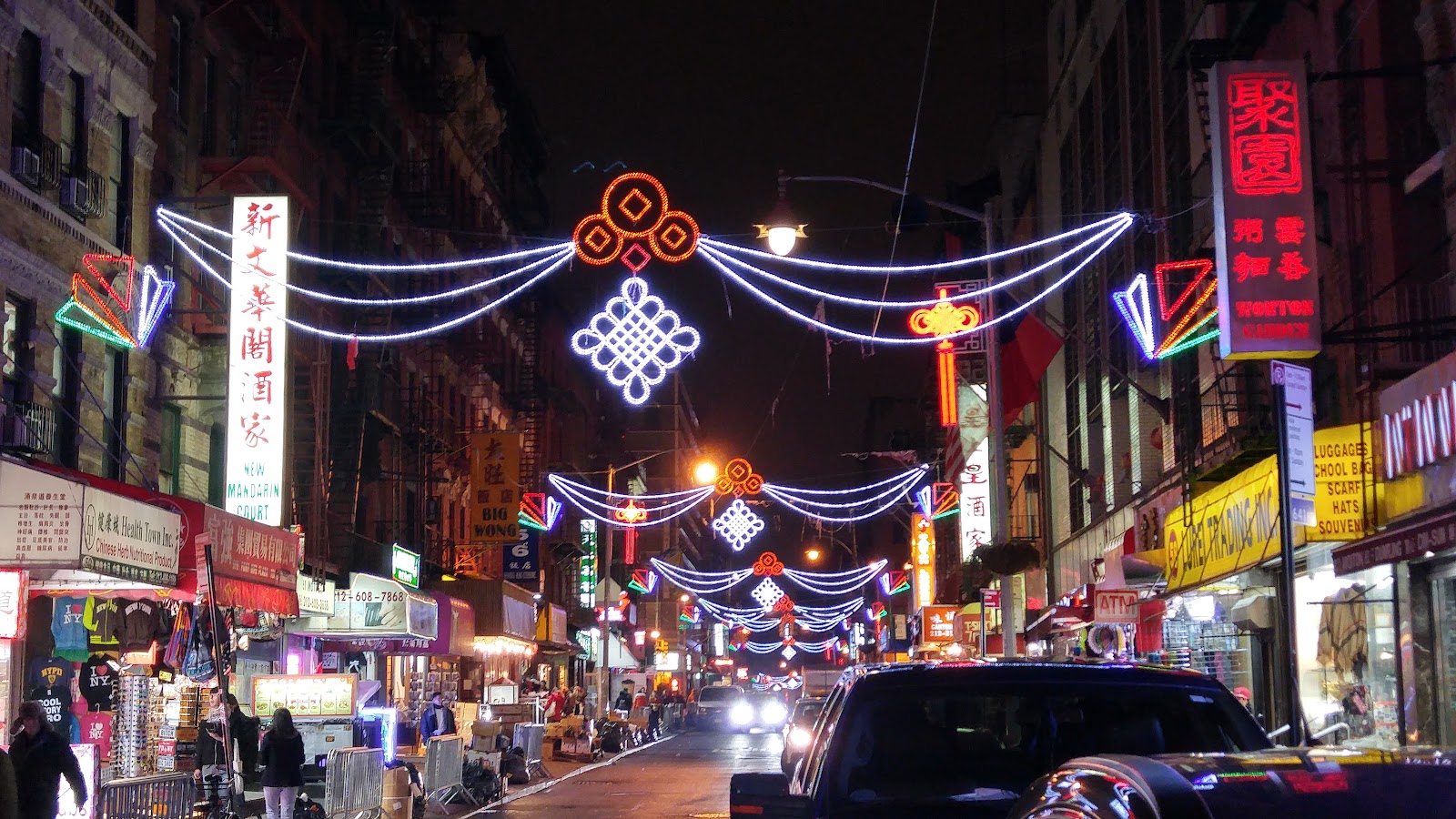
This is Mott Street, the oldest spine of the oldest Chinatown in the country. If the neighborhood has a Main Street, you're on it. Look up at the rooflines — the little upturned corners, the painted balconies, the pagoda flourishes. They look ancient and imported. They're mostly not. That whole distinctly-Chinese look was, in large part, invented right here as a style. The first building on this street actually designed to look Chinese was a merchants' clubhouse put up in nineteen twenty-one, and everyone liked it so much the neighborhood grew a matching costume around it.
But I want to tell you who walked this street, because it's the part people never hear, and it's the reason Chinatown is here at all.
For most of this neighborhood's early life, it was almost entirely men. Not because the men came first and the families were coming later. Because the law made families impossible. Starting in eighteen seventy-five, one federal law effectively blocked Chinese women from entering the
country. Then, in eighteen eighty-two, a second law — the only immigration law in American history to ban one specific nationality by name — shut the door on Chinese laborers entirely. And most states wouldn't let a Chinese man marry a white woman either.
So do the math on what that leaves. A neighborhood of men. In some years, more than twenty men here for every woman. Thousands of husbands and