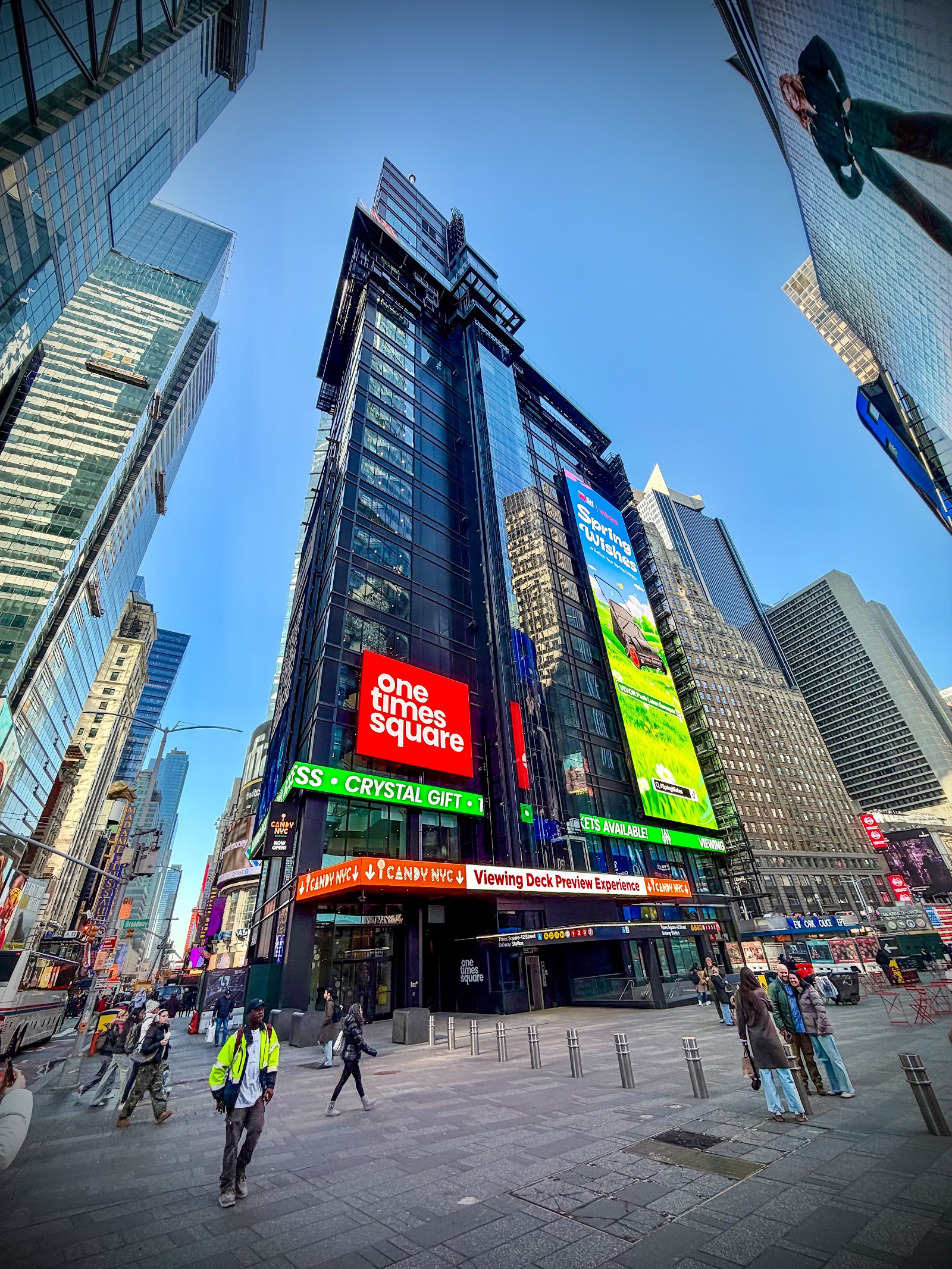
Find the narrow wedge of a building at the south end of all this — the skinny one buried under screens, where Broadway and Seventh Avenue cross each other. That's the building the ball comes down. And every part of why it does is an accident.
Until nineteen oh-four, none of this was called Times Square. It was Longacre Square, and it was where you went to buy a horse. Carriage dealers, stables, the smell you'd expect. Then the New York Times built its new headquarters right here, and the paper's owner, Adolph Ochs, persuaded the city to rename the entire neighborhood after his building. Which worked so well that most people now assume the square came first and the newspaper was named after it.
To announce the place, Ochs threw a New Year's Eve fireworks show off the roof. Two hundred thousand people turned up to watch a newspaper advertise itself, and it became the thing to do — an annual habit built entirely out of one man's marketing budget.
The fireworks lasted three years. Setti
ng off explosives above a crowd of that size turns out to produce a specific problem, which is that what goes up comes down hot, onto people. The city banned them.
So Ochs needed a replacement, and the solution he landed on was already sitting in the harbor. Ships kept time by watching a large ball drop down a mast at a known hour — you'd look at the ball, set your chronometer, sail away. Ochs to