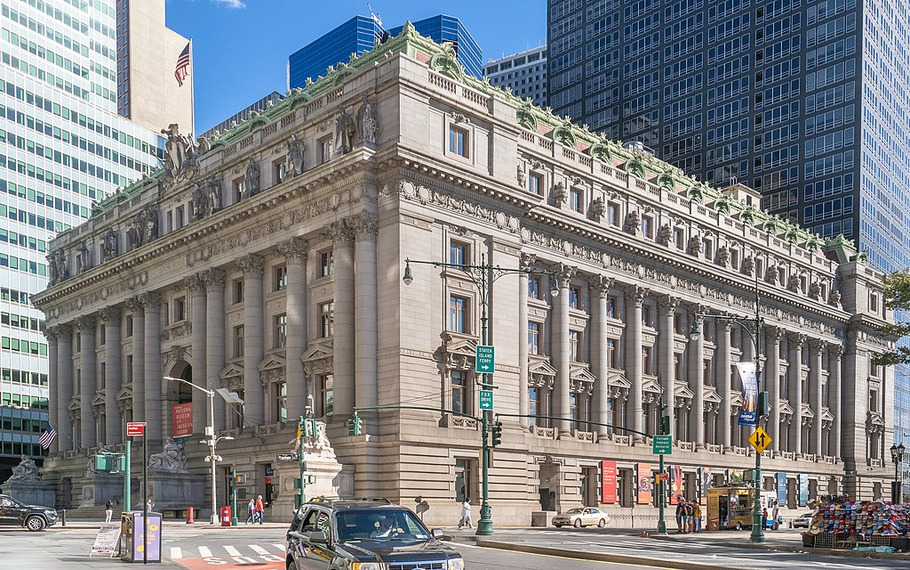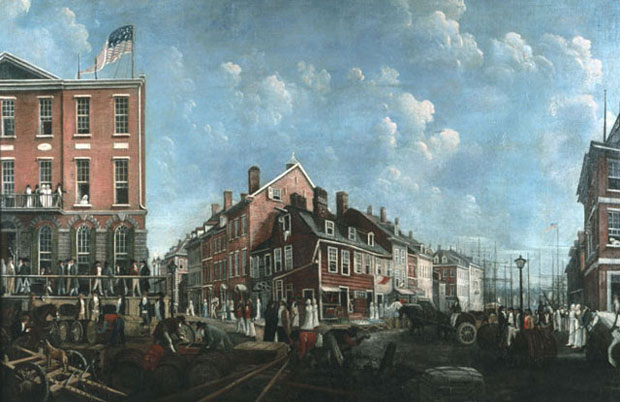
The corner of Wall Street and Water Street. Office towers, delivery trucks, and the East River one block behind you — close enough that the wind coming up this street still smells like it.
There is nothing here to look at. This corner is where the American stock market was born, and there is not a plaque worth the walk.
On this corner, in seventeen ninety-three, stood a three-story brick building called the Tontine Coffee House. Inside, at any hour, you'd find brokers, ship insurers, merchants shouting bids, and auctioneers standing on top of the cargo they were selling. It was a stock exchange, a commodities market, an insurance company, and a bar. Everything happened in the same two rooms, at the same time, over coffee.
Start with the name, because a tontine is one of the strangest things ever legally sold.
It works like this. A group of investors put in money. Each one nominates a living person — usually a child, often their own. Everybody collects an income. But every time one
of those children dies, the payout gets split among fewer people. So every death makes the survivors richer. And the last one alive owns the whole building.
Two hundred and three shares paid for this place. Which means the men in the coffee room downstairs were drinking with other men whose children they were quietly rooting against.
Now the crash.
In seventeen ninety-two, an investor named Wil