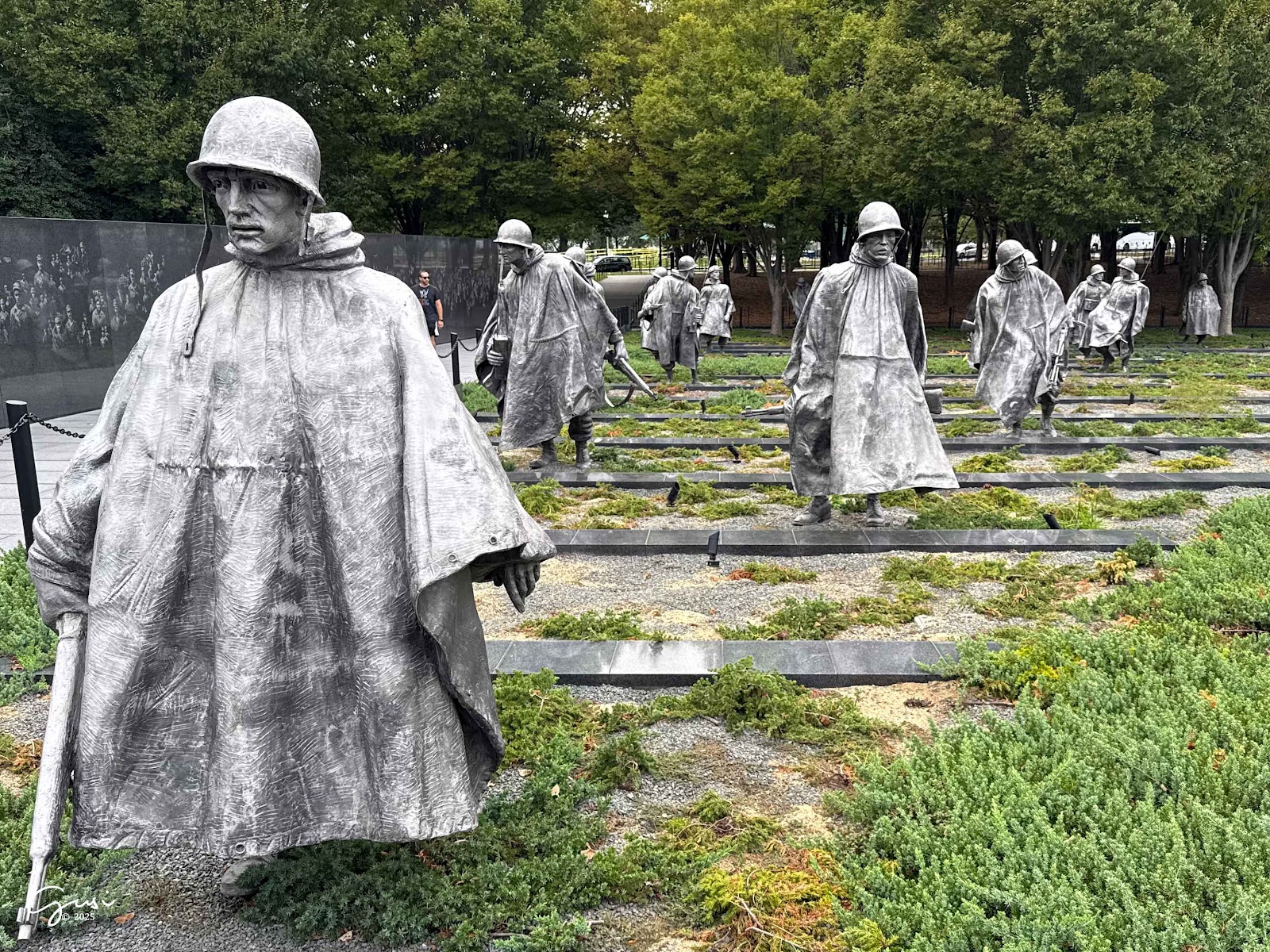
Nineteen soldiers in stainless steel, walking through juniper bushes toward a pool of still water. Each one about seven and a half feet tall. Nearly a thousand pounds apiece. Fear on their faces. Ponchos billowing. Mouths slightly open, like they're trying to communicate through glances.
Count them. Nineteen.
Look at the polished black granite wall running alongside them. The granite is so reflective that you can see the soldiers mirrored in the stone. Nineteen real soldiers. Nineteen reflections. Thirty-eight.
The thirty-eighth parallel — the border between North and South Korea. Thirty-eight months of fighting. The original design called for thirty-eight statues, but the Commission of Fine Arts said it would look too realistic. Too many soldiers on the National Mall. So the designers used a mirror trick born from a bureaucratic objection. They cut the number in half and let the stone do the math.
The sculptor was Frank Gaylord. He was a World War Two paratrooper with the Seventee
nth Airborne Division — fought in the Battle of the Bulge, won the Bronze Star. During that war, he had a habit of sketching the men in his unit while they rested. Decades later, when he sculpted these nineteen figures, he went back to those wartime drawings for the faces.
Some of the men you're looking at are ghosts from a different war. A World War Two soldier's face, cast in stainless steel, s