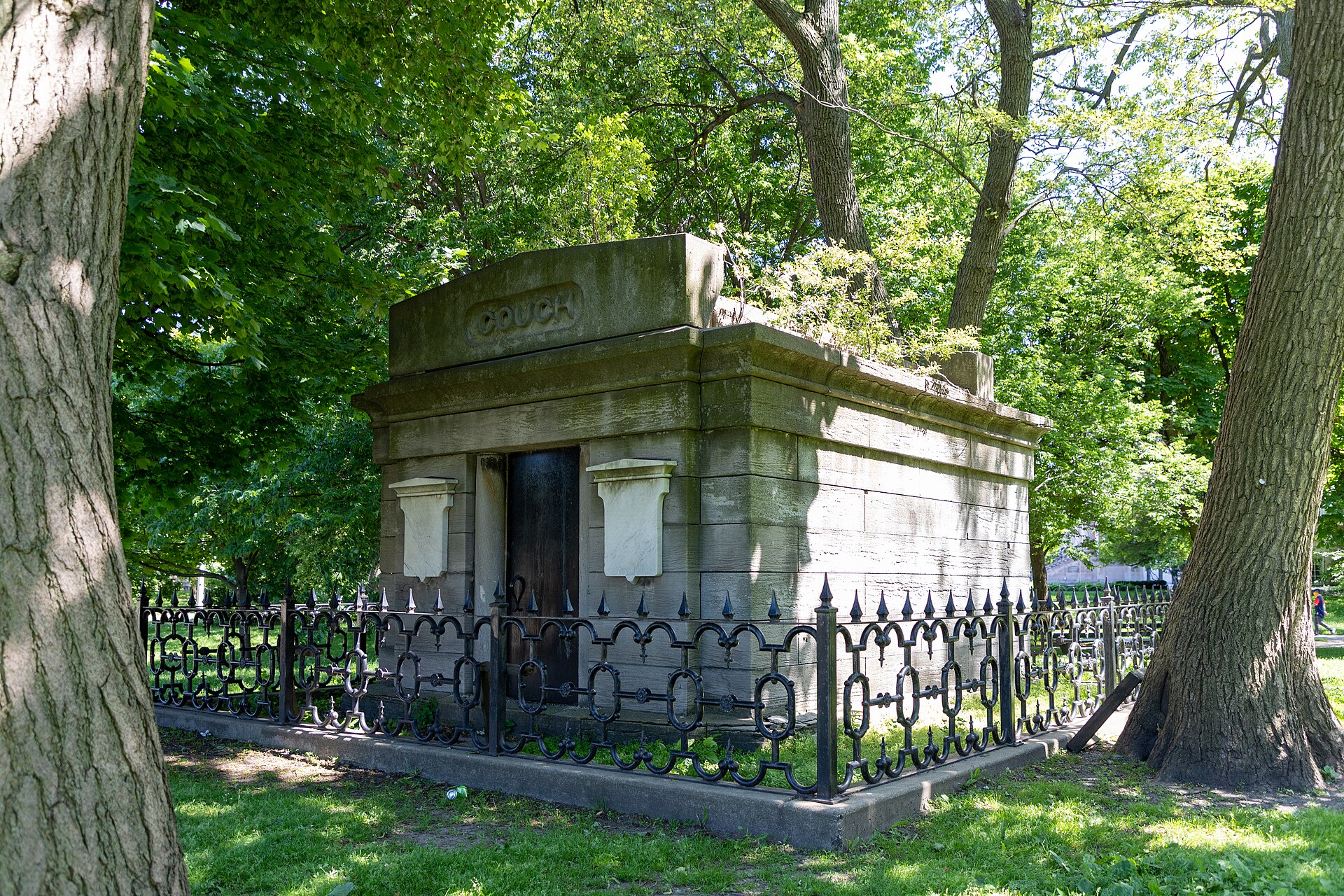
The small stone building in the grass — columns across the front, iron door that does not open — is a tomb. It is still occupied. And it is the last one left out of about thirty-five thousand.
This end of the park was the Chicago City Cemetery. From the eighteen forties onward, this is where the city buried its dead, and it was a genuinely terrible place to do it. The ground here is lakefront sand with the water table sitting a couple of feet down. Grave diggers hit water partway through digging. Coffins were reported floating in the trenches. And all of it sat just upshore from the water Chicago was drinking.
A physician named John Rauch spent years telling the city that this arrangement was going to kill people. He had cholera outbreaks to point at, and typhoid, and a map. The city finally agreed, ordered the burials moved, and handed the land over to the park commissioners. Families were told to come and collect their relatives. Thousands did, and reburied them out at Graceland an
d Rosehill.
Then, in eighteen seventy-one, the Great Fire came through here.
The wooden grave markers burned. A great deal of the paperwork burned with them. And once the marker and the record are both gone, there is no one left to move. Historians estimate that around twelve thousand people were never taken out of this ground. Roughly a third of everyone buried here.
The stone building was put