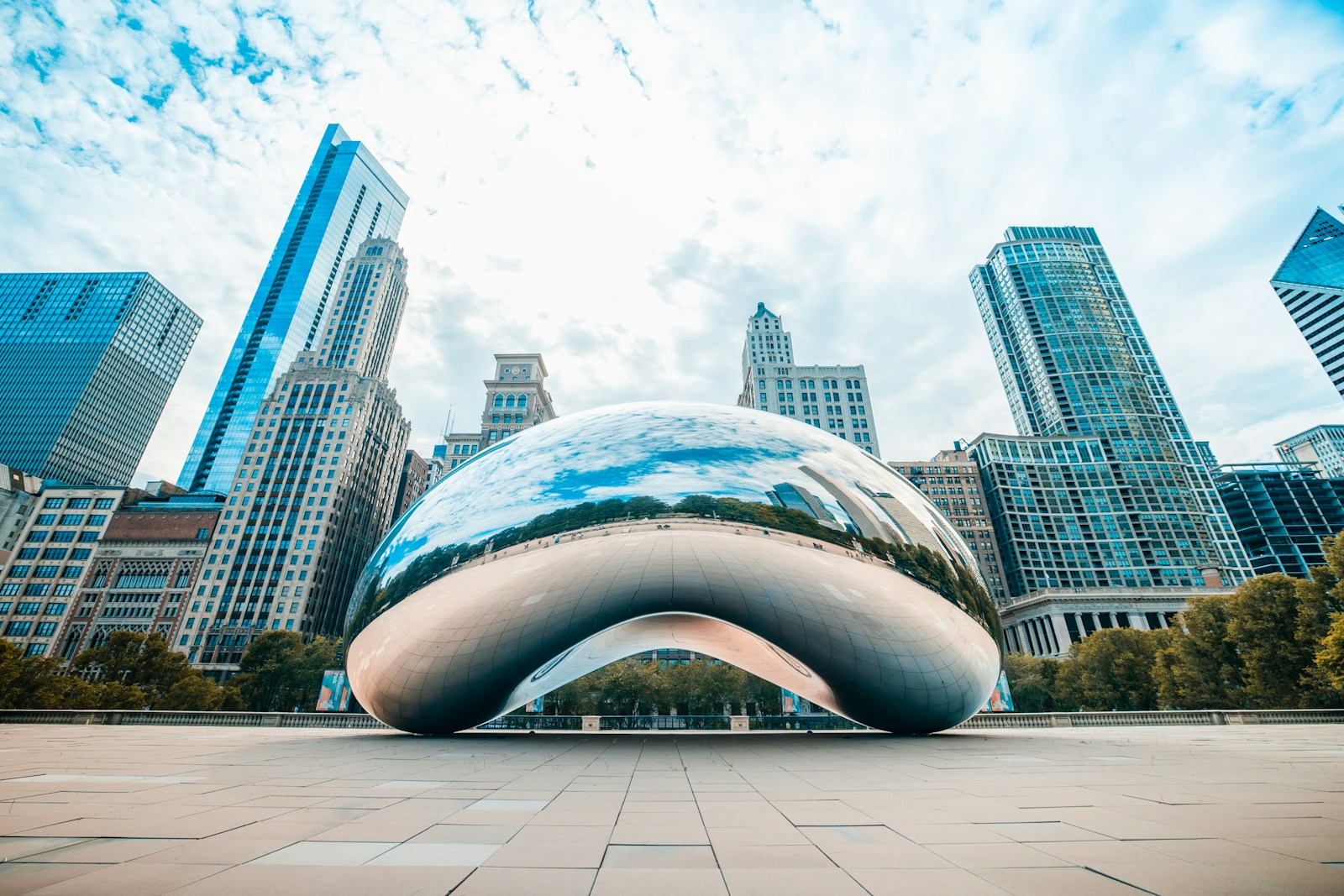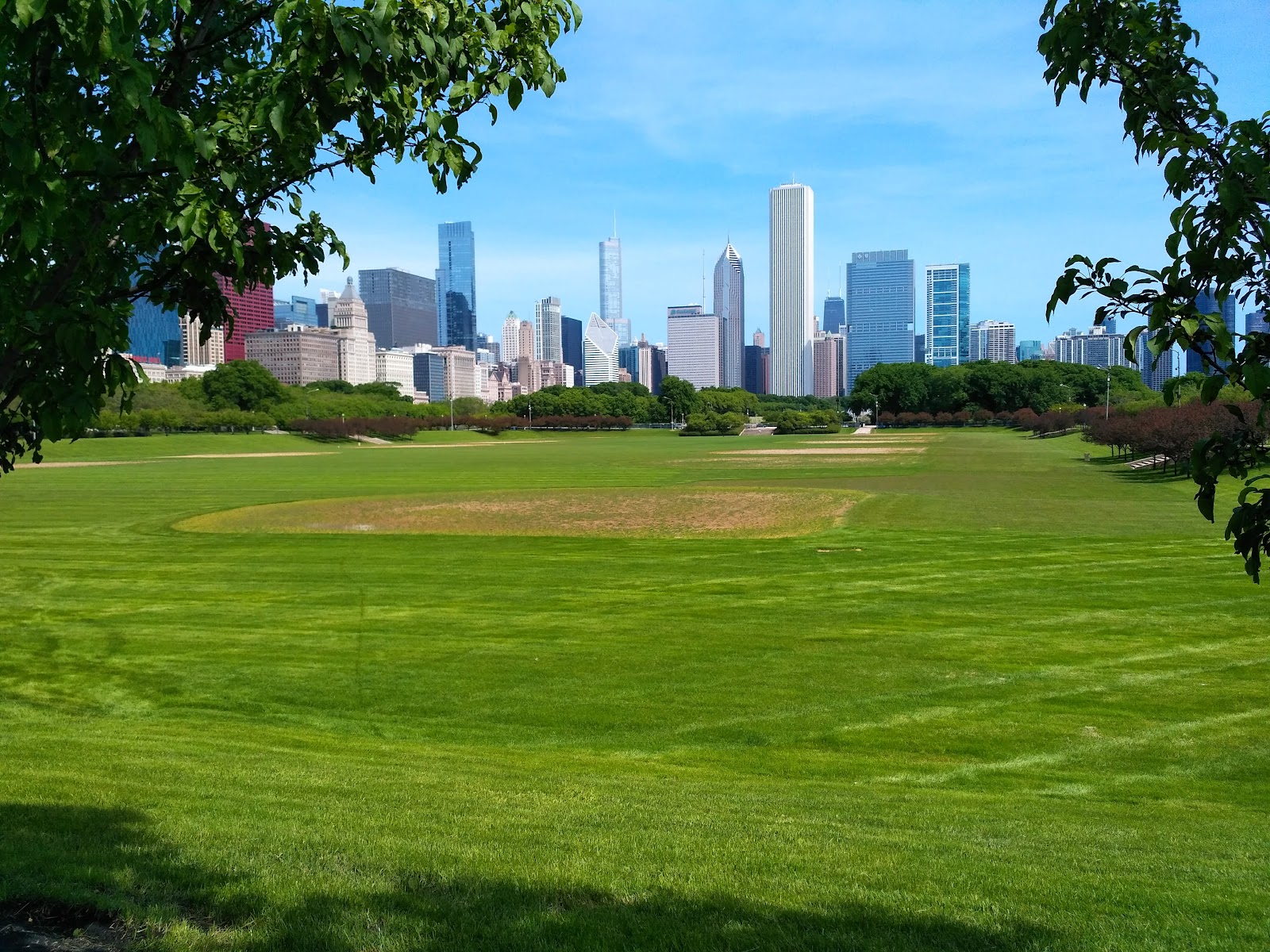
Turn back toward the skyline and notice what's missing. There's a solid wall of towers along Michigan Avenue, and then, between that wall and the water, a long green nothing. Grant Park is the most valuable empty real estate in the Midwest. It's empty because one furious catalog salesman sued the city of Chicago four times and won every single one.
Start with the dirt, because none of this is natural. In the eighteen fifties the city cut a deal with the Illinois Central Railroad. Build us a breakwater to stop the lake chewing up the shoreline. In exchange, you can run your tracks on a trestle out in the water. It worked. It also created a long stagnant lagoon trapped between the tracks and the avenue, which smelled about how you'd expect. Then, in eighteen seventy-one, the fire burned down the city and left roughly eighteen million bricks of rubble with nowhere to go. Chicago dumped its own remains into the lagoon and called the result a park. The lawn under you is a burned downtown,
flattened and seeded.
The legal argument started with a map. Back in eighteen thirty-six, when commissioners were selling off lots to fund a canal, somebody labeled this strip of shoreline Public Ground, and then wrote a promise underneath it. A common, to remain forever open, clear and free of any buildings, or other obstructions whatever. Nobody in city government thought about that sentence ag