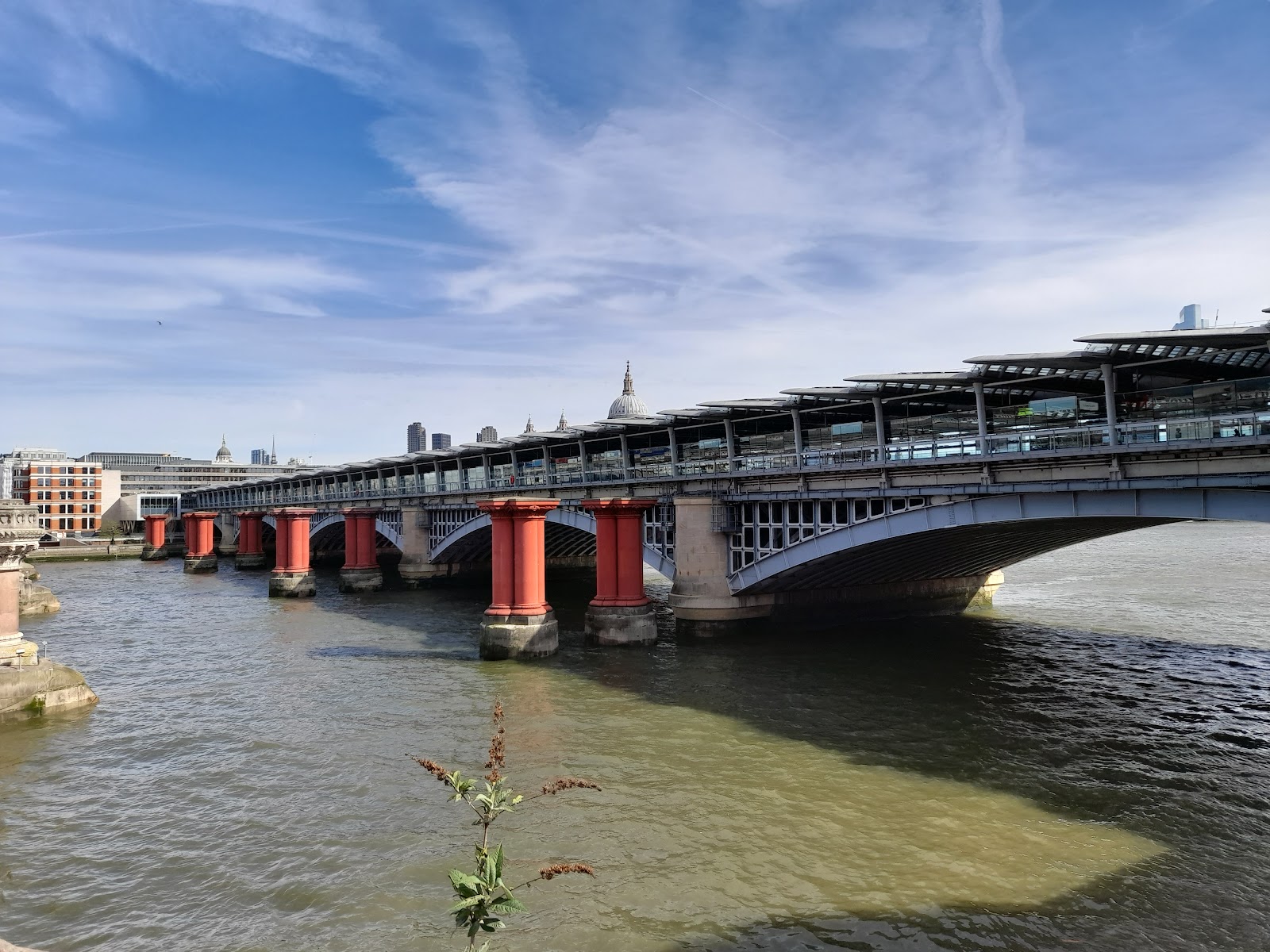
Look over the bridge at the river. Right below you, hidden in the stonework of the embankment, a second river empties into the Thames — one you'll never see flowing. It's called the Fleet, and it runs straight down under the street behind you, dropping toward the water beneath your feet the whole way. London has more than twenty rivers like this. Real rivers, with names — the Fleet, the Tyburn, the Effra, the Walbrook — and the city buried every single one of them.
They didn't vanish. The city grew over the top of them. As London got bigger and filthier, these open rivers turned into open sewers, which is a polite way of saying they became long, moving strips of everything nobody wanted. The smell got unbearable, so the answer was always the same: build a roof over it and pretend it's gone. Bazalgette, our sewer man, eventually swallowed most of them whole into his network. So London's ancient rivers now spend their lives as plumbing.
But they're still here, and they left their names
lying around on the surface as clues. Fleet Street — the famous one, home of the newspapers — is named after the river running underneath it. Farringdon, up the road, follows the old riverbed. The water's gone underground, but the map still remembers where it used to be.
And the Fleet wasn't some trickle. It was once London's second river — wide enough at the bottom for boats to sail up it, line