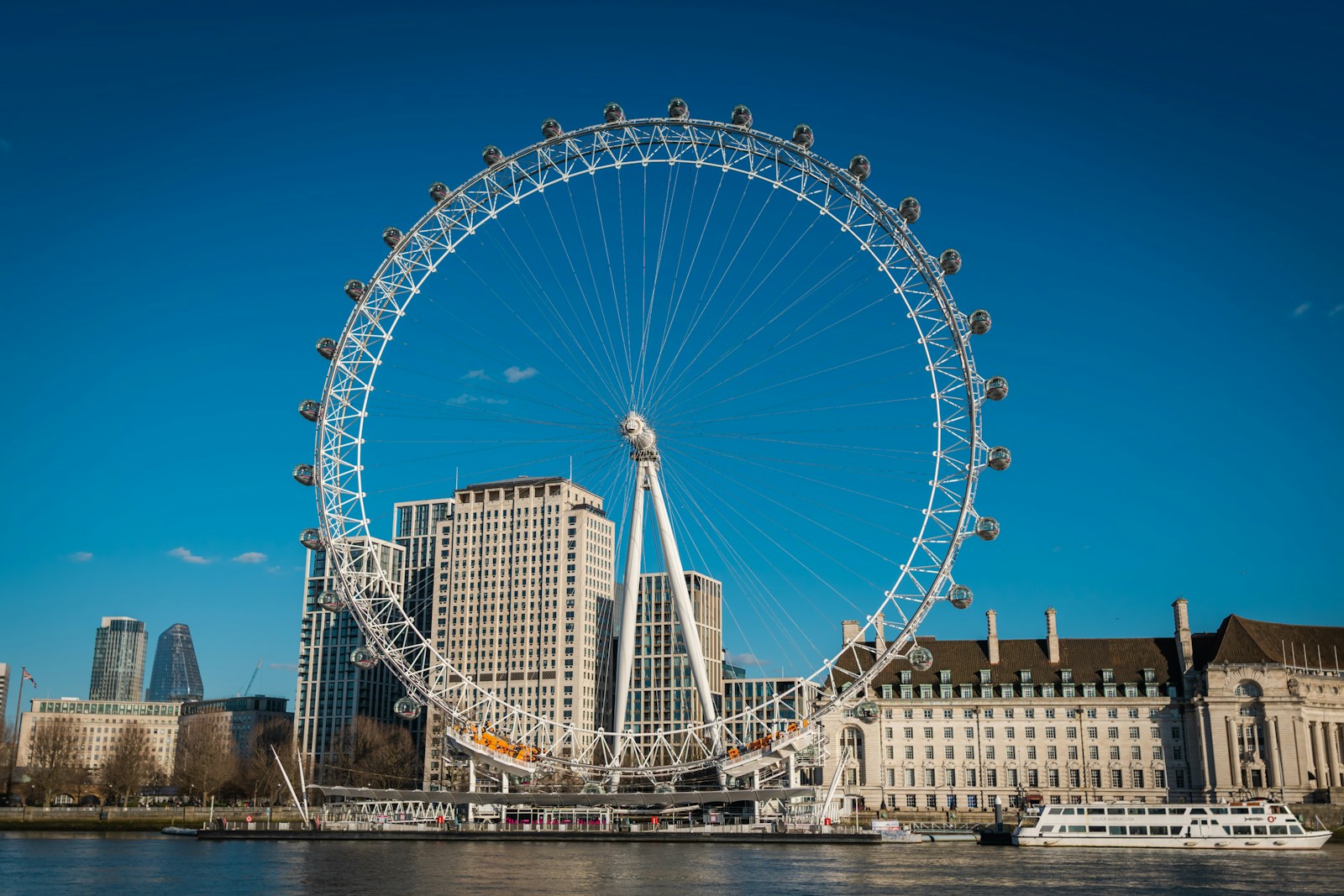
That's the London Eye — the enormous, slow, glass-capsuled wheel turning over the river in front of you. And almost nobody visiting it knows this: for twenty-four years, it was standing here illegally. Not illegally exactly — technically. It was built in the year two thousand as a millennium project, and the planning permission that let it exist was explicitly temporary. The deal was that somebody would decide, eventually, whether it could stay. Nobody got around to deciding until May of two thousand twenty-four, when the local council finally, formally, made it a permanent structure. So the most recognizable modern landmark on London's skyline spent every single day of its first quarter-century as a guest who never checked out. The city just never got around to asking it to leave.
It didn't even go up the easy way. You'd assume they built something this size standing straight up. They didn't. The entire wheel was assembled lying flat on platforms floating out on the Thames, then hydr
aulically raised into position afterward. The first attempt to lift it went wrong when a cable slipped. Engineers had to stop the whole operation with the wheel tilted at a diagonal. It sat there at a slant over the river for a full week before they could finish standing it up straight. And even once it was vertical, it wasn't ready. It was supposed to open for the millennium celebrations. It didn