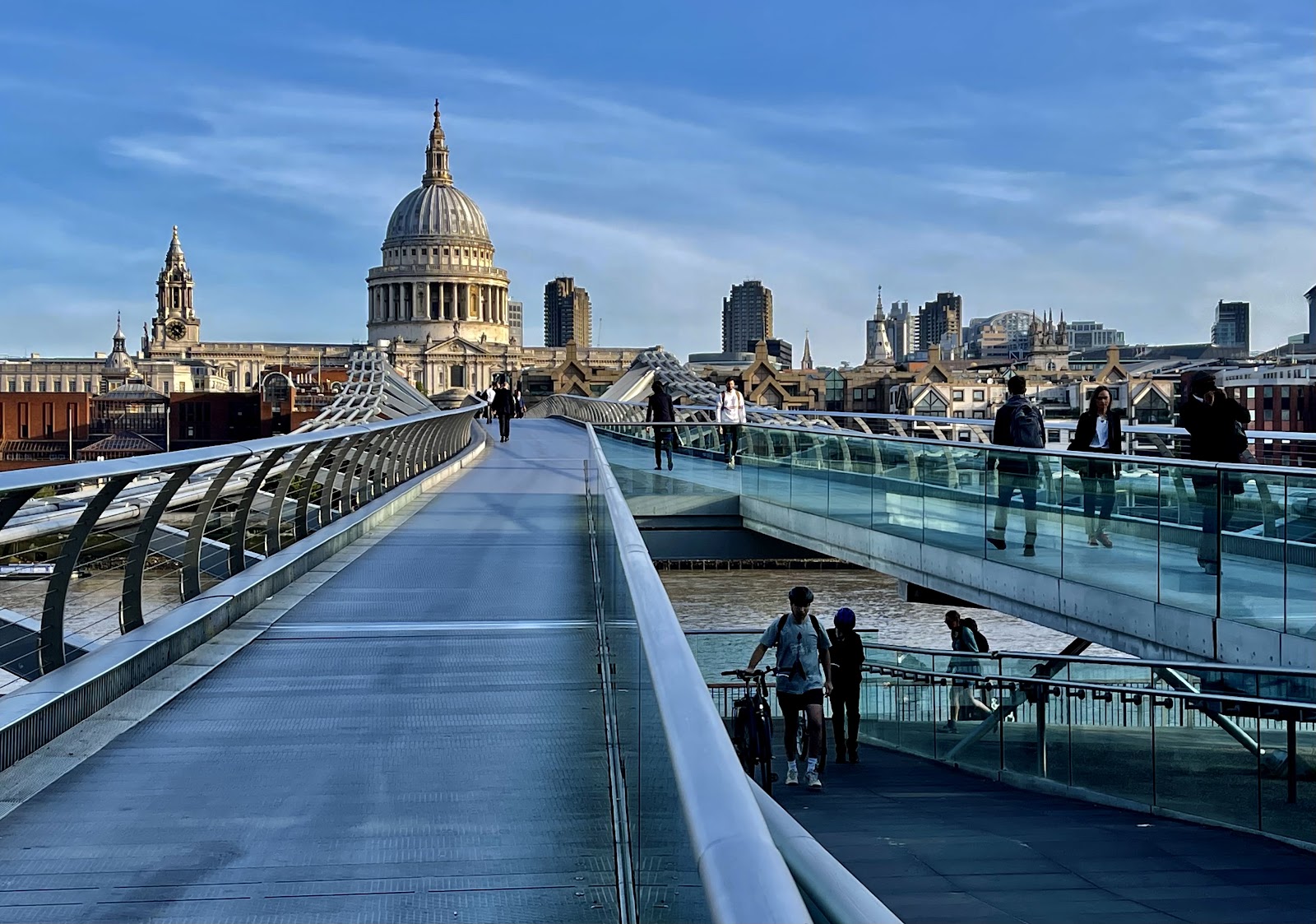
That low, flat, silver footbridge across the river — the one that looks like a thin blade laid over the water, pointing straight at the dome of Saint Paul's — is the Millennium Bridge. It's beautiful, it's a triumph of modern engineering, and on the day it opened it tried to throw everyone into the Thames.
This was London's first new bridge across the river in over a century, unveiled in the year two thousand with enormous pride. Designed by a world-famous architect as a "blade of light." Opening day, around ninety thousand people came to walk it. And the moment a serious crowd got on, it started to sway. Not a gentle wobble — a real, lurching, side-to-side roll that had people grabbing the handrails and each other.
And what happened next is the genuinely fascinating part, because it turned out to be human nature doing it. When a walkway sways under you, everybody instinctively adjusts their footsteps in the same direction at the same time to stay balanced. But when a whole crowd doe
s that in sync, they all push the bridge the same way at once — which makes the sway BIGGER — which makes everyone correct harder — which makes it bigger still. The engineers had a coldly beautiful name for this: synchronous lateral excitation. In English: the more people tried not to fall over, the more the bridge tried to kill them. The crowd and the bridge fed each other into a feedback loop, l