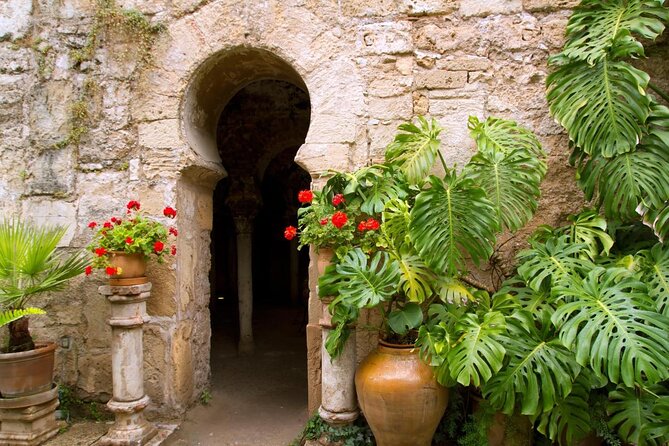
Behind that gateway, at the end of a garden of palms and lemon trees, there's a small square room with a dome on it. That's the Banys Àrabs. The Arab baths.
It's about a thousand years old, and it is very nearly the last thing standing.
Before any of the Gothic arrived, this was Madina Mayurqa — a Muslim city of tens of thousands of people, with mosques, markets, gardens, public baths, and a water system good enough that parts of it stayed in use for centuries afterwards. It was one of the wealthier cities in the western Mediterranean. It had a shipyard, a library culture, and a reputation.
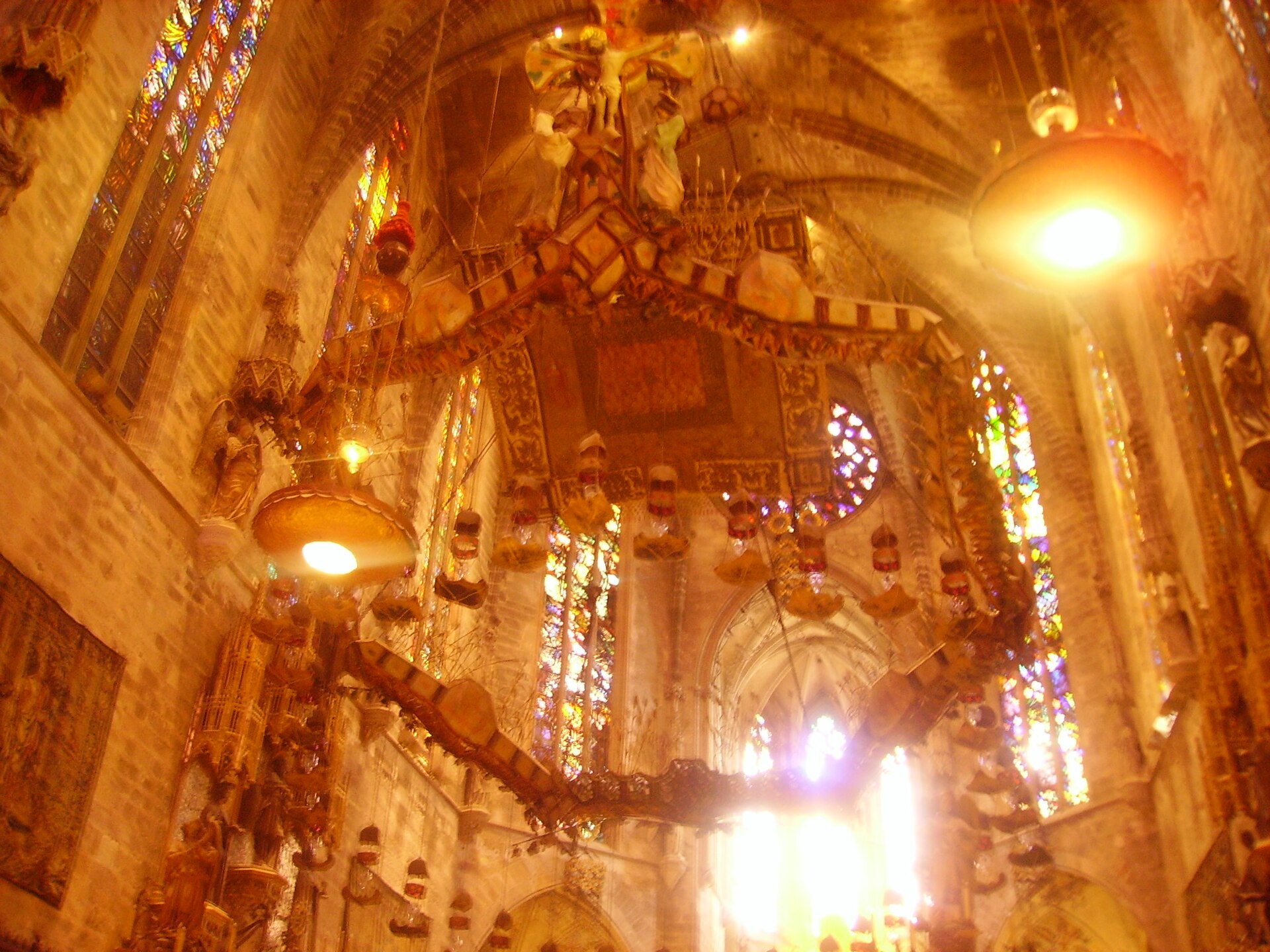
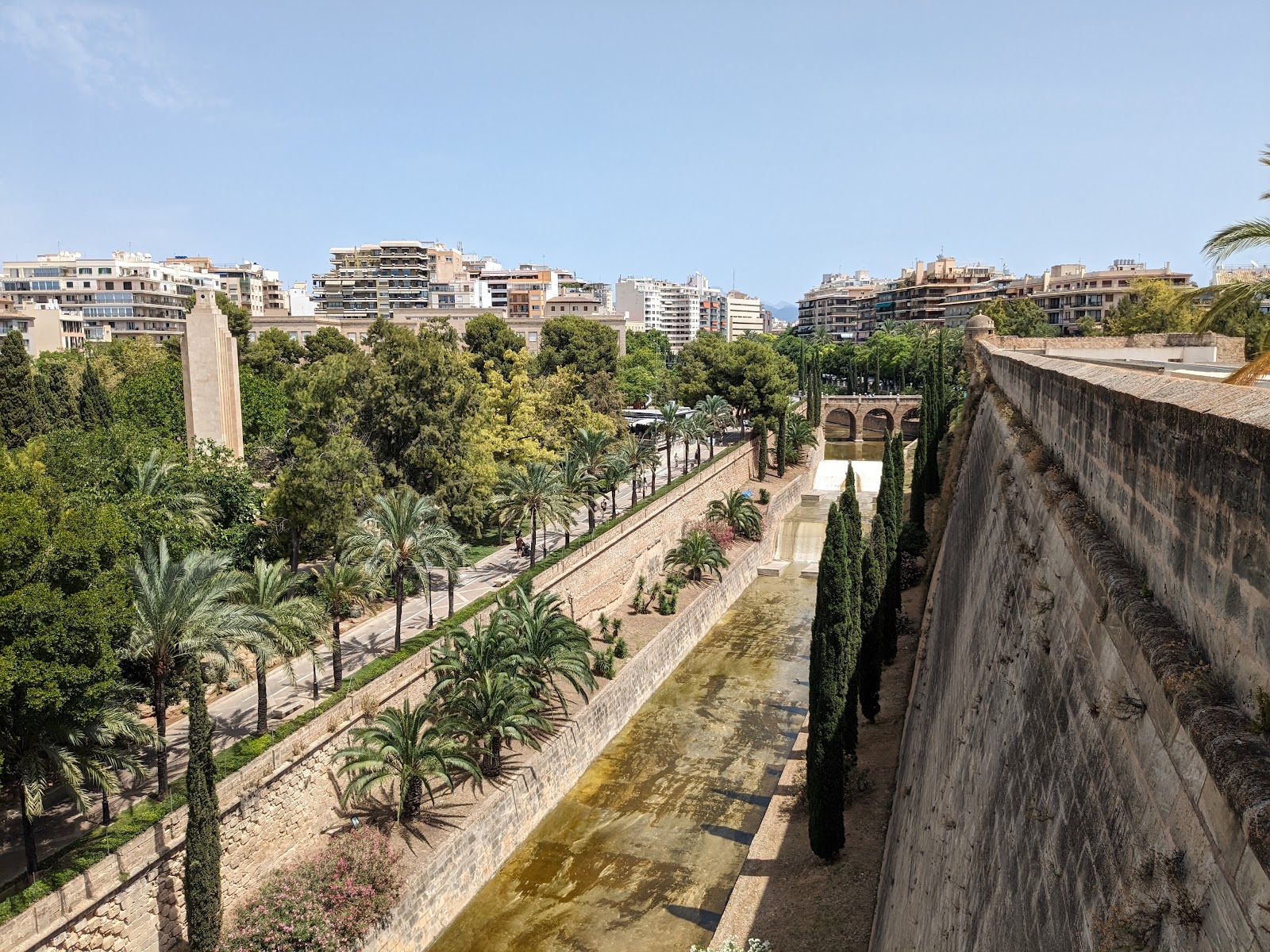
The city wasn't flattened, either. It was taken over and relabelled. The main mosque became the cathedral site, the citadel became the royal palace, and the street plan stayed put — those narrow lanes you came in through are the same lanes. They just answer to different names now.
And of the actual buildings, this is what's left. One warm room from one bath house, which was probably private, pro
bably attached to a rich family's home, and is now in somebody's back garden. That's the survival rate. A whole civilisation on this island, and you can stand in all of what remains in about ninety seconds.
Now go and look at the columns holding the dome up, because this is the part that gets me.
There are twelve of them, and they do not match.
Different stone. Different thicknesses. Different