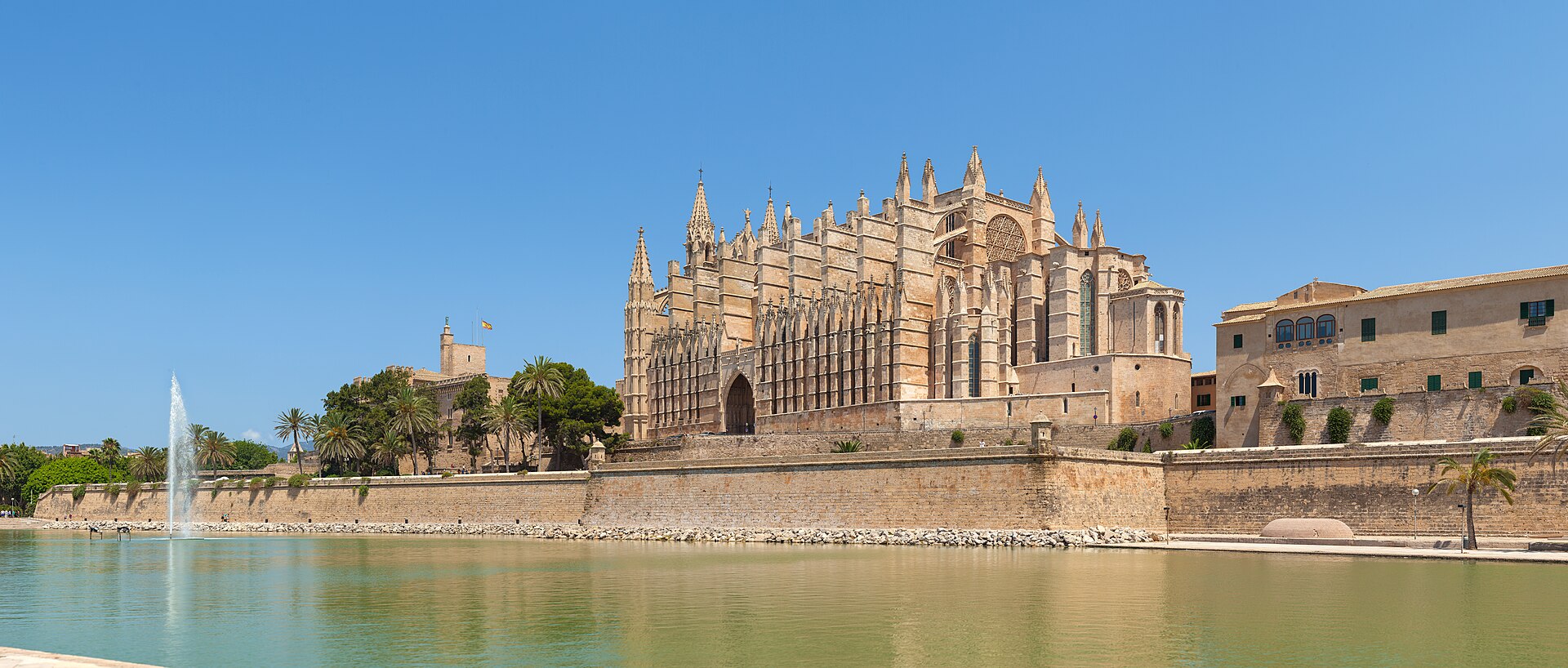
That's the water at Parc de la Mar, with the cathedral standing over it. This is the view. It's on the postcards, the fridge magnets, the front of every guidebook to this island.
It's also a lake. Not the Mediterranean. A lake, dug on purpose, filled with salt water and finished in the nineteen eighties.
For about seven centuries the sea came right up to that wall. The cathedral was built to be seen from a boat, which is why the whole south side is so ridiculously tall and so heavily buttressed — the people who paid for it wanted sailors to see it while they were still hours out. And the water underneath doubled everything. You got the building and you got the building again, upside down, moving.
Boats tied up under the wall. Fishermen worked the edge of it. The vaulted chambers built into the ramparts — the ones the city now uses for concerts — had the sea close enough to hear from inside. For most of this city's life, the cathedral and the water were a single object.
Then the cit
y needed a road. A big one, along the front, because Palma in the middle of the twentieth century was filling up with cars and hotels and people arriving faster than anybody could plan for. So they pushed a motorway across the waterfront, on new land, between the cathedral and the sea.
And the reflection died.
Not the building, not the harbour, just the reflection — one of the most valuable thin