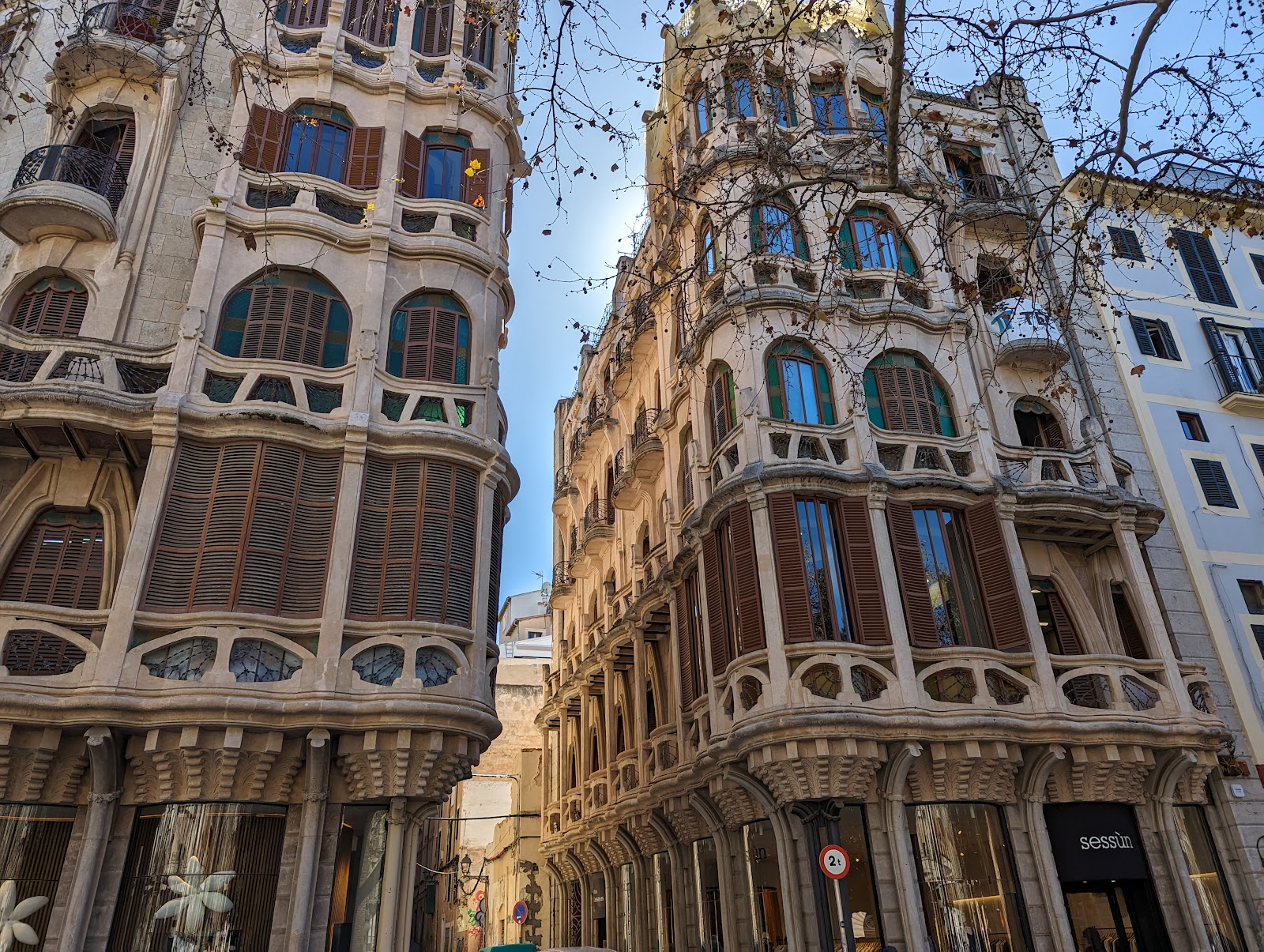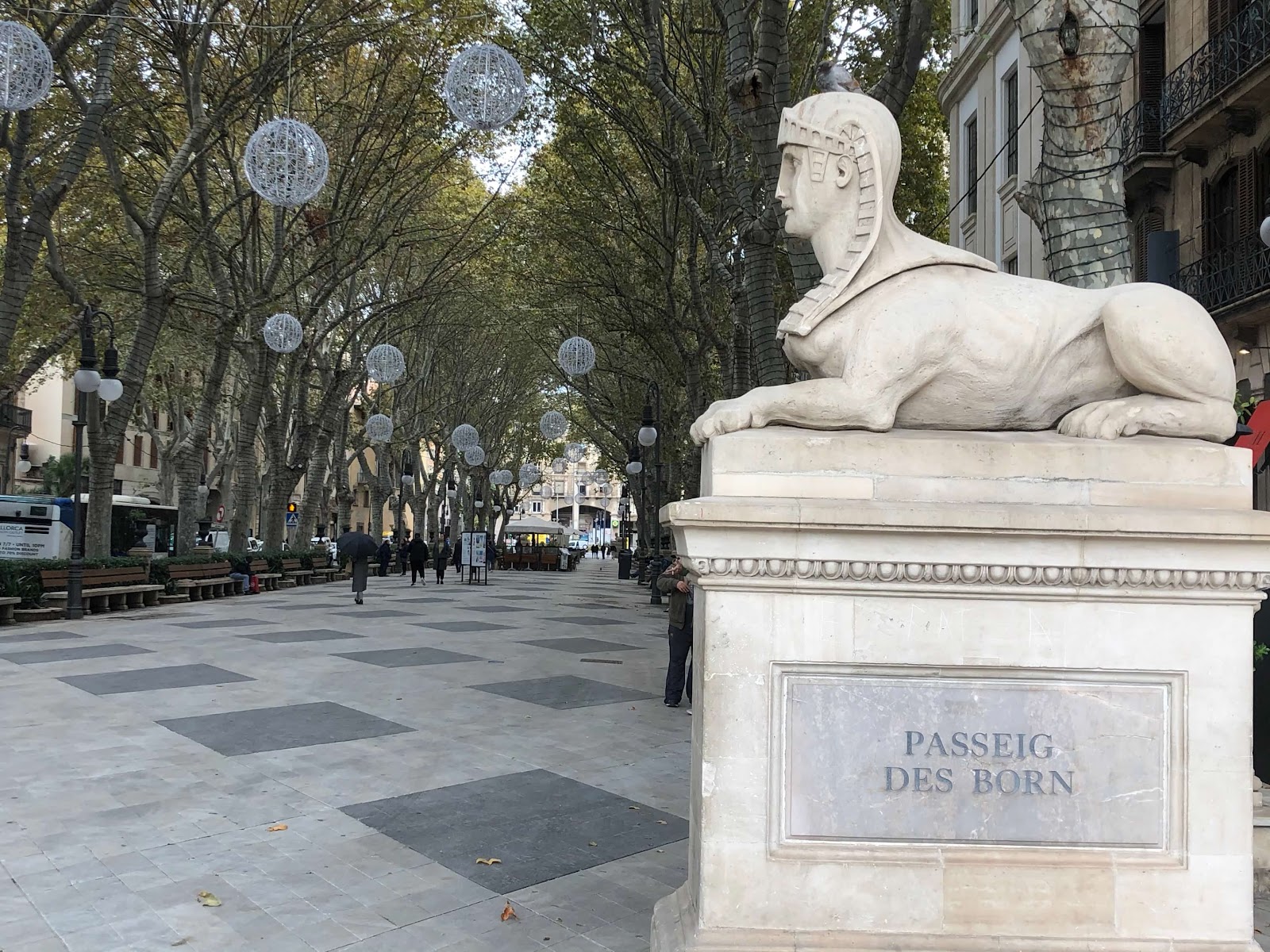
The wide shaded promenade running down toward the harbour is the Passeig des Born. Plane trees, stone benches, and the most expensive shop rents on the island.
The shape is the giveaway. Wide, flat-bottomed, straight, sloping gently down to the sea, with the ground rising away on both sides. That's the profile of a channel. You are standing in a riverbed.
The torrent was called sa Riera, and it came down out of the mountains and ran straight through the middle of Palma, splitting the city in two — the wealthy quarter up one side, the poor quarter down the other. Most of the year it was a dry stony ditch. Mallorcan torrents usually are. That's the trap.
In fourteen oh-three, after days of rain, it came down all at once.
The water went over the banks, through the lower city, and took the neighbourhoods on both sides of this street. About fifteen hundred houses were destroyed. Around five thousand people died — in a city of roughly thirty thousand. One person in six. It remains the wo
rst thing that has ever happened in Palma, and it happened right here, in what is now a shopping street.
The city knew what the problem was, and it took them two hundred and ten years to move the river.
There were proposals. There were surveys. There was, at several points, broad agreement that something really ought to be done about the watercourse that had drowned a sixth of the population. An