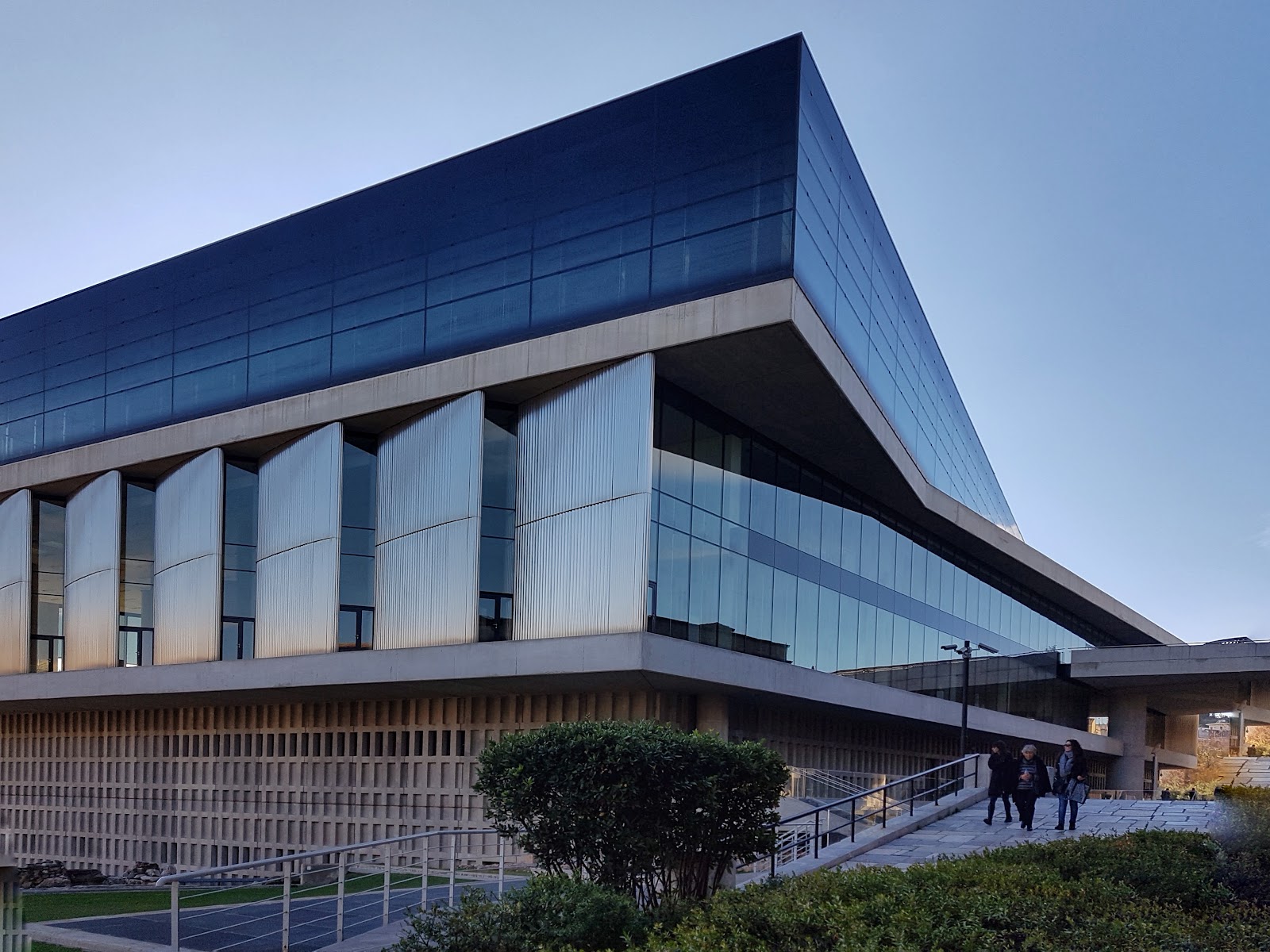
That long building of glass and concrete is the Acropolis Museum, and its top floor is sitting crooked. Everything underneath lines up with the street, but the glass box on top is turned at an angle, as though somebody set it down in a hurry. It's turned twenty-three degrees so that it lines up exactly with the Parthenon on the rock above. The top of this building is pointing at it.
That's deliberate, like nearly everything in here, because this museum was built to win an argument.
In the early eighteen hundreds, Lord Elgin, Britain's ambassador to the Ottoman Empire, which ruled Athens at the time, had his workmen take down about half of the Parthenon's surviving sculpture and ship it to London. It has been in the British Museum ever since. For a century and a half after that, Greece asking for it back was a polite diplomatic grumble that nobody in London lost much sleep over.
Then the grumble got Melina Mercouri. She was a movie star first, nominated for an Oscar for a film called
Never on Sunday, with a husky voice and a laugh you could hear from the back of a theater. In nineteen eighty-one she became Greece's Minister of Culture. The next year, at a UNESCO conference in Mexico City, she stood up in front of the world's culture ministers and refused to use the British name. There are no such things as the Elgin Marbles, she told them. They were the Parthenon Marbles, and