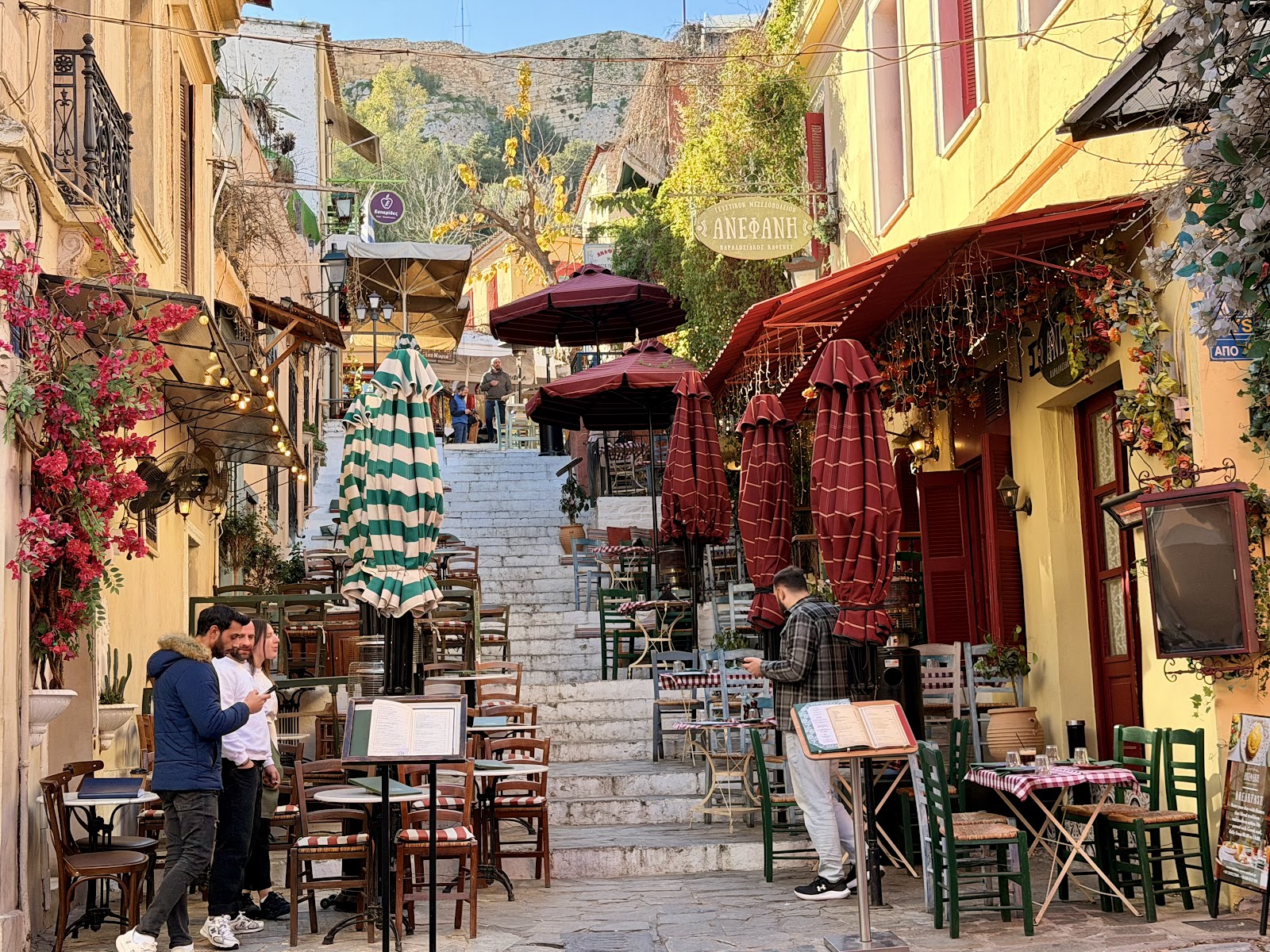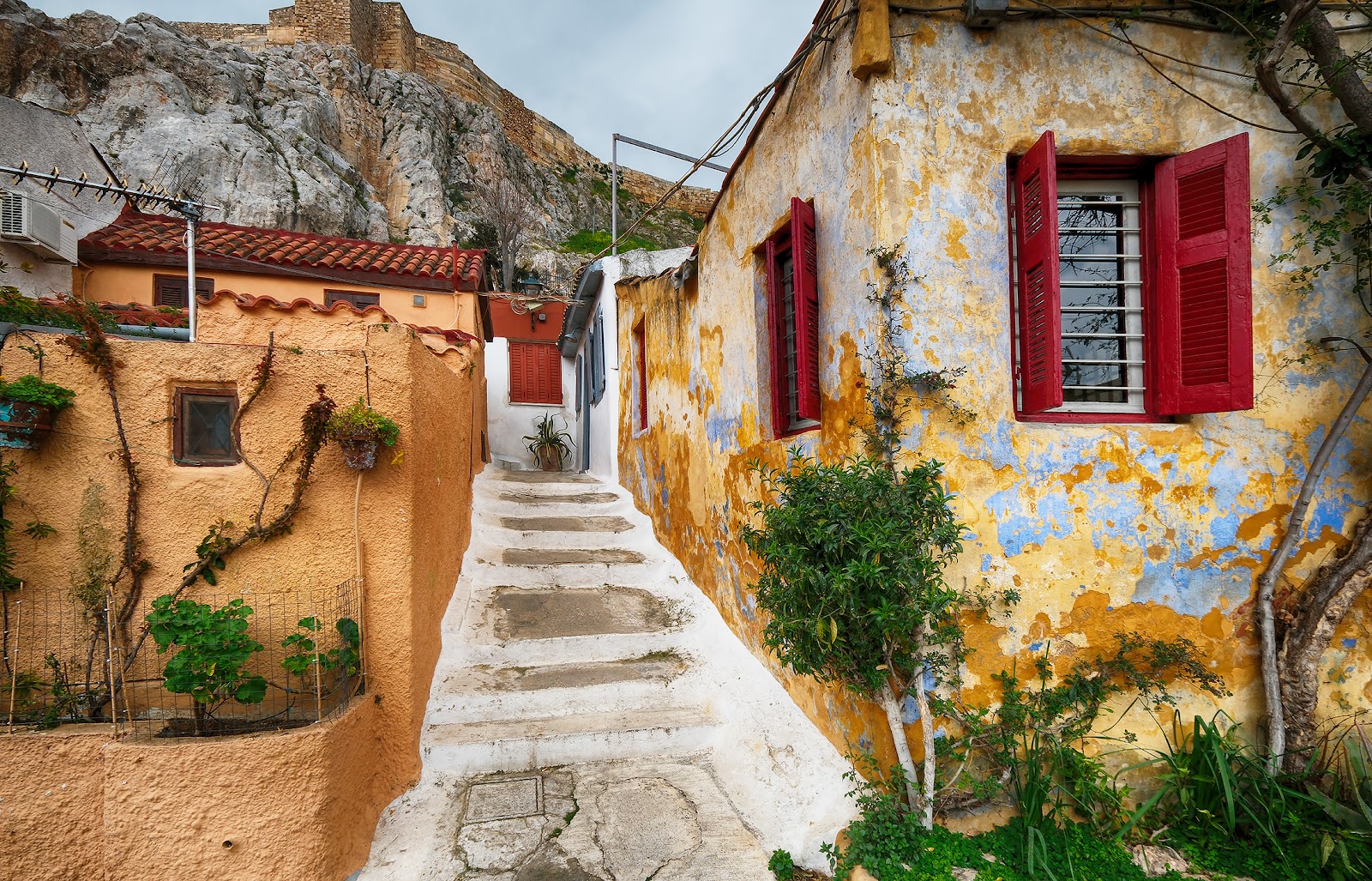
This is Anafiotika, and you've just walked out of Athens and onto a Greek island. Whitewashed cube houses with flat roofs, blue doors and shutters, pots of geraniums and basil on every step, lanes so narrow two people have to turn sideways to pass. Cats asleep along the tops of the walls. And right behind the top row of houses, the rock of the Acropolis goes straight up.
The nearest place that really looks like this is a ferry ride away. This one got here in the dark.
When Athens became the capital, the new state needed a palace, ministries, churches, a whole city, and it needed them fast. That meant it needed people who could cut and lay stone. Some of the best builders in Greece came from the islands, and in particular from Anafi, a small, dry rock in the far southeast of the Cyclades with a few hundred people on it. Anafi's men had a reputation across the Aegean as stonemasons. So they came to Athens to work, along with builders from other islands.
Nobody had anywhere to put them
. There were no workers' houses and no plan for any. At the end of each shift the masons went off to whatever corner they could find, and some of them looked up at the empty slope under the Acropolis.
The slope was off-limits. The new government had declared the ground around the Acropolis an archaeological zone, and building on it was banned. But the masons knew an older custom, left over from O