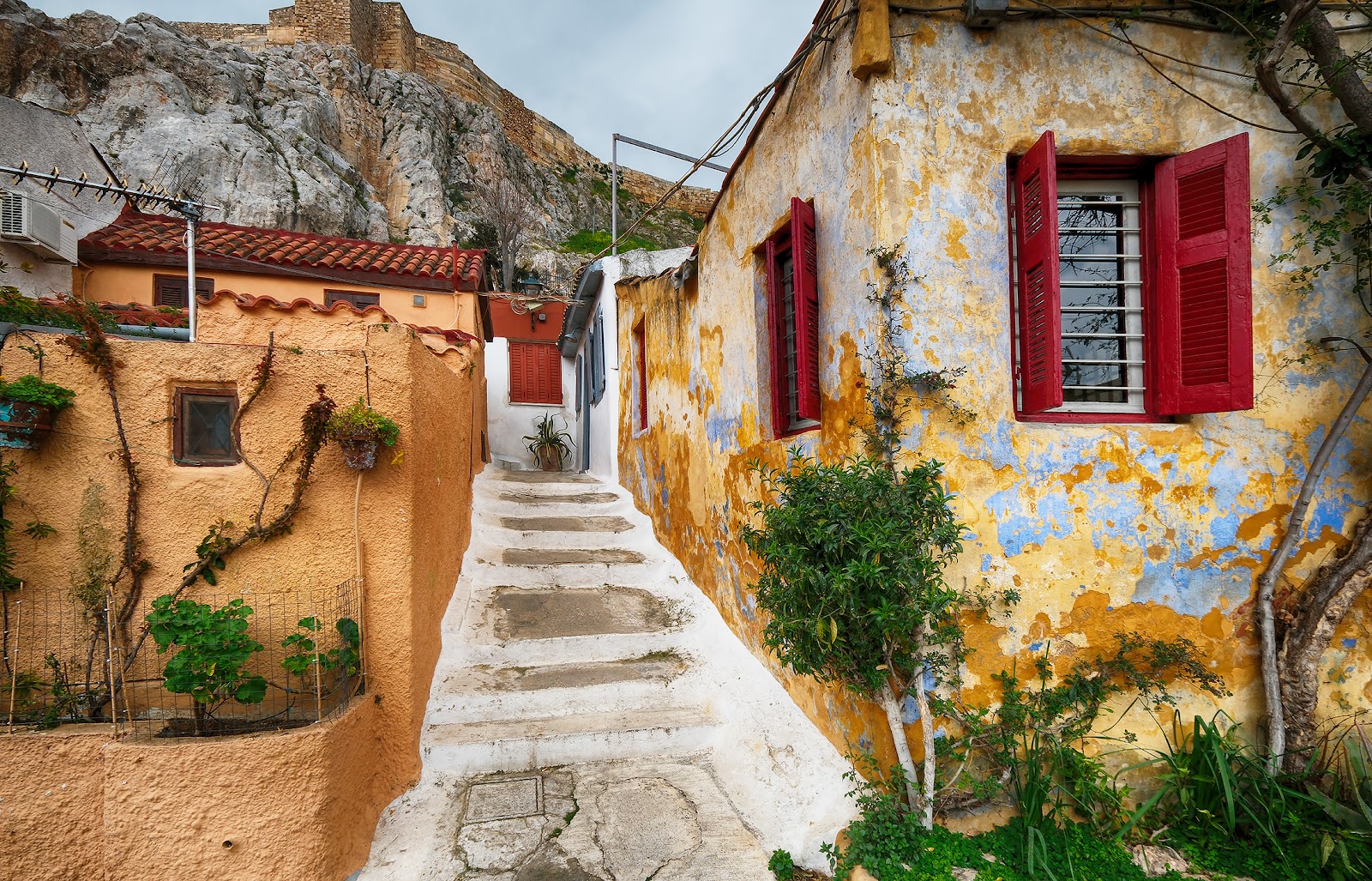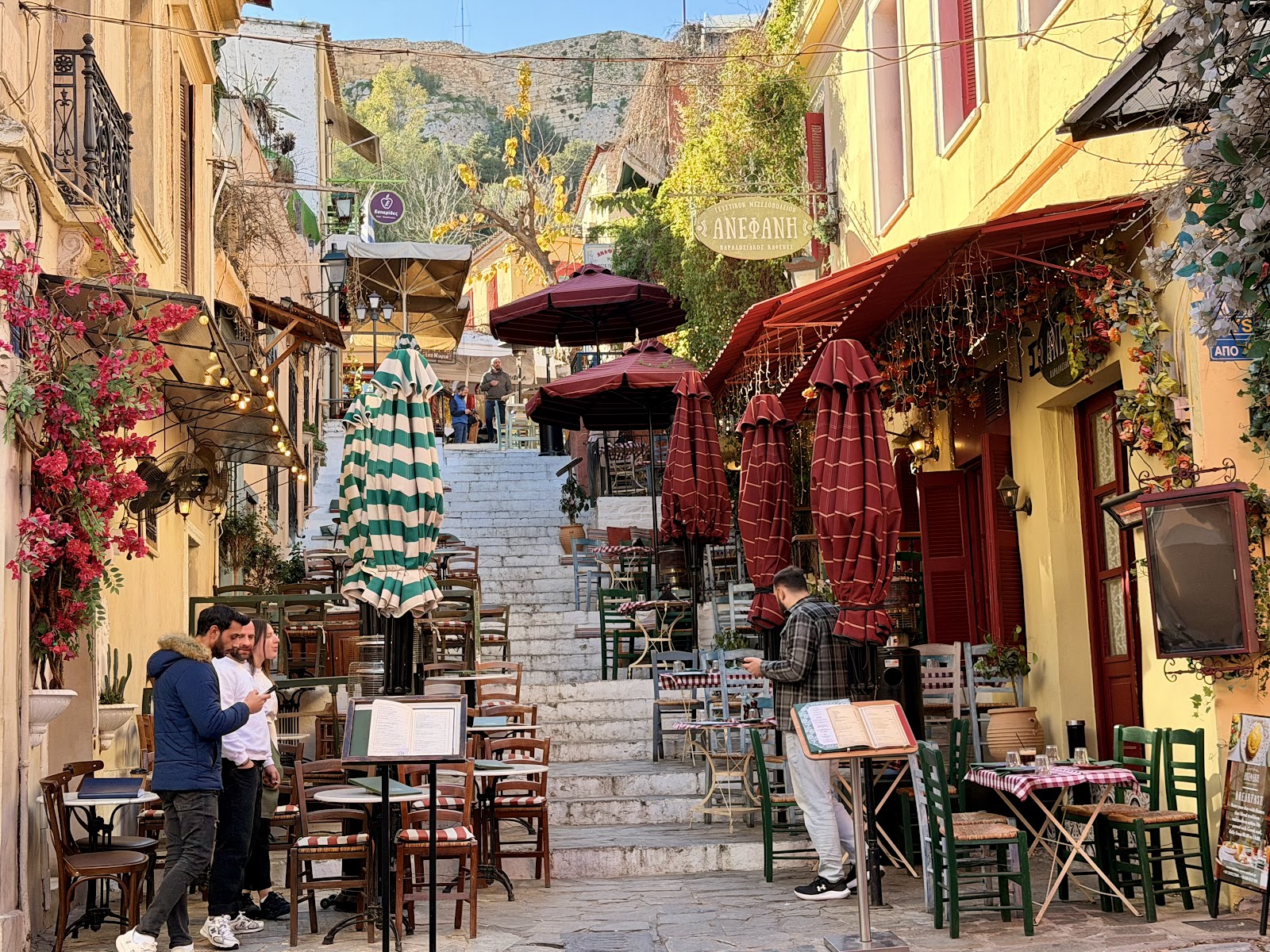
This is Mnesikleous Street, the stepped lane where the cafés set their tables right on the stairs, under bougainvillea, with the wall of the Acropolis rising above. It's one of the most photographed corners of Athens, and it looks as though it has been exactly like this forever. It has been like this for about forty years.
Plaka is the one part of central Athens that kept its old shape. Low houses, crooked lanes, no grid. Outside it, from the nineteen fifties on, Athens rebuilt itself through a deal called antiparochi. You gave a builder your house and your plot, he knocked the house down and put up an apartment block, and he paid you in apartments. There was no bank and no cash, and whole neighborhoods turned into six-story concrete within a couple of decades. Greater Athens went from about a million and a half people in the early fifties to around three million by the early eighties, and most of them ended up living in those blocks. You can see the result on every ridge around the c
ity.
Plaka mostly escaped the concrete. What it got instead was louder.
In the sixties and seventies the tourist boom arrived, and these lanes filled with nightclubs. Bouzouki joints, discos, bars with neon signs and amplified floor shows that ran until four in the morning, in lanes so narrow you can touch both walls, with families trying to sleep upstairs. One of the clubs the authorities final