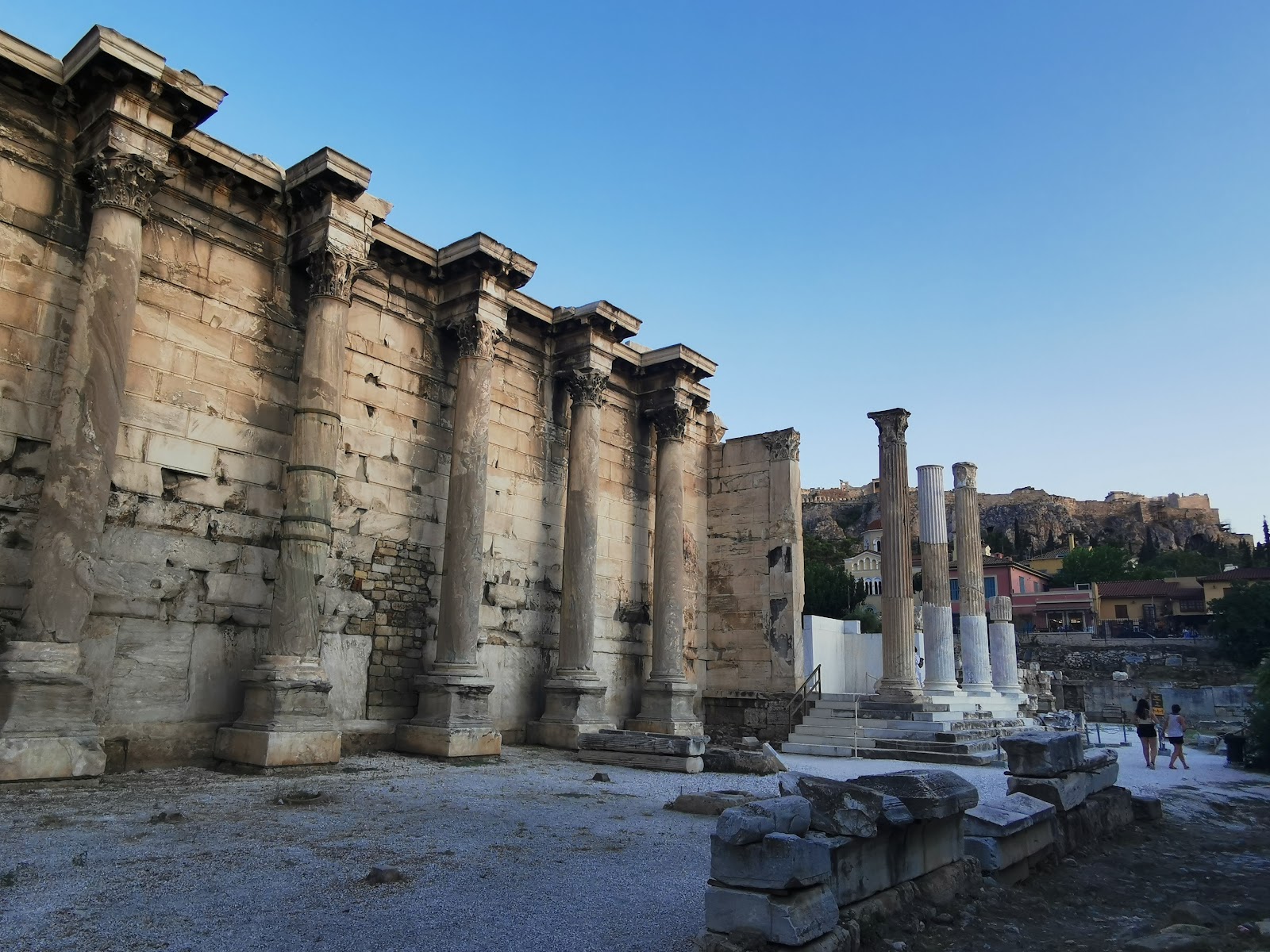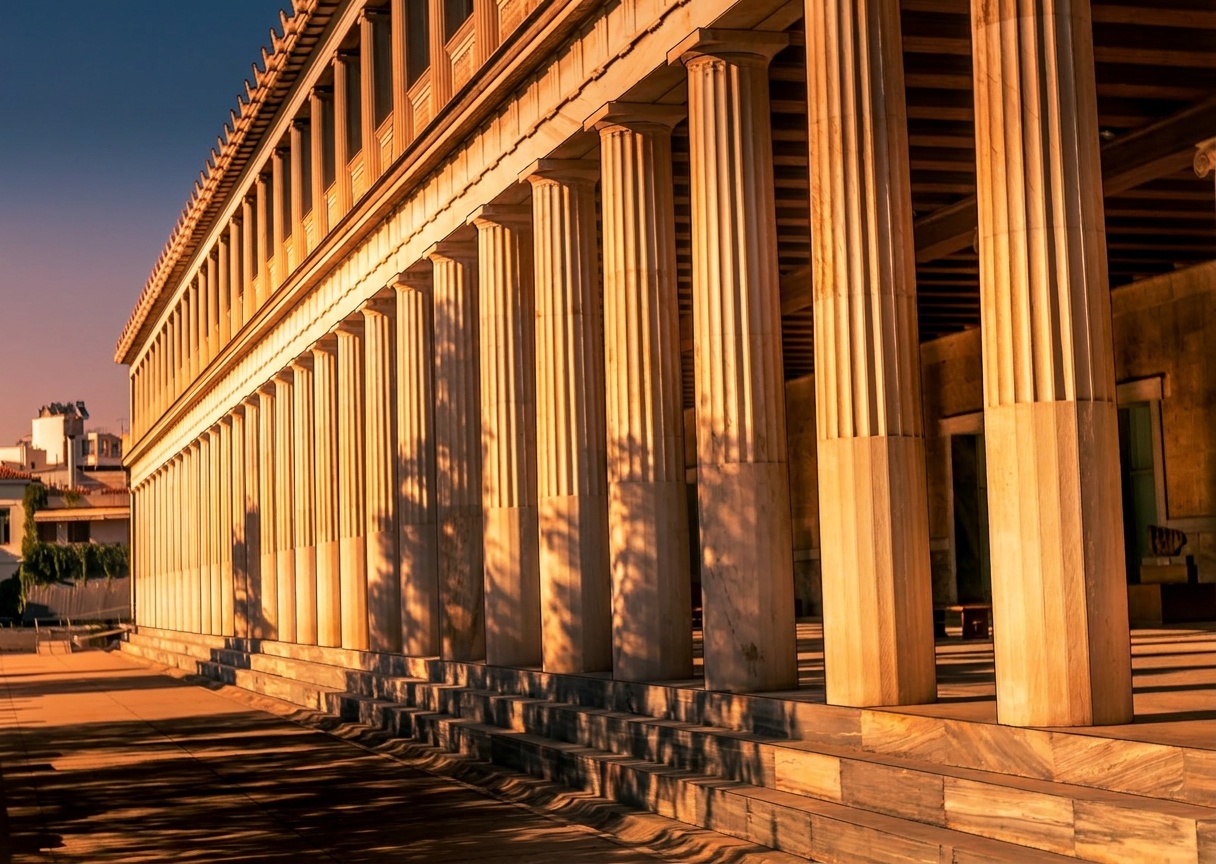
Below you, past the railings, is the Ancient Agora, the square where Athens ran its daily business, and most of it is ankle-high: foundations, stubs of walls, outlines of rooms in the grass. The long two-story building with the colonnade is the exception. It looks new because it nearly is. American archaeologists rebuilt it on its ancient foundations in the nineteen fifties, with Rockefeller money, and then filled it with what they'd dug up out here. One of those finds is the reason to stop.
This is where Athenian democracy actually happened, and it had one procedure I'd like to see revived for a single afternoon. Once a year, the citizens were asked whether there was anybody they would like to get rid of. If enough said yes, a date was set.
On the day, every voter took a broken piece of pottery, the scrap paper of the ancient world, scratched a name into it, and dropped it in. If at least six thousand votes were cast, whoever had the most had ten days to leave Athens. He couldn't co
me back for ten years. There was no crime and no trial. It only took enough of your neighbors deciding they'd had enough of you. Those shards were called ostraka, which is where we get the word ostracize.
Vote days were crowded, and they drew a little trade. Potters from the workshop district up the road set up at the entrances with baskets of ready-broken pieces, for anybody who'd forgotten to b