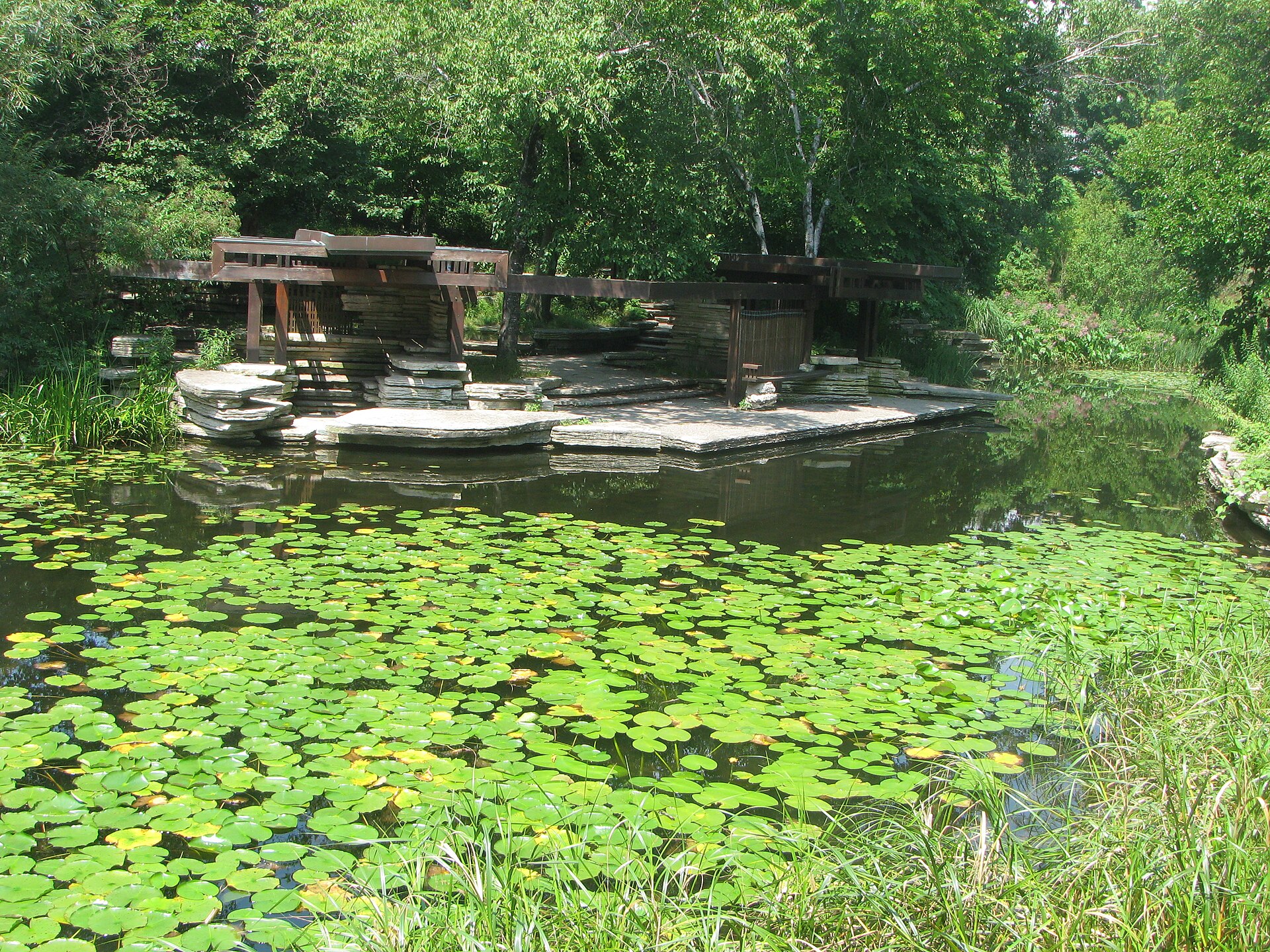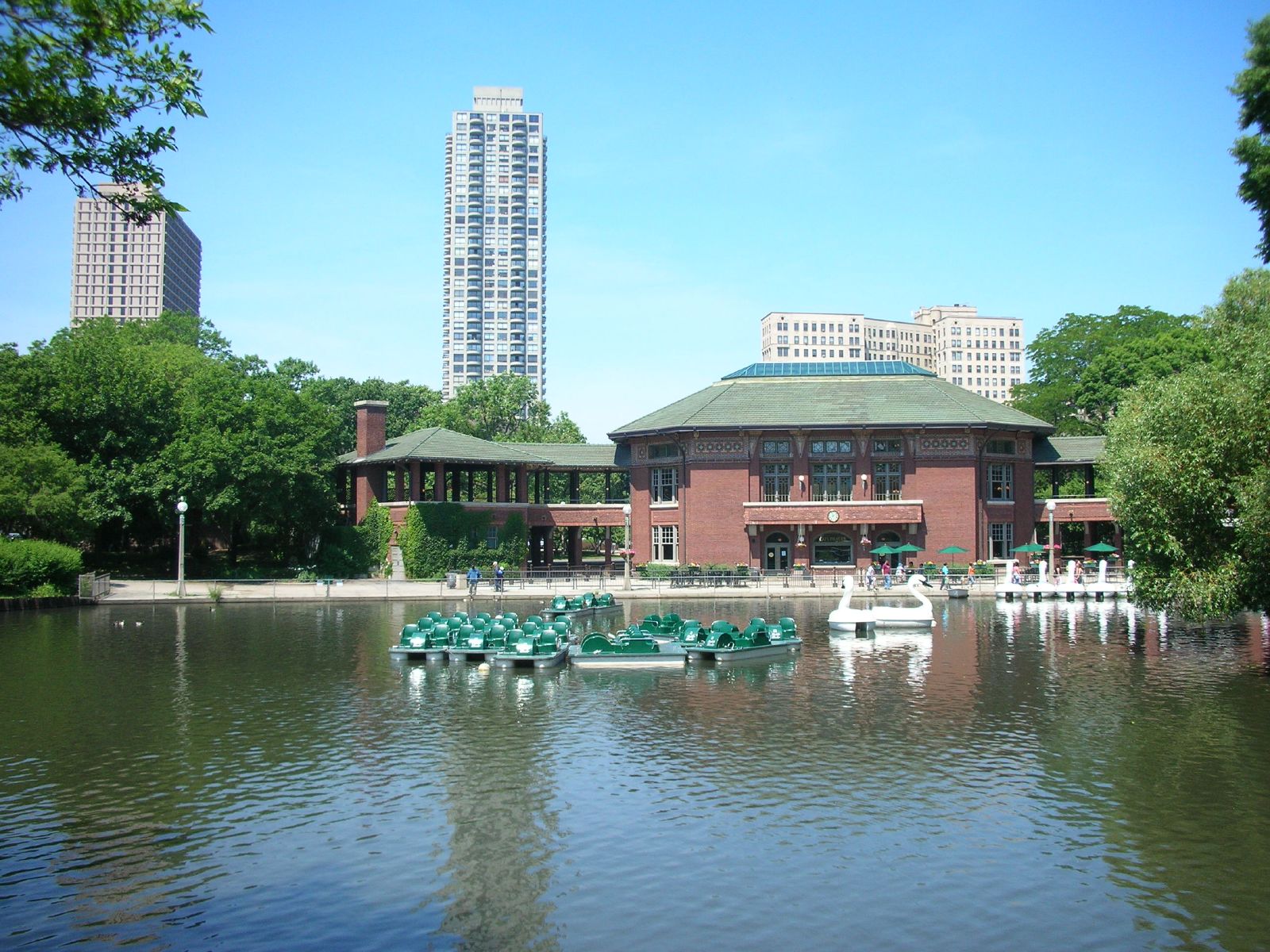
The long brick building with the green tile roof and the eaves that stick way out past the walls is Café Brauer. Prairie School, nineteen oh-eight, and it is aimed straight at the water.
For about fifty years of its life, this is where the city kept its lawn mowers.
The architect was Dwight Perkins, and he designed it to be walked through rather than around. The ground floor opens toward the pond through an arcade. It was never meant to stand between the path and the water.
Perkins is one of the great underrated Chicagoans, and he was constitutionally incapable of being polite about a bad building. He designed dozens of the city's public schools. He also spent years telling politicians exactly what he thought of the ones he hadn't designed. Eventually they pushed him out of his job as the Board of Education's architect, on charges that included insubordination. He had been rude about schoolhouses.
What stood on this spot before him was a wooden boathouse by William Le Baron Jenney,
the man usually credited with the first steel-frame skyscraper. So Chicago tore down a Jenney to put up a Perkins, on a duck pond, for pot roast.
Because it was a restaurant. Two German immigrant brothers, Paul and Caspar Brauer, had a popular place on State Street. They bid for the concession rights to all of Lincoln Park and won them, at seven thousand five hundred dollars a year. Upstairs was