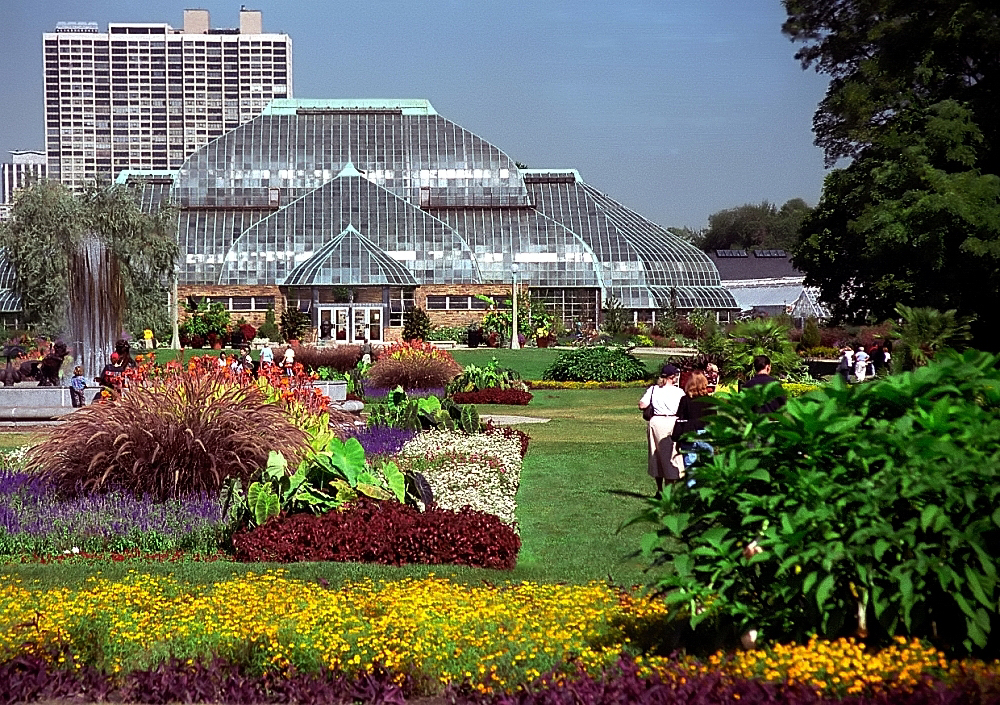
Glass and iron, arched like the hull of a boat turned upside down, sitting on a granite base. If the door is open you will feel this building before you are through it. The air inside runs warm and wet all year, and it smells like soil and green things. That is a smell Chicago does not produce for about five months at a stretch.
That is not decoration. That was the point of it.
The architect was Joseph Lyman Silsbee, who history mostly remembers for who walked through his office. In eighteen eighty-seven he hired a twenty-year-old from Wisconsin as a tracer for eight dollars a week, and that was Frank Lloyd Wright's first job in Chicago. George Maher and George Elmslie were drafting in the same room. The entire Prairie School was, at that moment, three underpaid kids at desks belonging to the man who designed this greenhouse.
But the reason a city builds one of these at all has nothing to do with architecture.
Chicago in the eighteen nineties ran on soft coal. The air was smoke. La
undry came in off the line gray. The standard medical advice for anyone with lung trouble was to leave the city. Useful counsel, if you can afford a train and a house somewhere else. No help at all to everybody who could not. In that Chicago, a warm wet room full of living green sat closer to medicine than to luxury. The park commissioners treated it exactly that way. They built it in stages betwe