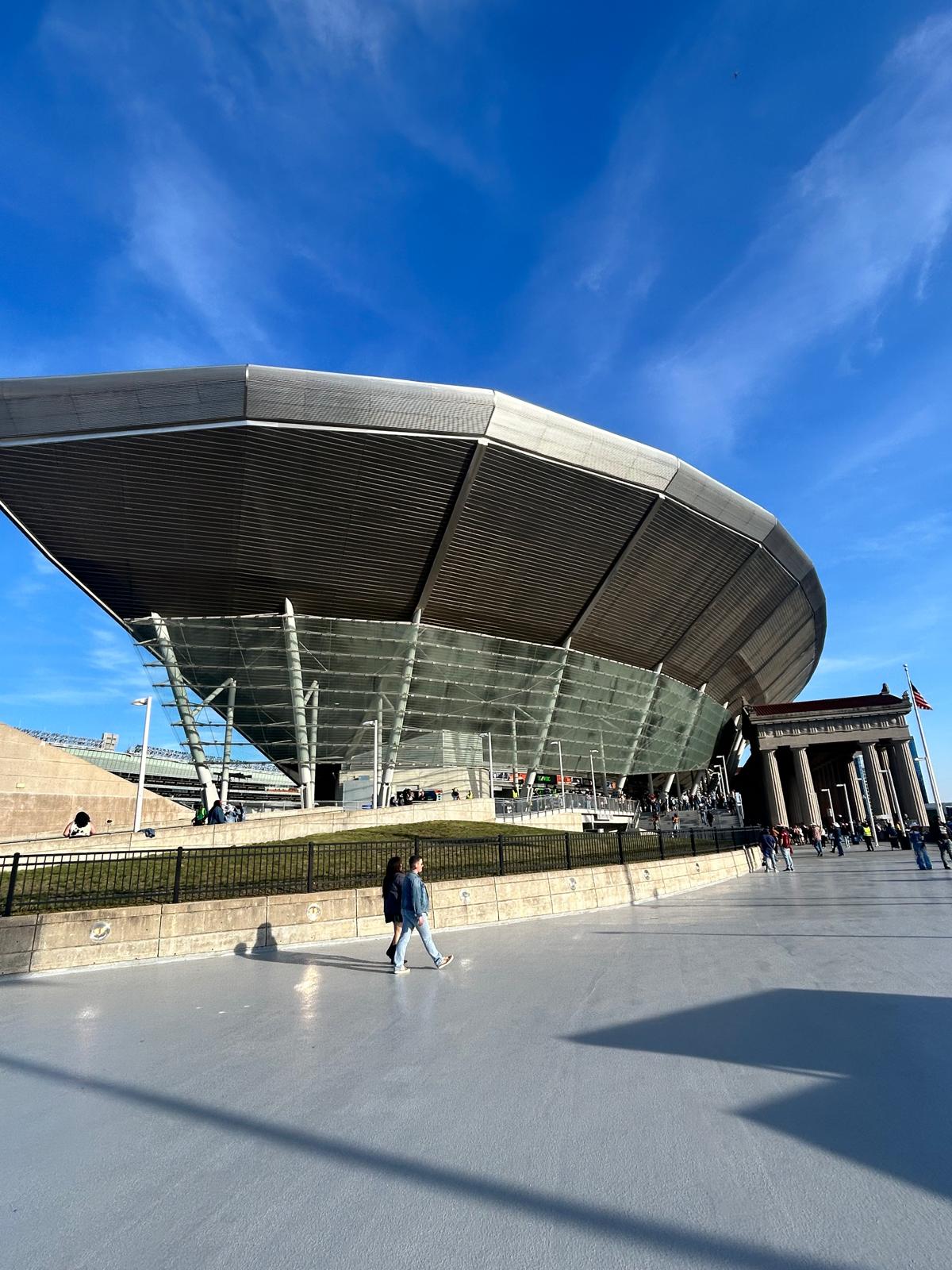
Those two long rows of Doric columns are Soldier Field, or at least the part of it that's original. Everything you can see between and above them arrived seventy-nine years later, and Chicago has never fully forgiven anyone for it.
The stadium opened in nineteen twenty-four under the name Grant Park Municipal Stadium. Holabird and Roche designed it to look like a Greek arena that had wandered north and settled by a lake. Then, on Armistice Day the following year, the city renamed it. Soldier Field is a memorial to the Americans who died in the First World War. The name is the entire purpose of the building, and it's easy to forget while queuing for a beer.
And it was built for crowds that don't exist anymore. With temporary seating, this place could take well over a hundred thousand people. In nineteen twenty-six the Army-Navy game filled it. The following autumn, Notre Dame played the University of Southern California in front of an estimated one hundred and twenty-three thousand, w
hich is a number no American football stadium reaches today.
The biggest night was a fight. On the twenty-second of September, nineteen twenty-seven, one hundred and four thousand, nine hundred and forty-three people paid to watch Jack Dempsey try to take his heavyweight title back from Gene Tunney. The gate was two million, six hundred and fifty-eight thousand dollars — boxing's first two-millio