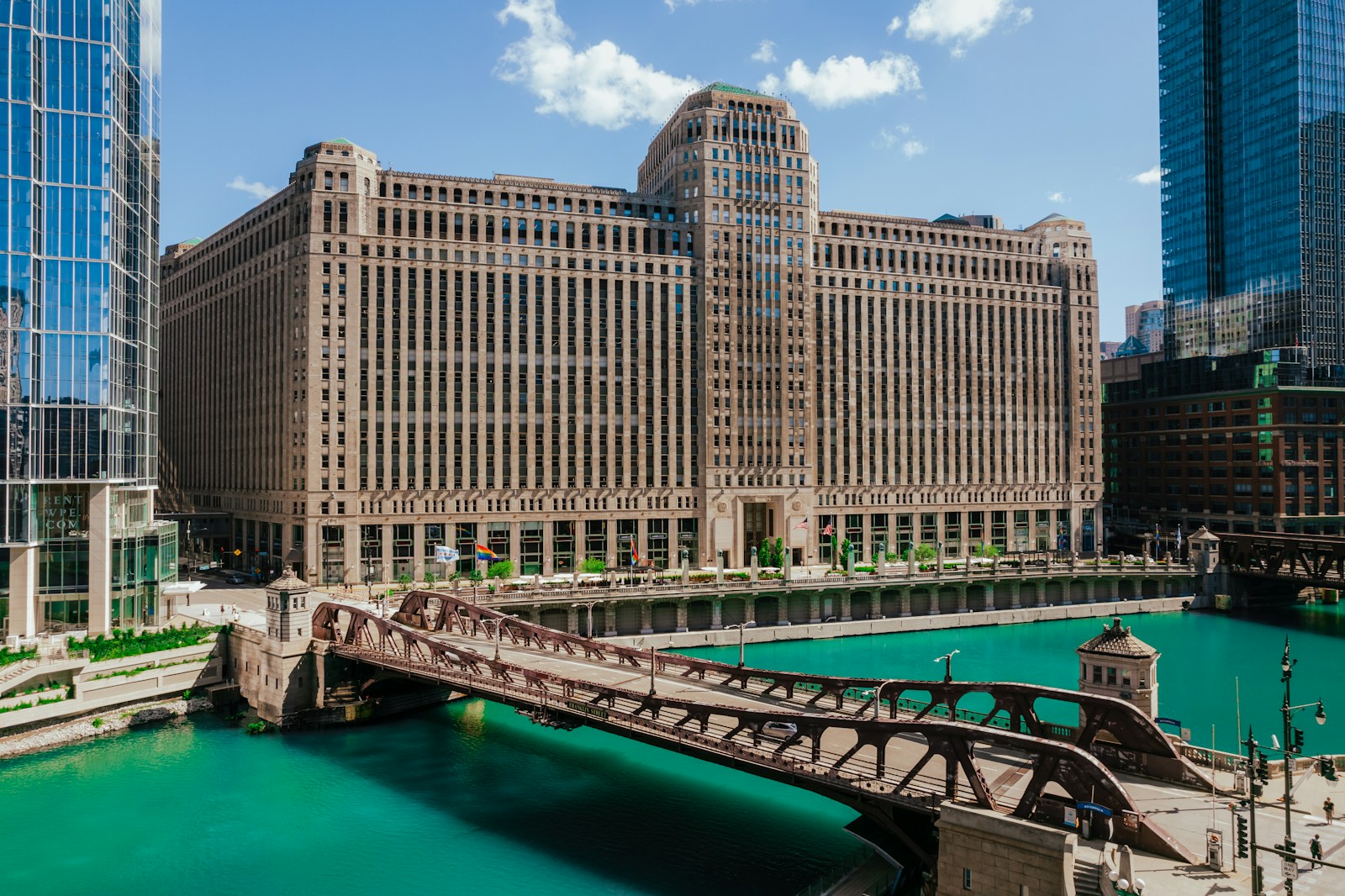
The limestone thing occupying the entire far bank of the river is the Merchandise Mart, and the correct way to understand it is that this is not a building with a footprint. It's a building with a territory. Four million square feet. About ninety acres of floor, stacked twenty-five stories high across two full city blocks. When it opened in nineteen thirty it was the largest building on planet Earth, and it held that title until the Pentagon turned up thirteen years later.
It was so large the Postal Service gave it its own ZIP code, which it kept until two thousand eight. It has its own stop on the elevated train — not a stop nearby, a stop for the building. And it's built straddling a railroad terminal, so freight trains ran underneath the merchandise while the merchandise was being sold above them.
The purpose was wholesale. Marshall Field and Company — the department store, long after the man himself was gone — wanted one place where a store buyer from Denver or Atlanta could come
and see the samples of hundreds of manufacturers without spending a season on trains. So they built a warehouse the size of a district and filled it with showrooms. You went to Chicago, you walked for three days, you ordered a year of inventory, you went home.
They opened it in nineteen thirty. Which, for anyone keeping track of American economic history, is the single worst year of the century