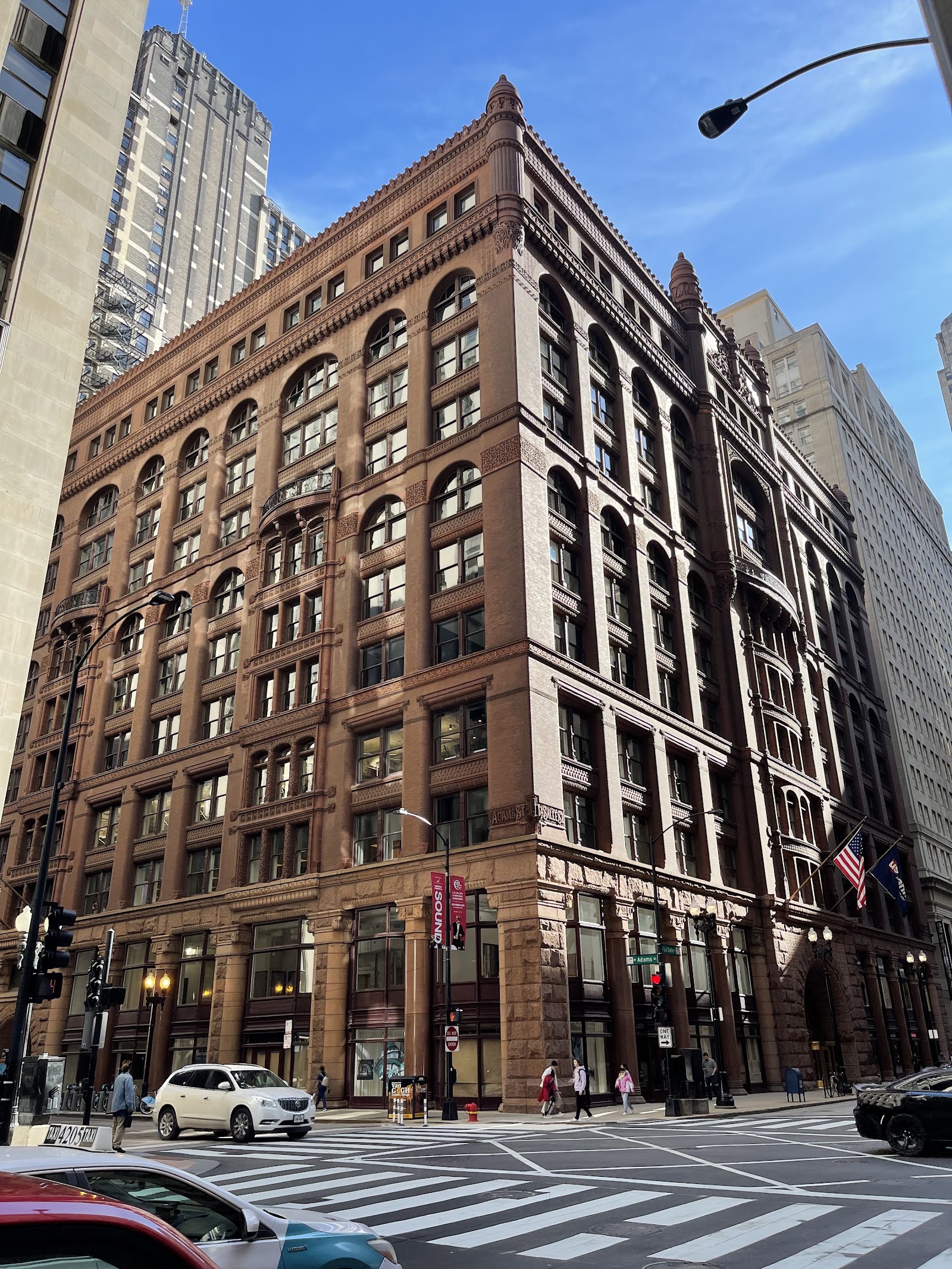
From the sidewalk the Rookery is a fortress. Dark red granite, deep arches, stonework heavy enough to survive a siege by a medium-sized army. And the name carved on a building this serious is the Rookery — which is not grand, and is not Latin, and was originally a slur.
After the Great Fire of eighteen seventy-one, the city put a temporary City Hall on this corner — a cheap emergency shed with a water tank on the roof. Two things immediately colonized it. Pigeons, in genuinely upsetting numbers, roosting all over the tank and the eaves and the window ledges. And politicians, who were operating out of the same building and had a reputation, at the time, for taking money that wasn't theirs. Chicagoans started calling the place the rookery, which was a nineteenth-century word for a slum full of birds and ALSO a word for the place you go to get rooked. The joke landed on both readings, hard, and it stuck for years.
Then Burnham and Root got the commission to build something permanent her
e, and they made a choice I find genuinely great. They kept the insult. They put the name on the front of the finest office building in the city — and then John Root went further and carved rooks into the stone. Look at the entrance arch and you'll find birds worked into the ornament, beaks open, mid-complaint. He built a monument to the city's opinion of its own government and then signed it with