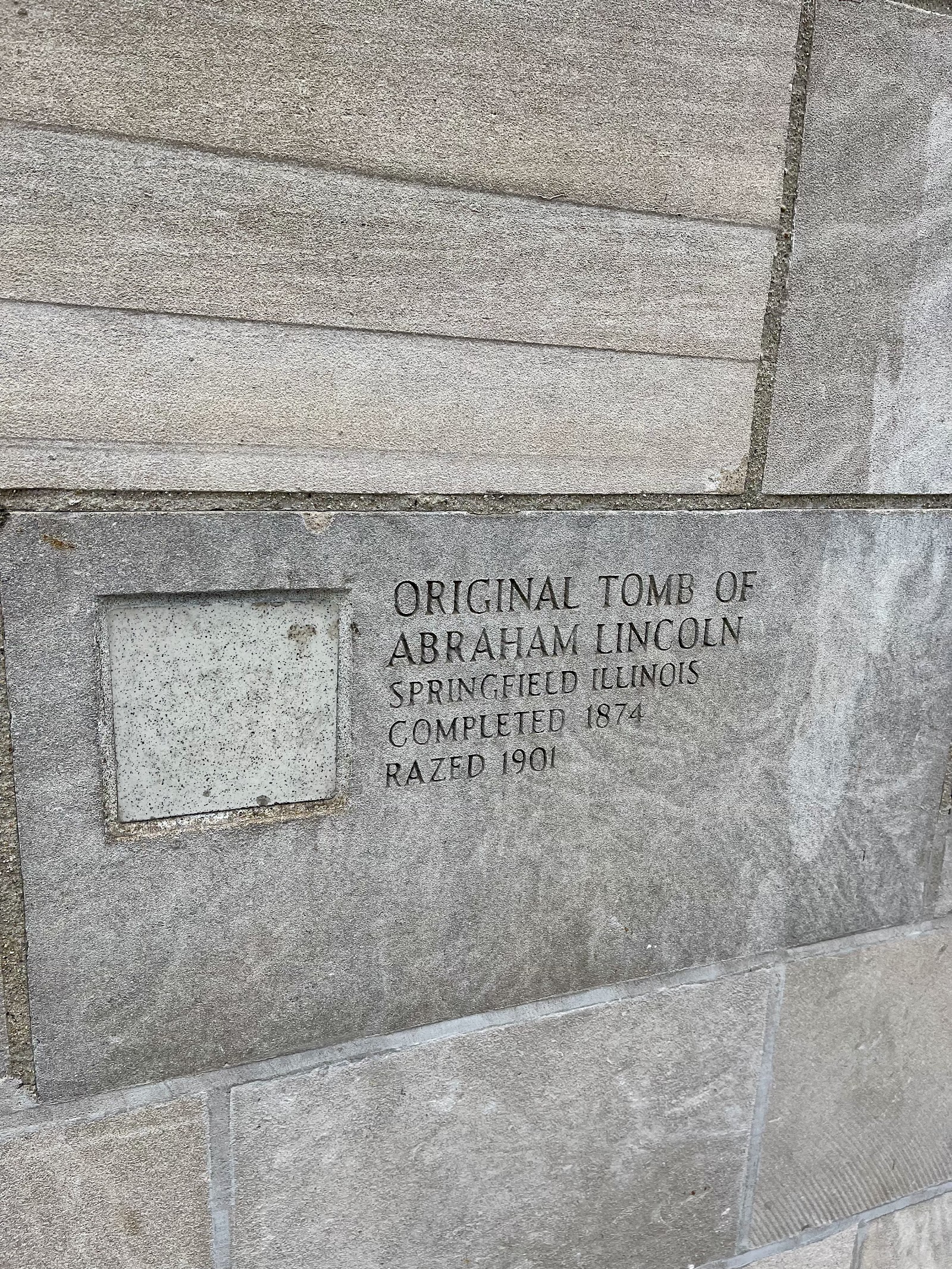
Get close to the base of the pale Gothic tower with the crown of stone spikes on top. Down at hand height, set into the limestone, there are ragged little chunks of rock with labels chiselled under them. That one's the Parthenon. That one's the Great Wall of China. Keep going — the Taj Mahal, the Colosseum, Westminster Abbey, the Alamo, the Berlin Wall. A brick out of Abraham Lincoln's house. A stone from the Custer battlefield.
A hundred and forty-nine of them. This is the Tribune Tower, and the walls are made partly of other people's monuments.
It started with one man's souvenir. In nineteen fifteen, Colonel Robert McCormick, who owned the Chicago Tribune, walked through the town of Ypres in Belgium while German shells were taking the medieval cathedral apart. He picked up a fragment and put it in his bag. Then he did the same at the ruined city hall at Arras.
Years later he built himself a headquarters, remembered the rocks in his desk drawer, and sent an instruction to every Tri
bune correspondent on earth. Bring me pieces. And they did, for decades. Reporters sent to cover famines and coronations and wars came home with chips of the local heritage in their luggage. The foreign desk finally put a rule on it — nothing bigger than a fist, and nothing anybody would notice was gone.
Some of those stones were formally presented by grateful officials. Some of them were not.