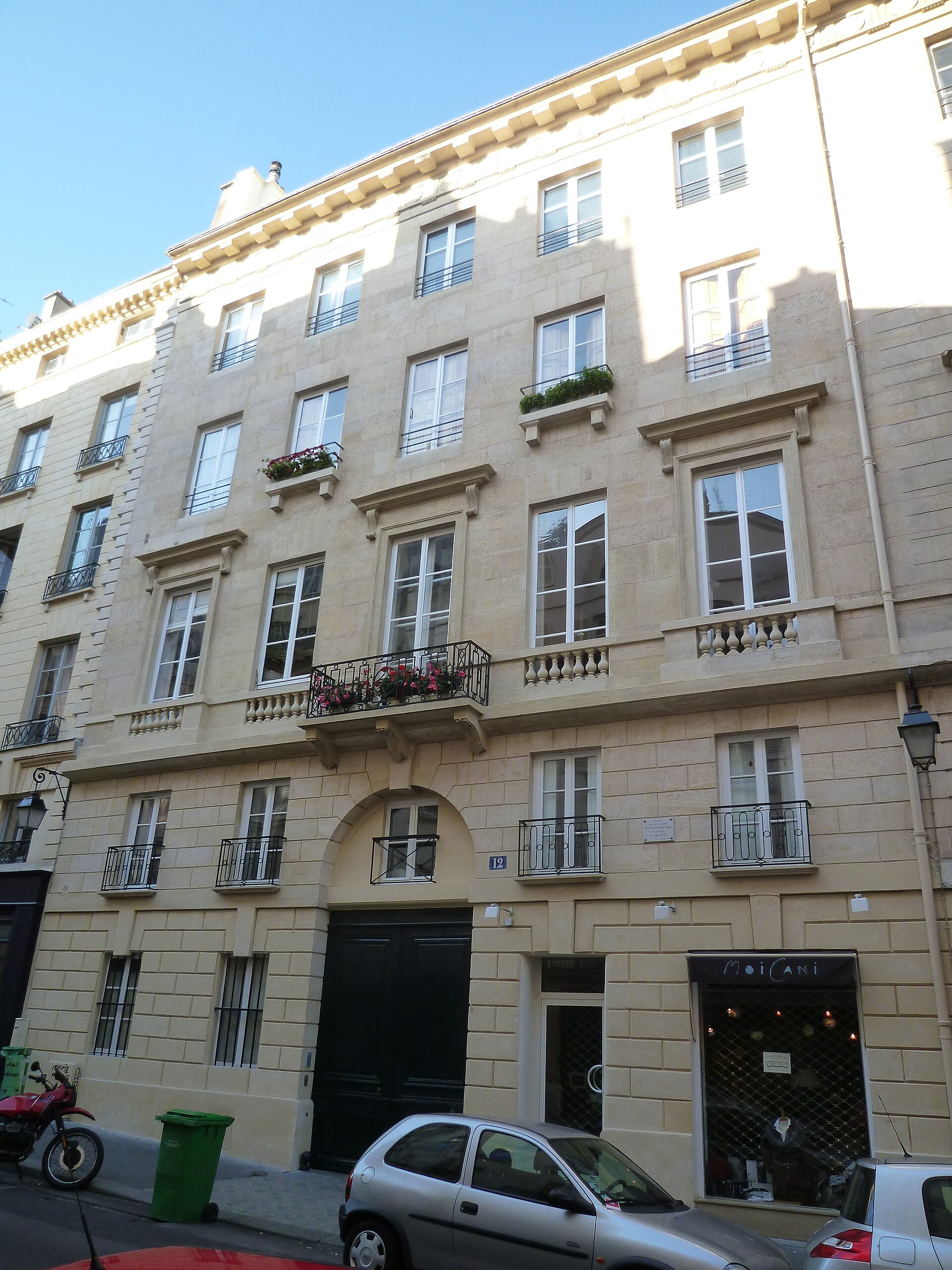
12 Rue de l'Odéon — Sylvia Beach

12 Rue de l'Odéon — Sylvia Beach

Paris, France

Find number twelve, rue de l'Odéon — Oh-day-on. There's no bookstore here anymore. Just a doorway, apartments, and a plaque you'd walk past in a hurry.

Find number twelve, rue de l'Odéon — Oh-day-on. There's no bookstore here anymore. Just a doorway, apartments, and a plaque you'd walk past in a hurry. In nineteen twenty-two, this address published the most important novel of the twentieth century, because nobody else on Earth had the nerve.

The shop was called Shakespeare and Company, and it belonged to Sylvia Beach, an American preacher's daughter from New Jersey. She opened an English-language bookstore here after the First World War, and it became the clubhouse of the Lost Generation. Hemingway borrowed books he couldn't afford. Fitzgerald turned up. Gertrude Stein held forth. Beach ran a bookshop, a lending library, a post office, and an unofficial bank for broke writers, all from one narrow room.

Then James Joyce walked in with a problem. His novel Ulysses had been declared obscene before it was even finished. An American court had convicted the magazine serializing it. British printers refused to set the type. Virginia Woolf

passed. Every established publisher in the English-speaking world looked at the manuscript of the century and said no thank you.

So Sylvia Beach, a bookshop owner with zero publishing experience, asked Joyce a question she later wrote down. Would you let Shakespeare and Company have the honor of bringing out your Ulysses? He said yes on the spot — which tells you exactly how out of options he was
Hear the full story

Hear this story with audio narration in the Bad Historian app.

Get the App

Quick Facts

  • Sylvia Beach, an American preacher's daughter with zero publishing experience, published Ulysses at 12 rue de l'Odéon in 1922 after every established publisher refused it
  • An American court had convicted the magazine serializing Ulysses as obscene; British printers refused to set the type; Virginia Woolf's press declined
  • Joyce added roughly a third of the novel at proof stage and Beach paid for every correction; the cover was mixed to match the exact blue of the Greek flag; she handed him the first copy on February 2, 1922 — his 40th birthday
  • Ulysses was banned and burned in the US and UK but never banned in France; Beach called herself a "booklegger," and a smuggler carried copies from Canada on the Detroit ferry stuffed down his trousers
  • George Bernard Shaw really sent a letter calling the book "a revolting record of a disgusting phase of civilization" and said no Irishman would pay 150 francs for a book
  • Joyce sold the US rights to Random House and Beach saw almost nothing for her ten years of work
  • In 1941, after a German officer demanded her copy of Finnegans Wake and threatened confiscation, Beach and friends carried the entire shop upstairs within hours; she spent six months in an internment camp and the shop never reopened
  • In August 1944 Hemingway personally "liberated" the rue de l'Odéon, dealt with rooftop snipers, then left to liberate the wine cellar at the Ritz — it's in Beach's own memoir
Featured Tour

The Left Bank: Thinkers, Drinkers & Dreamers

9 stops • 37 min

View Tour

Location

Paris, France
Open in Maps

More to explore in Paris