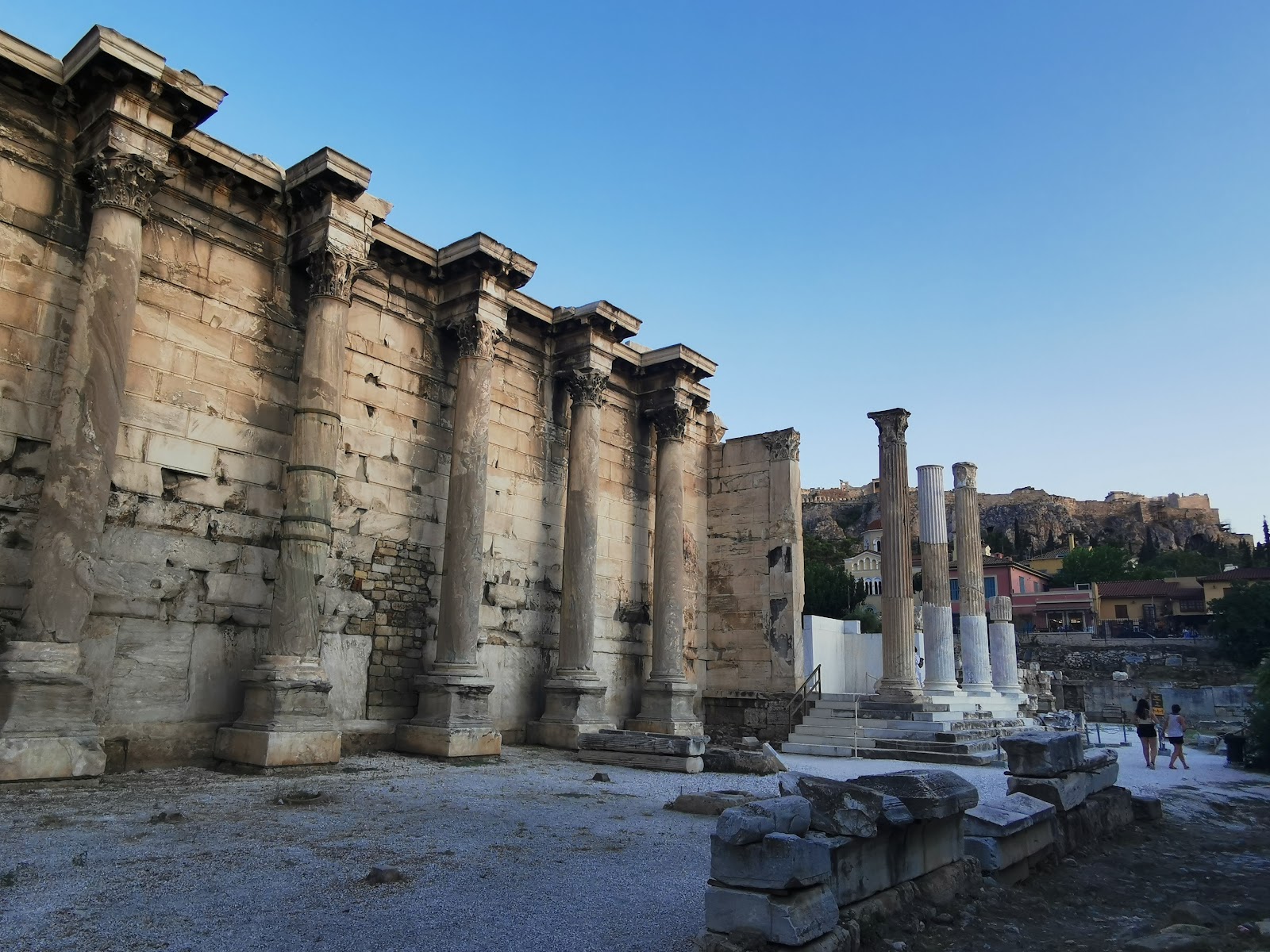
The bare, shiny hump of rock just below the entrance to the Acropolis is the Areopagus, the Hill of Ares, and the stone is a lot slicker than it looks. Twenty-five centuries of feet have buffed the limestone close to glass, which is why there's a metal staircase bolted to the side. At the foot of the rock there's a big bronze plaque covered in Greek lettering. Find it, because the words on it are the last link in a chain that starts with a flock of sheep.
The hill was a courtroom. The oldest court in Athens met up there in the open air, on the bare rock, and it tried murders. Before that, though, according to a story the Athenians loved to tell, this hill was where they cured a plague.
A disease had taken hold of the city and nothing would stop it. The Athenians decided they must have offended a god. The difficulty was that they had a great many gods and no idea which one was upset. So they sent to Crete for a famous holy man named Epimenides.
Epimenides came with a reputation. As a
boy, the story went, his father had sent him out to look after the sheep, and he'd wandered into a cave to get out of the heat, sat down, and fallen asleep. He woke up, went home, and discovered he'd been gone for fifty-seven years. People took this as a sign that he'd spent the time with the gods, and they treated him as a prophet from then on.
His answer to the plague was more sheep. He had a