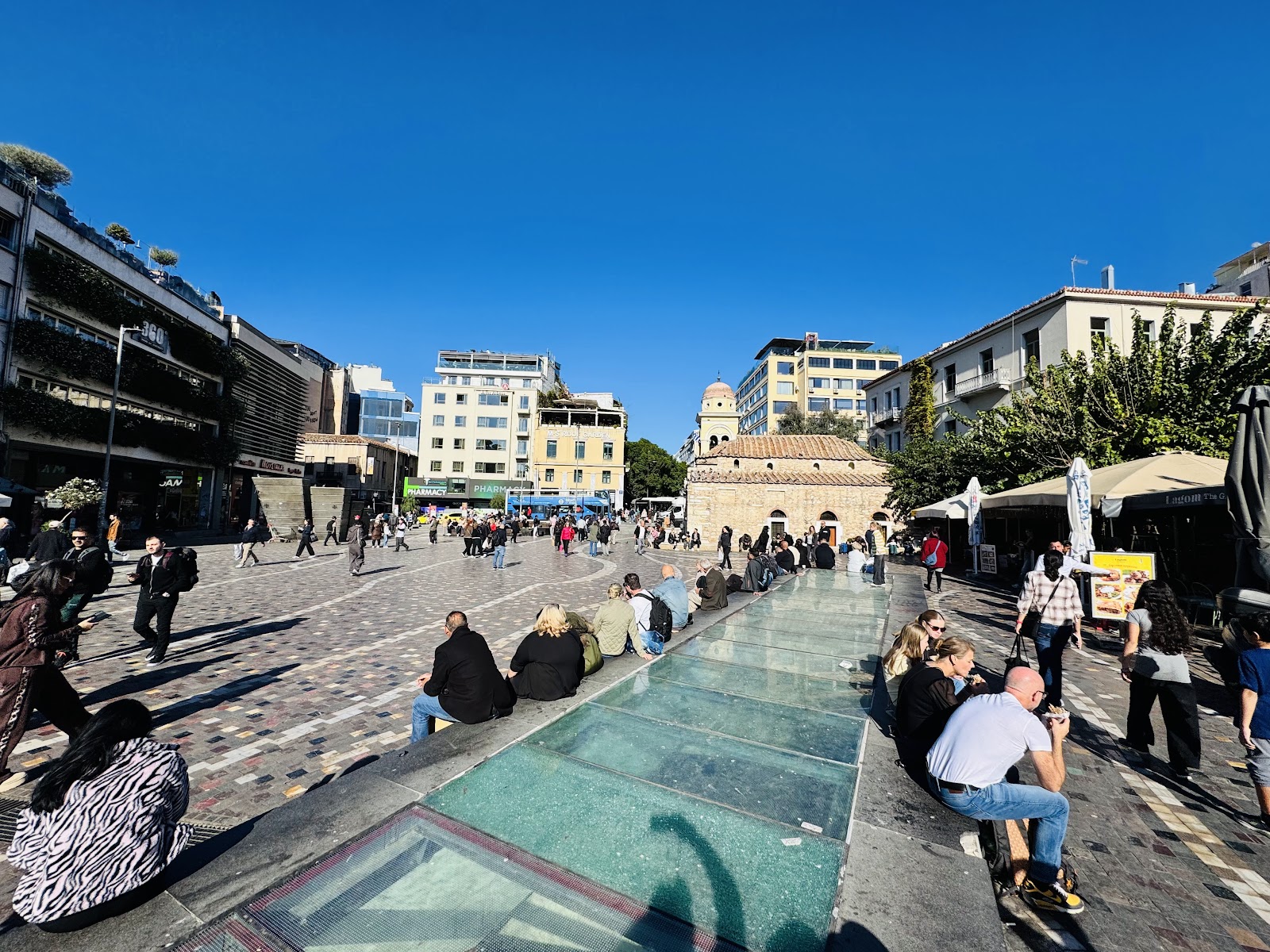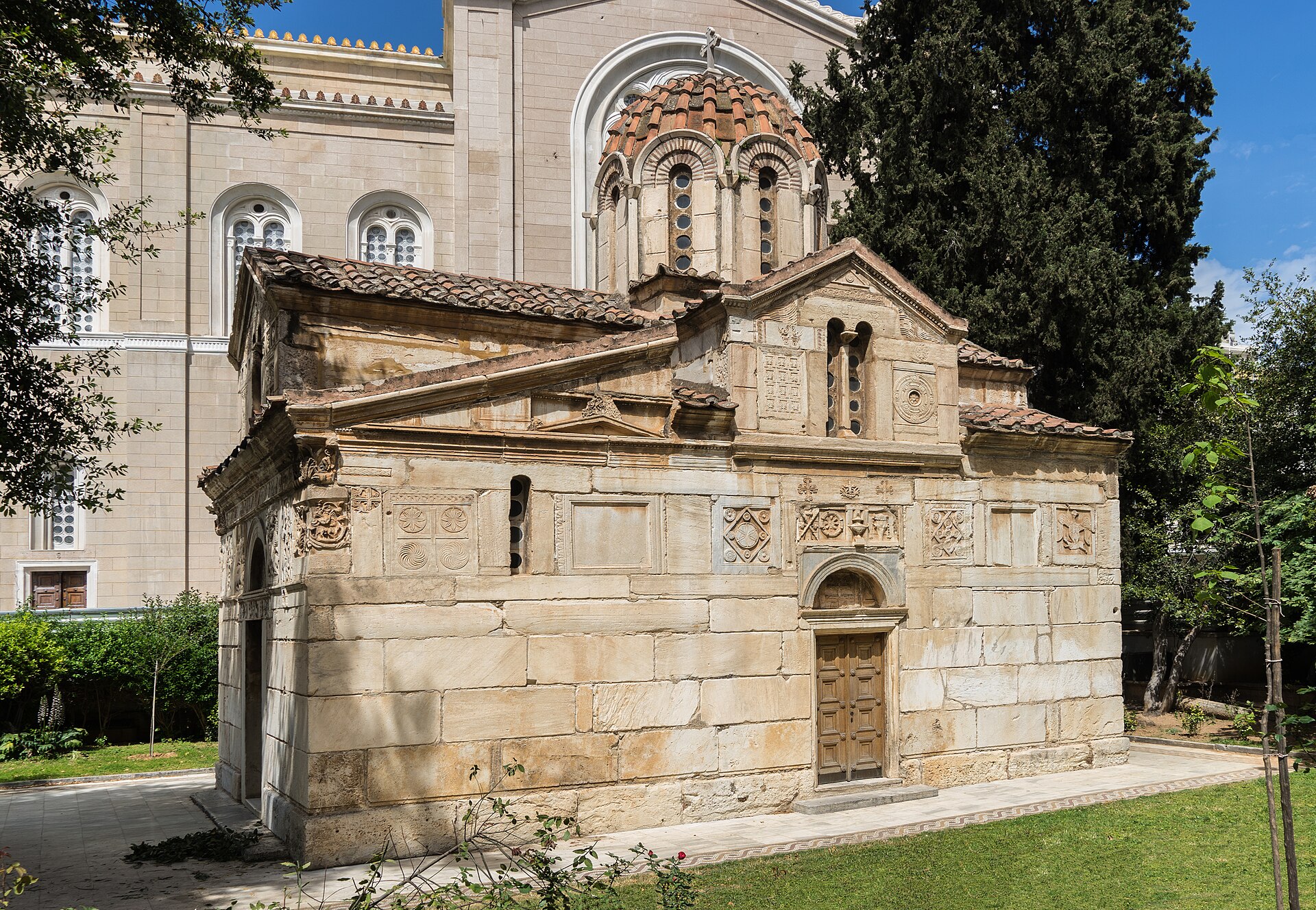
There are two churches in front of you, and you want the small one. The big pale cathedral is the Metropolis, the main cathedral of Athens. The little stone church crouching beside it is the Little Metropolis, and if you get close you'll see that its walls are covered in carvings that don't match. Lions, eagles, crosses, wreaths, a sphinx, panels lifted off Roman tombs. Not one of them was carved for this church.
Byzantine builders put it up out of salvage, sometime around the twelfth or thirteenth century. Nobody agrees exactly when, because every stone in the wall is older than the wall. They went around Athens collecting carved marble from ruined temples and abandoned buildings, about ninety pieces in all, and set them into the walls like tiles. The result is a church only about forty feet long that holds something like two thousand years of other people's decorating.
The church has a name that's better than its nickname. Officially it's the Panagia Gorgoepikoos, the Virgin Who An
swers Quickly, which is a lovely thing to call a church built entirely from secondhand parts. And for a few decades in the eighteen hundreds it wasn't a church at all. The new Greek state used it as a public library before handing it back to the priests.
The best piece is the long strip of carving running above the main door. It's a calendar. Ancient Athenians carved it to show the months of thei