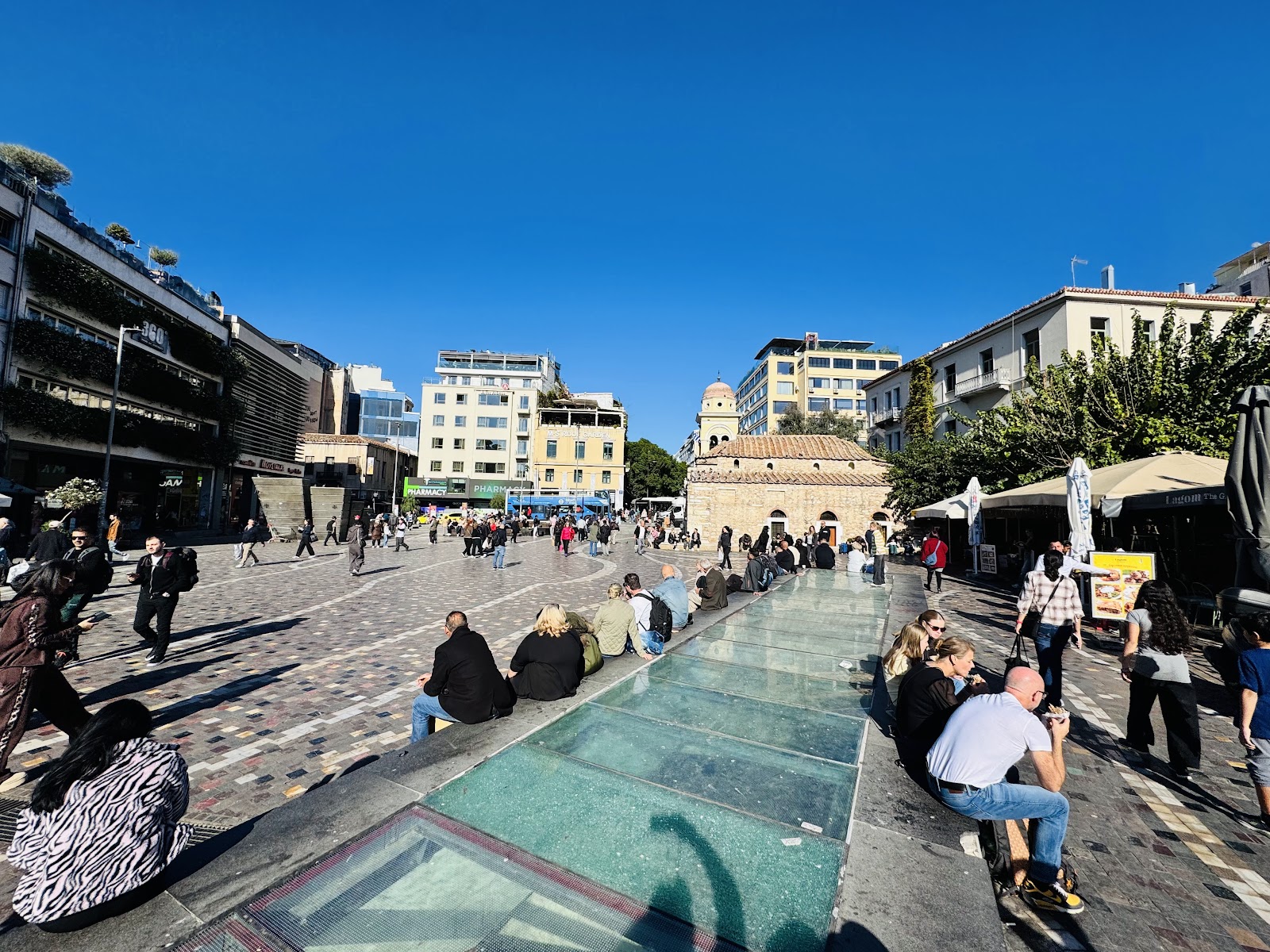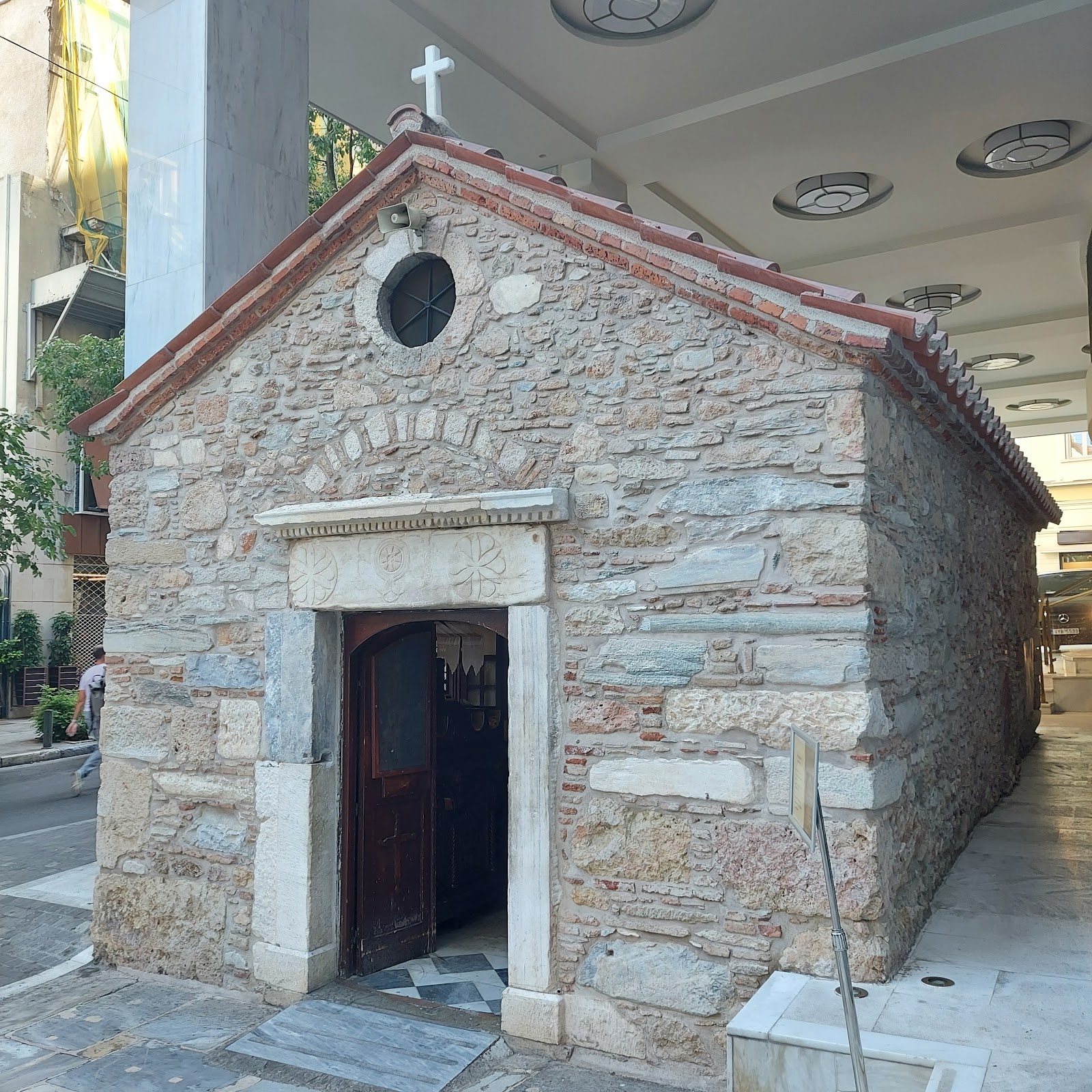
This is the church of Agia Dynami, and it's easy to walk straight past, because there's a hotel standing on top of it. Find the little domed chapel tucked under the overhang, between two big square pillars. The whole building above is resting on those pillars. The church sits in the gap underneath, like a parcel somebody left on a doorstep and then built a house around.
It dates from the sixteenth century, it's about the size of a large living room, and it's still a working church, with icons and candles and a priest. The building above it went up in the middle of the twentieth century as the Ministry of Education and Religious Affairs, which was the government department responsible for, among other things, old churches. The engineers weren't allowed to move this one, so they stood the ministry on legs and built over it. The ministry has since become a hotel. The church stayed put.
Agia Dynami means Holy Power, and for centuries women came here to pray for strength before giving bir
th. But the story Athenians love to tell about this chapel involves a different kind of power.
In the last years of Ottoman rule, before the Greek war of independence, the chapel stood beside a workshop that made gunpowder and bullets for the Ottoman garrison. The man who ran it was a Greek named Pavlis Alexiou, known around town as Mastropavlis, Master Pavlis. By day he made ammunition for the s