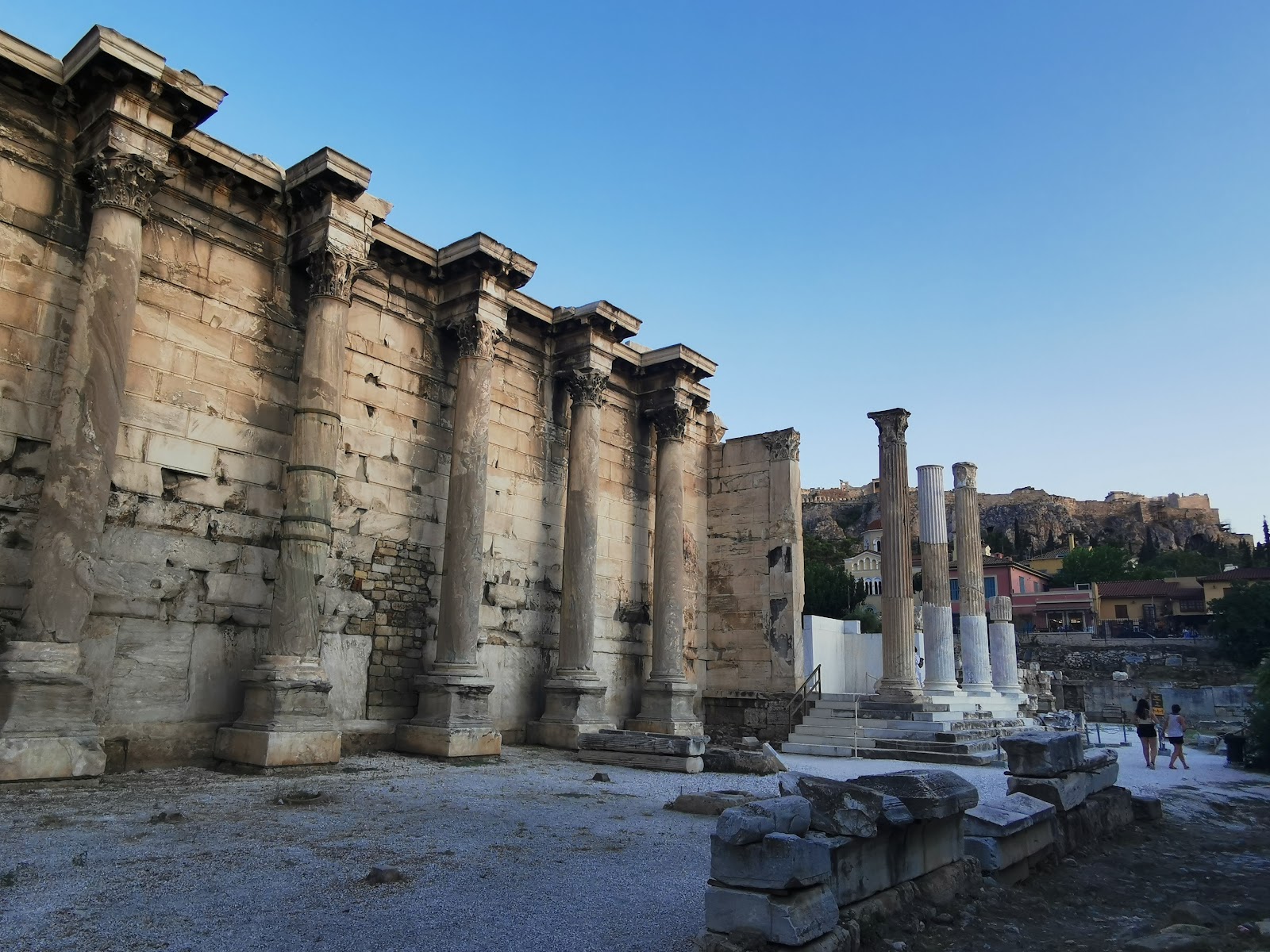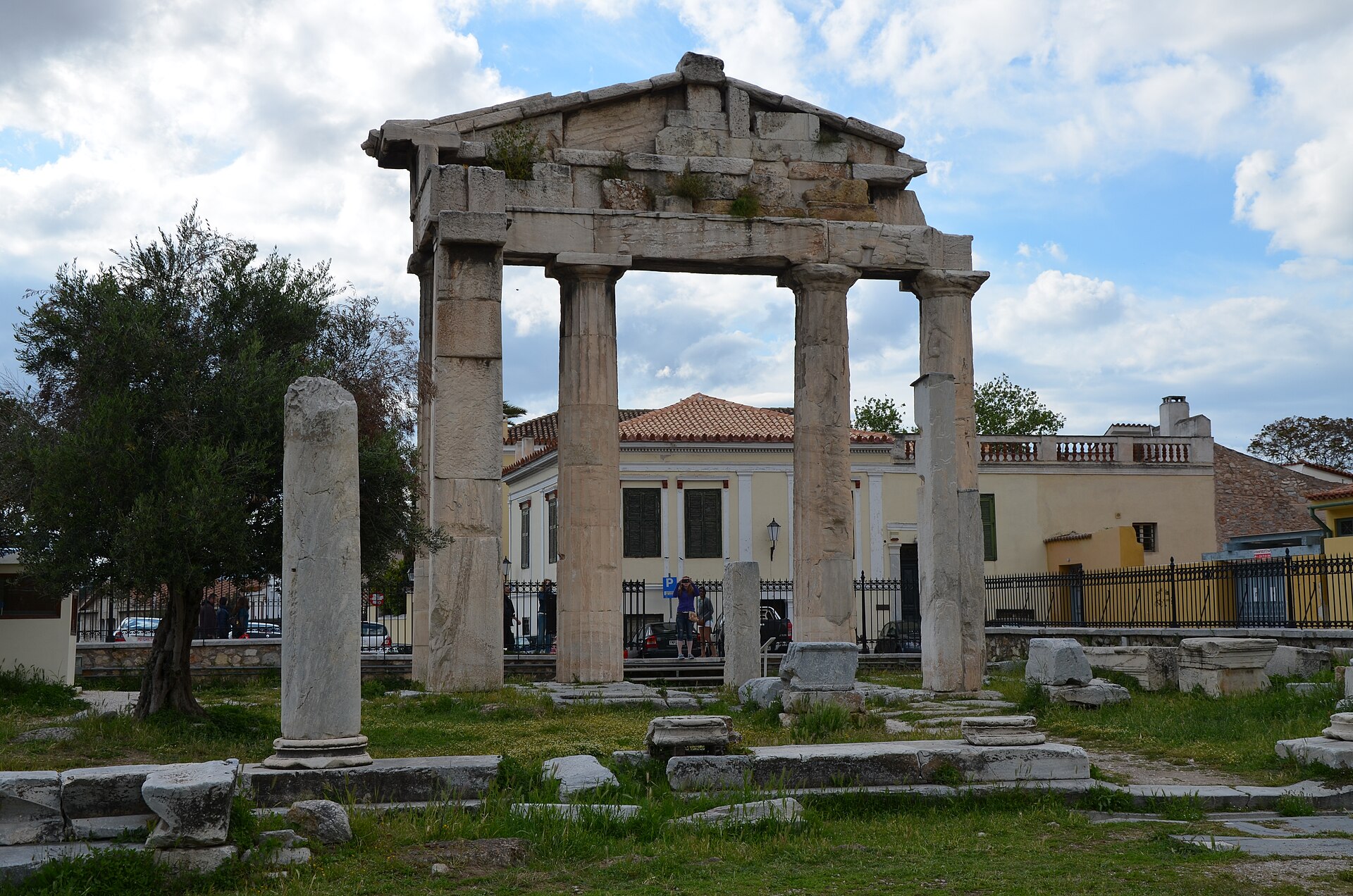
Four thick marble columns holding up a plain triangular roof, with a fenced field of ruins behind them: that's the Gate of Athena Archegetis, the front door of the Roman market of Athens. Rome paid for it around the time of the emperor Augustus. The old Greek marketplace over the hill had filled up with so many temples and monuments that the shopping had to move here. Look at the tall stone blocks framing the doorway. One of them is covered in small, dense lettering, and it's a tax law about olive oil.
The emperor Hadrian had it carved there at head height, on the doorway every trader had to walk through, about a hundred and thirty years after the gate went up. It opens, grandly, with the words: a chapter of the law of the most divine Hadrian. And Athens had actually asked him for it. Athenian farmers kept selling their olive oil abroad, where it fetched a better price, and the city kept running short of its own oil.
The law is extremely clear. Before you exported a drop, you had to
sell a third of your harvest to the city's official olive buyers. You had to register your harvest with the authorities, in two copies, and take one copy home. Merchants had to write down what they shipped and who they'd bought it from. If you lied, your oil was confiscated. If you sailed off without registering, you could be prosecuted back in your own city.
And if somebody turned you in, the in