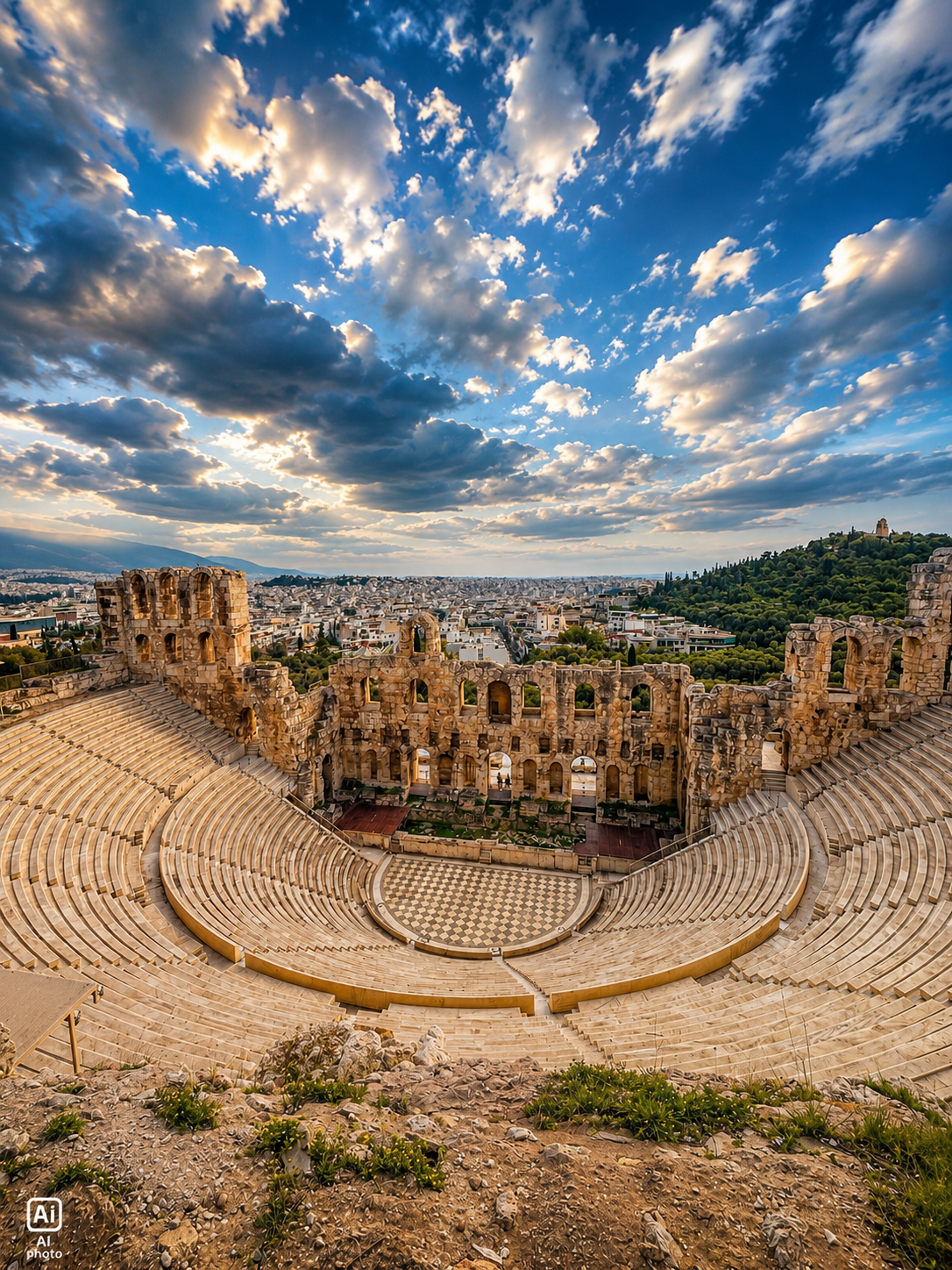
The huge curved stone wall with rows of tall arched windows, built into the slope of the Acropolis, is the Odeon of Herodes Atticus, a Roman theater nearly nineteen hundred years old. It still works. After its stone seats were restored in the nineteen fifties, the Athens Festival moved in, and it has staged opera, ballet and concerts here most years since. Its performers have included Maria Callas and Frank Sinatra. It's one of the most beautiful places in the world to hear music.
It was built as a memorial, and the story behind it is not a happy one.
Herodes Atticus was the richest man in the Greek world in the second century A.D., and the family fortune started with a stroke of luck. His father bought a house in Athens, just down this slope near the old theater, and found a hidden treasure in it. He was so nervous about it that he wrote to the Roman emperor to ask what he should do with the money, and the emperor told him to keep it and use it. The son used it spectacularly. Herode
s paid for public buildings all over Greece. He rebuilt the old Panathenaic Stadium across town in gleaming marble. He was a famous speaker, a celebrated teacher, and a friend of emperors. He married a Roman aristocrat named Regilla, from one of the grandest families in Rome, and they had six children.
In the year one sixty, Regilla, eight months pregnant, died after one of Herodes's freedmen kic