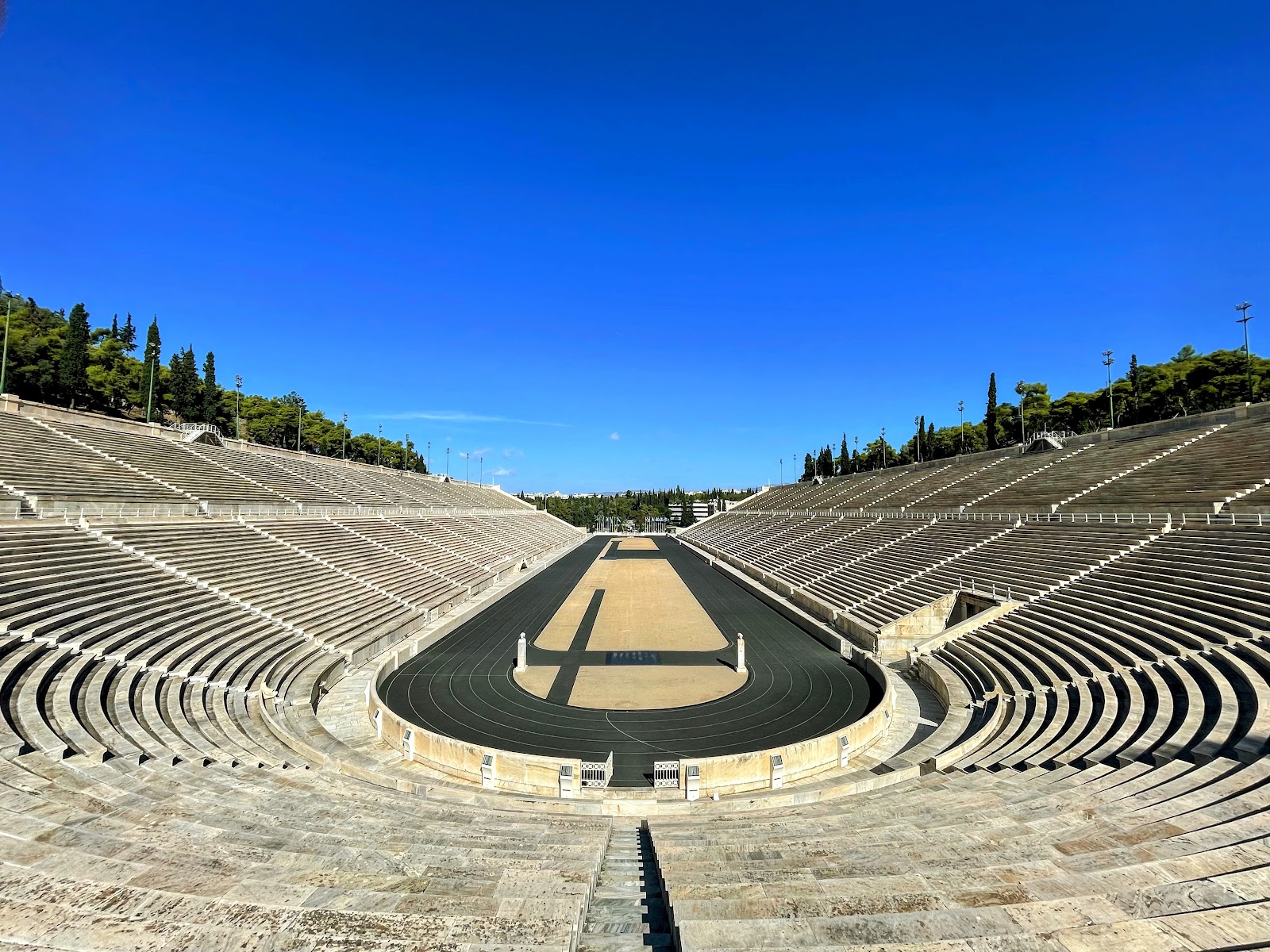
This is the Panathenaic Stadium, and every part of it is marble: the seats, the steps, the whole long bowl. It's the only stadium in the world built entirely that way. Look at the shape, too. It's a long, skinny horseshoe with a hairpin turn at the closed end, the old ancient racetrack layout, and the runners at the first modern Olympics, in eighteen ninety-six, hated those corners.
There's been a stadium in this fold of ground since the fourth century B.C. The Romans rebuilt it in marble. Later generations quarried the marble back out and left the hollow to fill with dirt, until it was just a field with a dip in it. For the first modern Olympics, Athens dug it out again, and a rich Greek merchant paid to cover it in fresh marble from the same mountain as the Parthenon. The Athens Marathon still finishes here every year, on the marble, and the reason is one man.
The marathon was not an ancient event. Nobody ran one in the ancient Olympics. A French scholar named Michel Bréal had read
the old story of a messenger running from the battlefield at Marathon all the way to Athens with news of the victory. He suggested they recreate the run, about twenty-five miles from the town of Marathon to this stadium. The Greeks loved the idea. They also badly needed to win it, because by the last days of the Games, Greece had not won a single track event. Americans had won most of them.
Seve