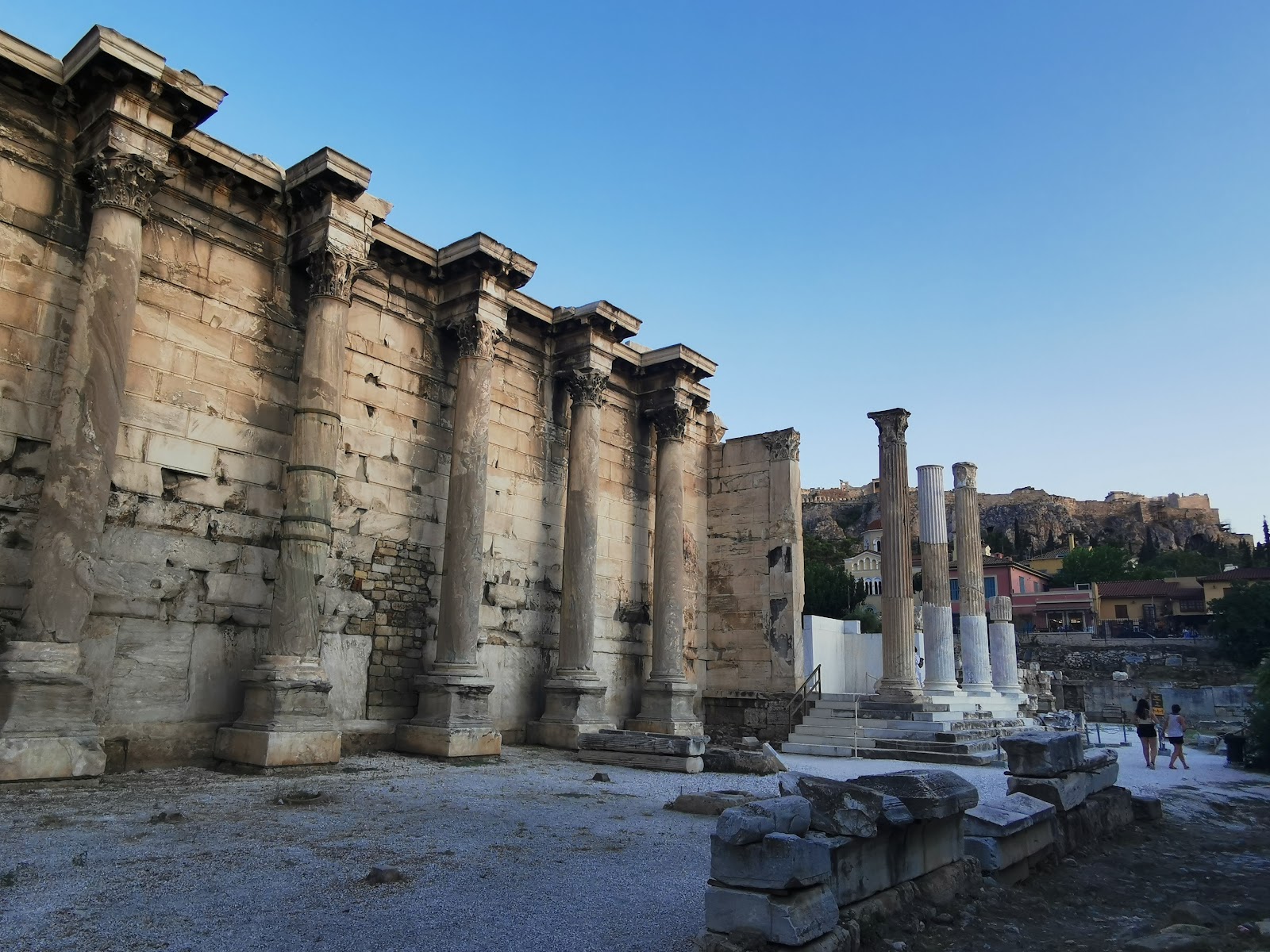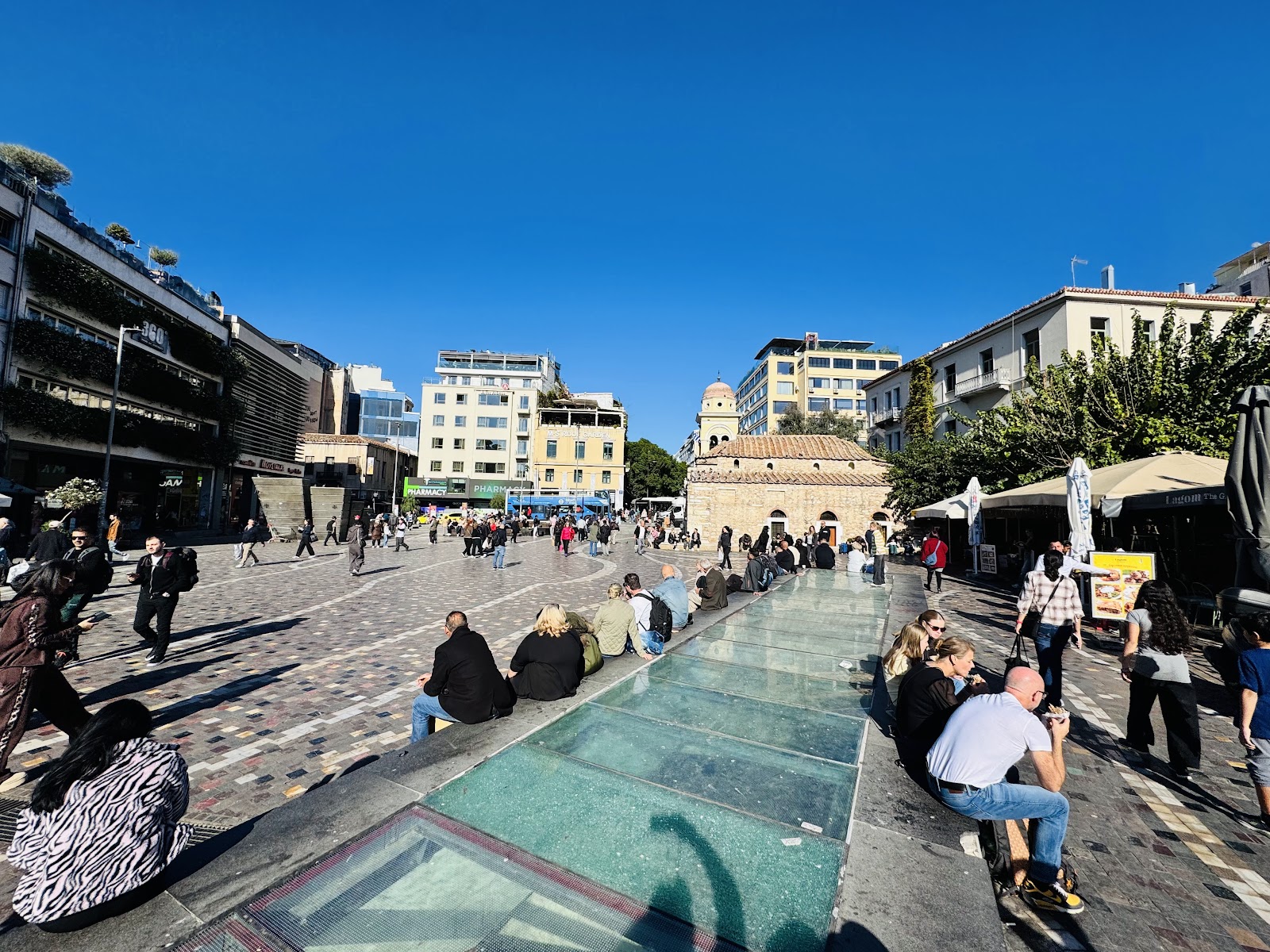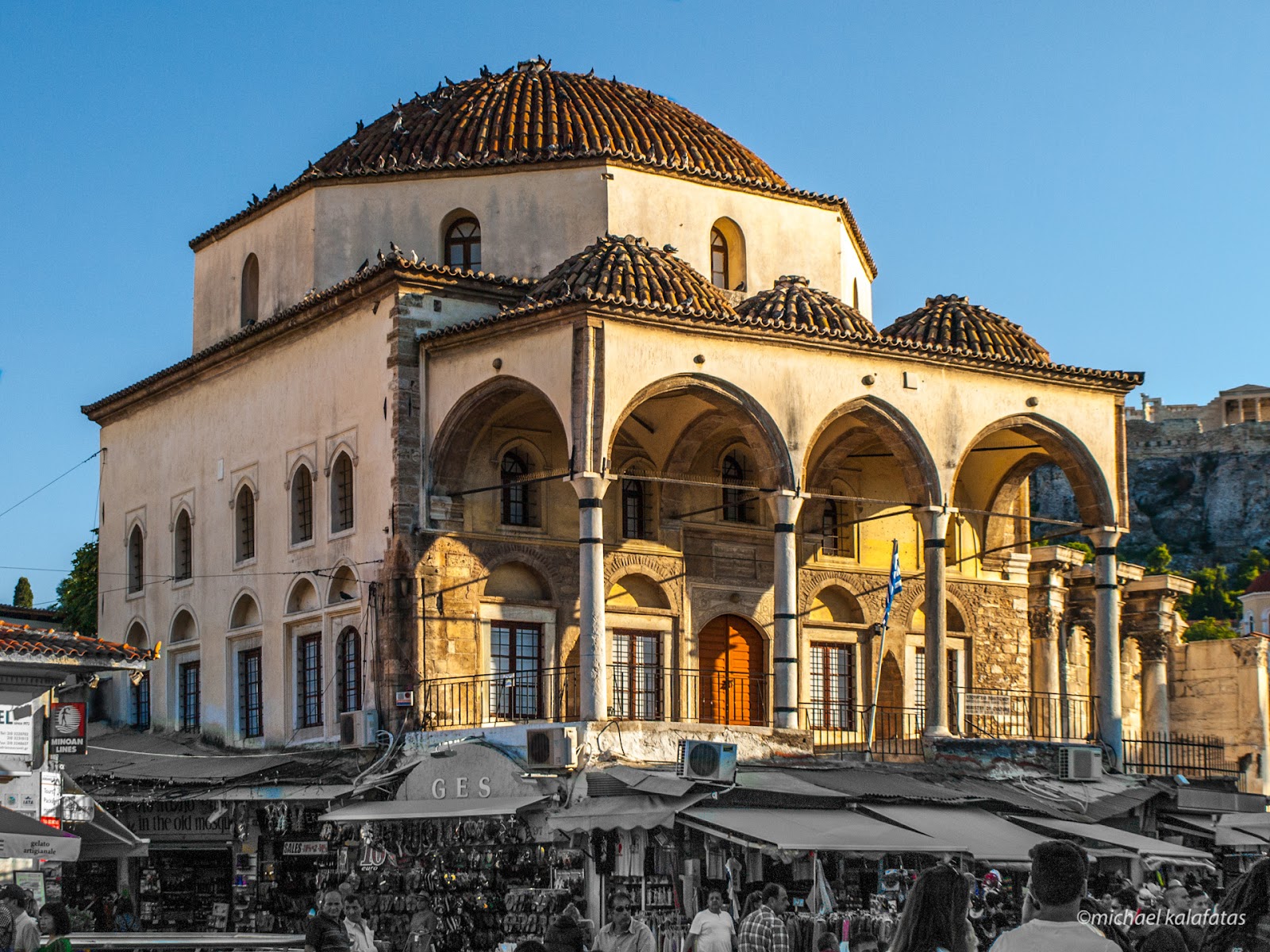
On the corner of Monastiraki Square, the low building with the arched porch and the small dome is a mosque, built by the Ottoman governor of Athens in seventeen fifty-nine. Right beside it, running along the street, is a tall wall of gray stone with a row of columns standing in front of it. That's the outside of Hadrian's Library, built by the Roman emperor more than sixteen centuries earlier. Look along that row of columns and notice the gaps in it.
The governor was Mustafa Agha Tzistarakis, and he wanted his mosque finished properly. Finishing it properly meant lime, the white plaster that coats the walls and holds the stones together. You make lime by burning limestone in a kiln until it crumbles to powder, and the best limestone in the world is marble. Athens had marble lying all over the place, already quarried and cut and polished, in its ruins. For centuries people had been feeding it into lime kilns without much thought.
Tzistarakis did it with gunpowder. He had an ancient co
lumn packed with explosive and blown apart, then carted the pieces off to be burned for the plaster on his mosque.
The tradition in Athens says it was one of the giant columns from the Temple of Olympian Zeus across town. Most scholars think he took it from somewhere a great deal more convenient, like the library next door, with its row of columns that's missing a few. Either way, a column that h