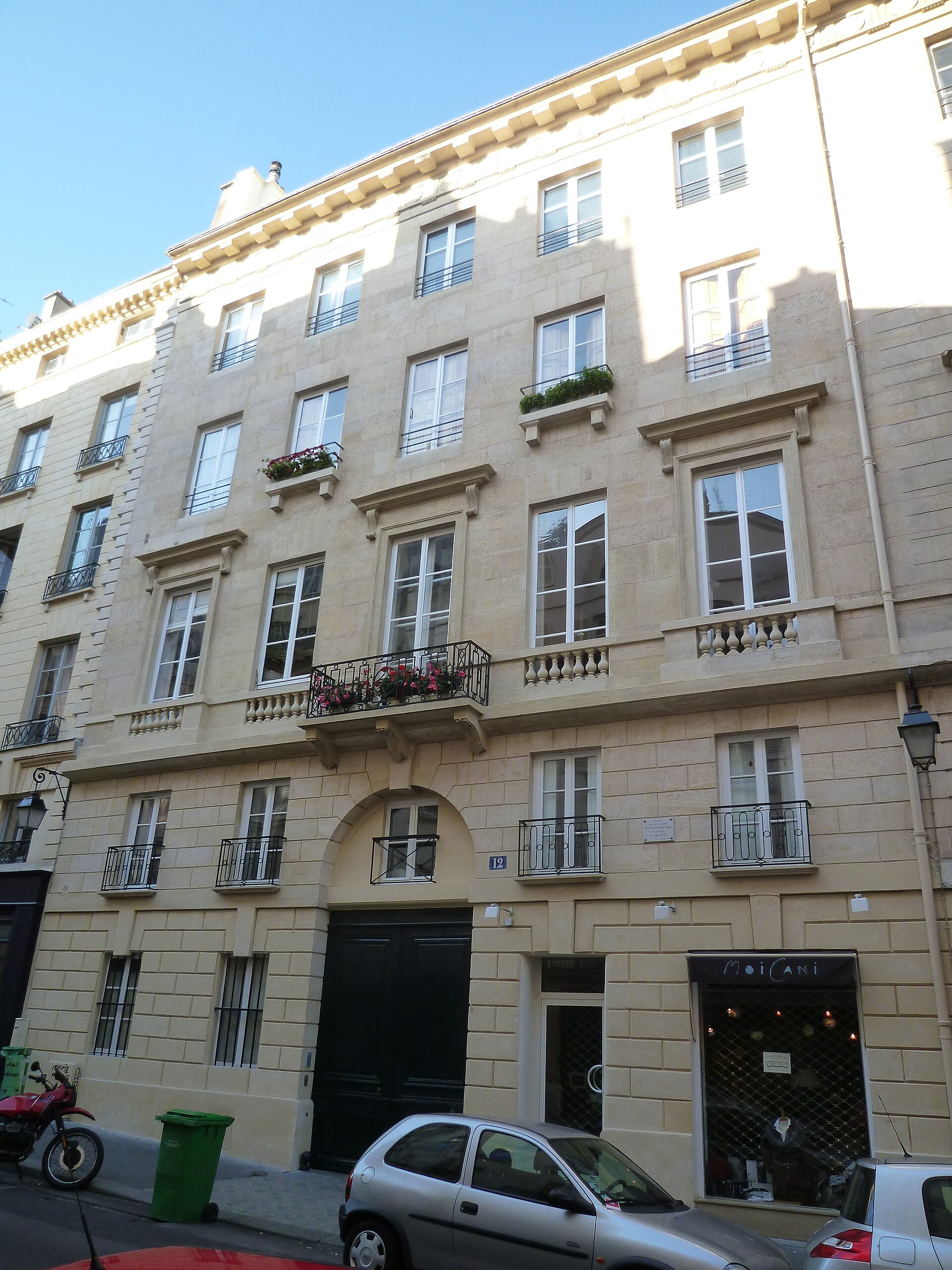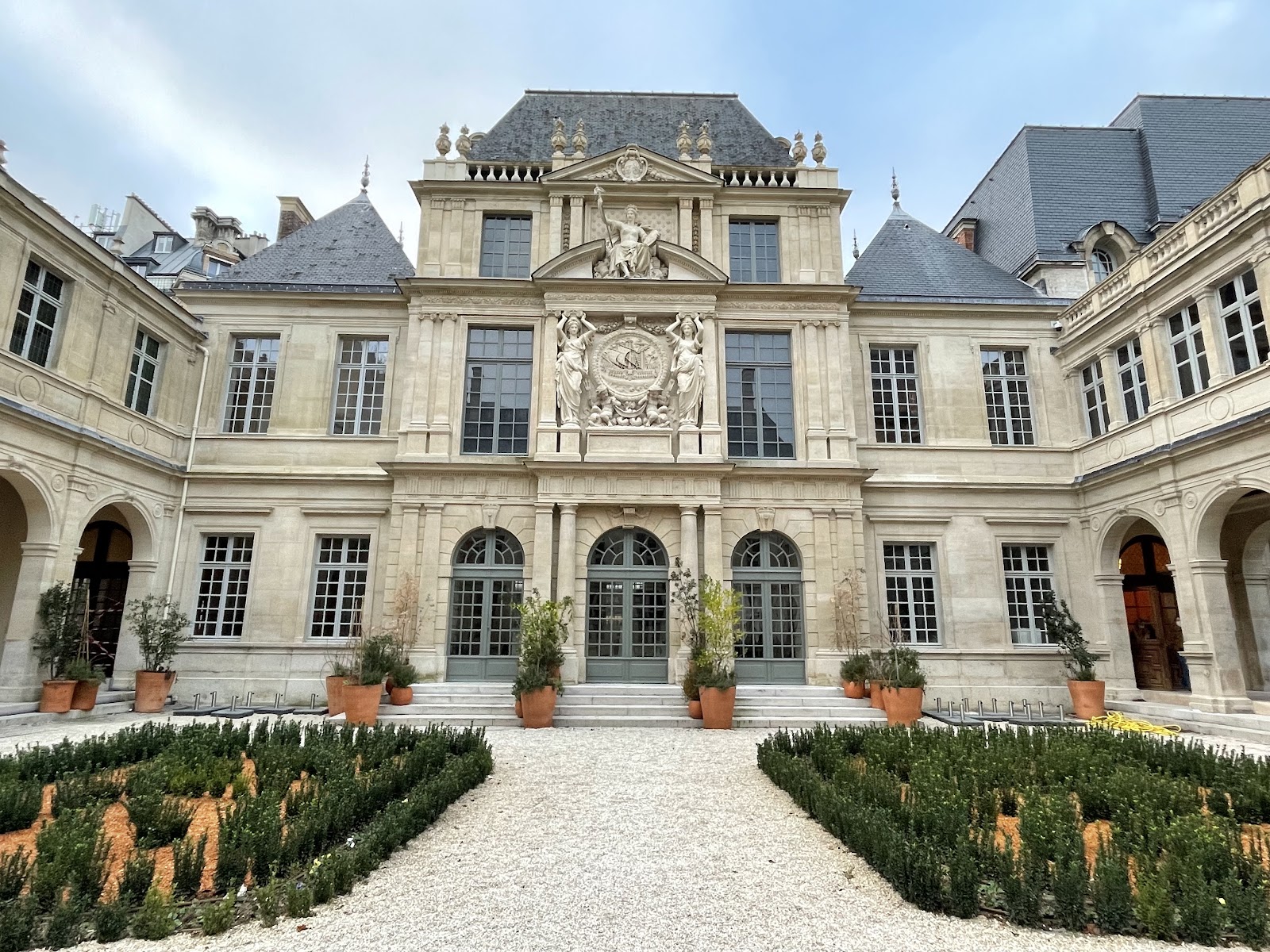
Behind that gate is the Carnavalet — two Renaissance mansions stitched together, holding the museum of the history of Paris. The city keeps its own attic here. More than half a million objects, and the permanent collection is completely free, because Paris decided its memory shouldn't cost anything. Other cities should take notes.
The mansion's most famous tenant was Madame de Sevigne, who lived here for the last nineteen years of her life, in the sixteen hundreds. Her daughter moved to Provence, and Sevigne responded by writing her letters for twenty-five years. Over a thousand survive. They're the best eyewitness record of the court of Louis the Fourteenth — the scandals, the poisonings, who wore what, who ruined themselves at cards. She once opened a letter to a cousin like this. I am going to tell you the most astonishing thing, the most surprising, the most marvelous, the most miraculous. Then she kept piling on superlatives for most of a page before revealing the news. She made
him GUESS. Three centuries before the internet, a woman perfected the sentence you-won't-believe-what-happened-next. Her lacquered writing desk is upstairs. Treat it with respect. It's a founding artifact of clickbait.
The museum's whole logic is like that — history through objects that shouldn't have survived. Napoleon's traveling case. Revolutionary china celebrating the fall of the Bastille, f