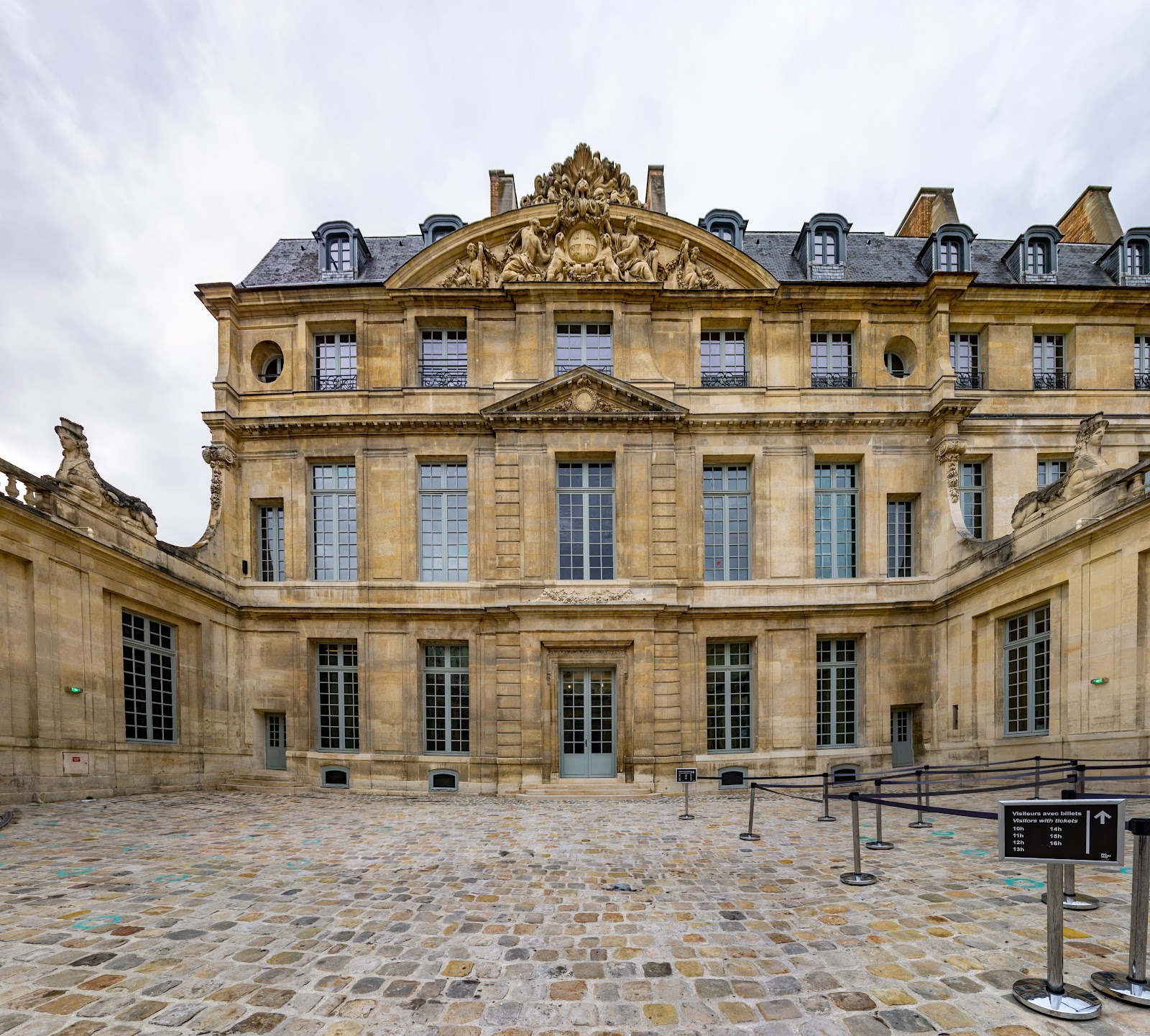
The tall slate roofs and carved gate ahead belong to the Hotel Sale. The name means the Salted Mansion, and it was an insult. In the sixteen fifties, a contractor named Pierre Aubert won the job of collecting the salt tax. France taxed salt so brutally that smuggling it was a full-time career. Collectors were private businessmen who kept a cut, and Aubert kept considerably more than his cut. He skimmed a fortune and poured it into the biggest, showiest mansion in the neighborhood. His neighbors watched it go up and named it after exactly where the money came from. Salted. The nickname stuck so hard it's on the museum tickets today.
Aubert got about four years to enjoy it. His patron fell from power, the auditors arrived, and by sixteen sixty-three he was ruined and the mansion was seized. Hold that thought — a tax man builds the house, the tax man loses the house. The house isn't finished with taxes.
Jump forward three hundred years. In April nineteen seventy-three, Pablo Picasso die
d at ninety-one, and he left no will. What he did leave was roughly forty-five thousand works of art. Paintings, sculptures, sketchbooks, ceramics, filling houses and chateaux across the south of France. Because along with being the most famous artist alive, Picasso was a pack rat of the highest order. He sold what he felt like selling and kept the rest. He kept the paintings other artists gave hi