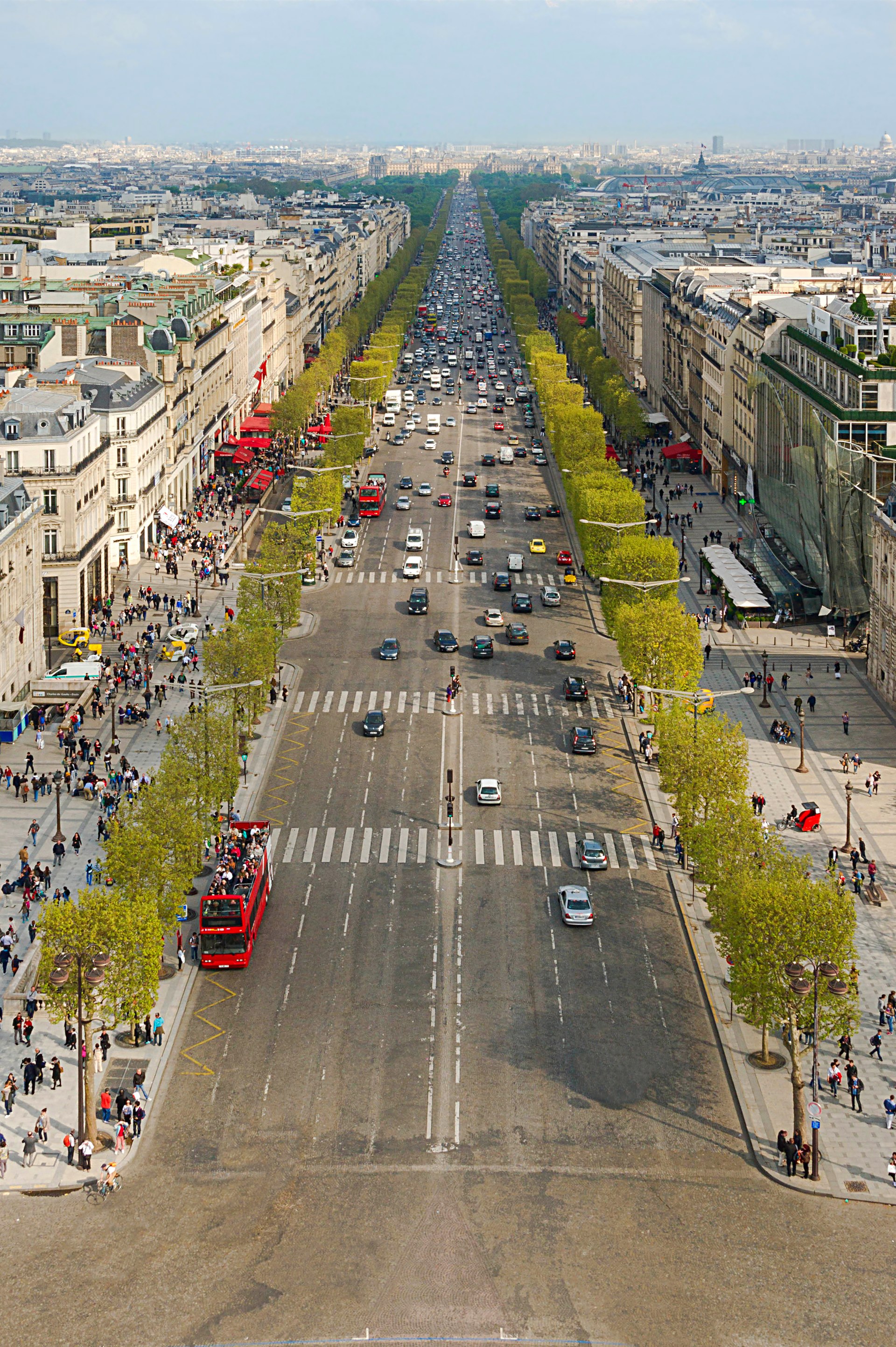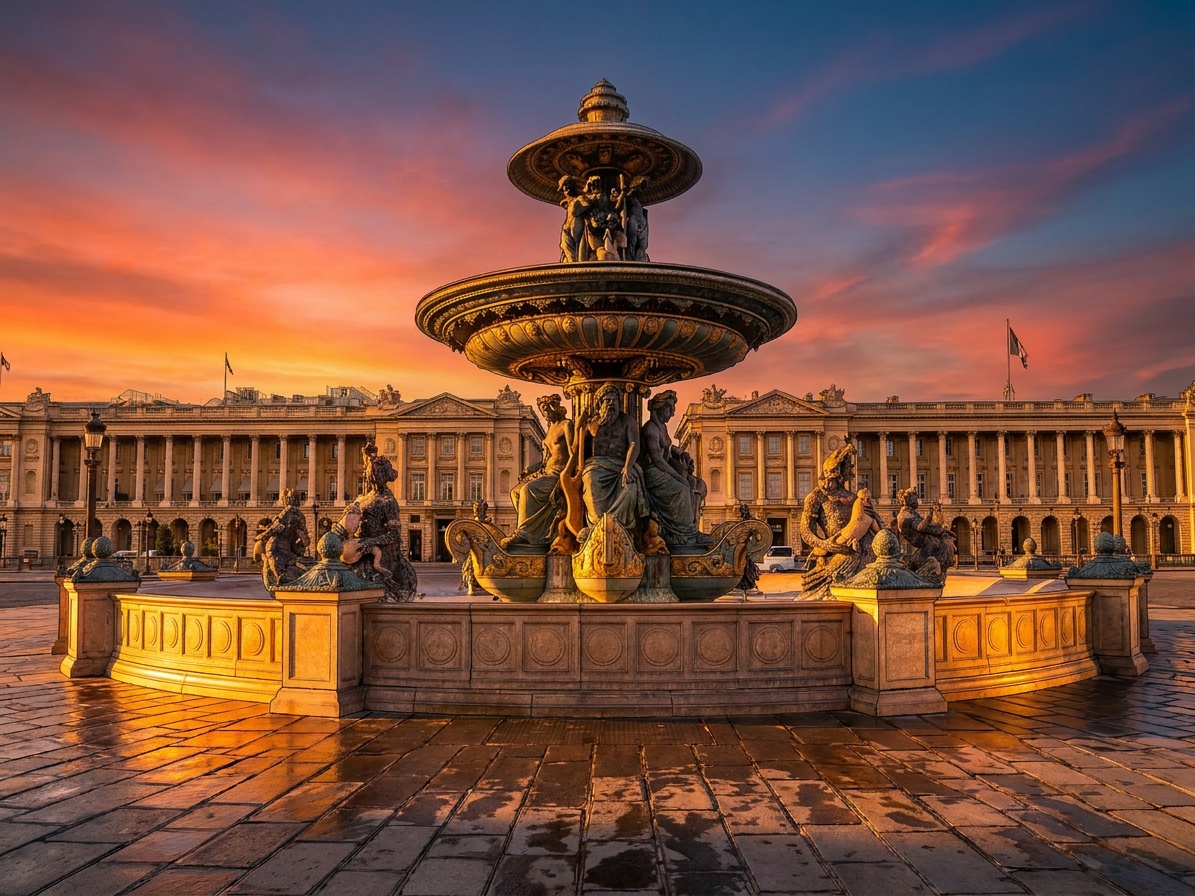
This is the Place de la Concorde — eight and a half hectares of open space, the largest public square in Paris. The fountains, the obelisk, the symmetry. It looks like a postcard.
This square has a dark chapter. During the Revolution, it was renamed Place de la Revolution, and over a thousand people were executed here in thirteen months — including the king and queen. Marie Antoinette climbed the scaffold after nine months in a prison cell so damp her hair had turned white. She accidentally stepped on the executioner's foot. Her last words: Pardon me, sir. I did not mean to do it. That's grace under pressure most people couldn't manage at a dinner party.
My favorite quote from the era belongs to the revolutionary leader Danton, executed right here. His last words to the executioner: Show my head to the people. It is worth seeing. Staring down your own death and delivering a punchline.
But I didn't bring you here for the guillotine. Look at that tall thing in the middle. That's not F
rench. That's a three-thousand-three-hundred-year-old Egyptian obelisk from the temple of Luxor, and the story of how it got here is possibly the most absurd logistics project in European history.
Egypt gave it to France in eighteen twenty-nine, but GETTING it to Paris took over two years. They had to build a special flat-bottomed barge called the Louxor — essentially a one-trip boat, custom desi