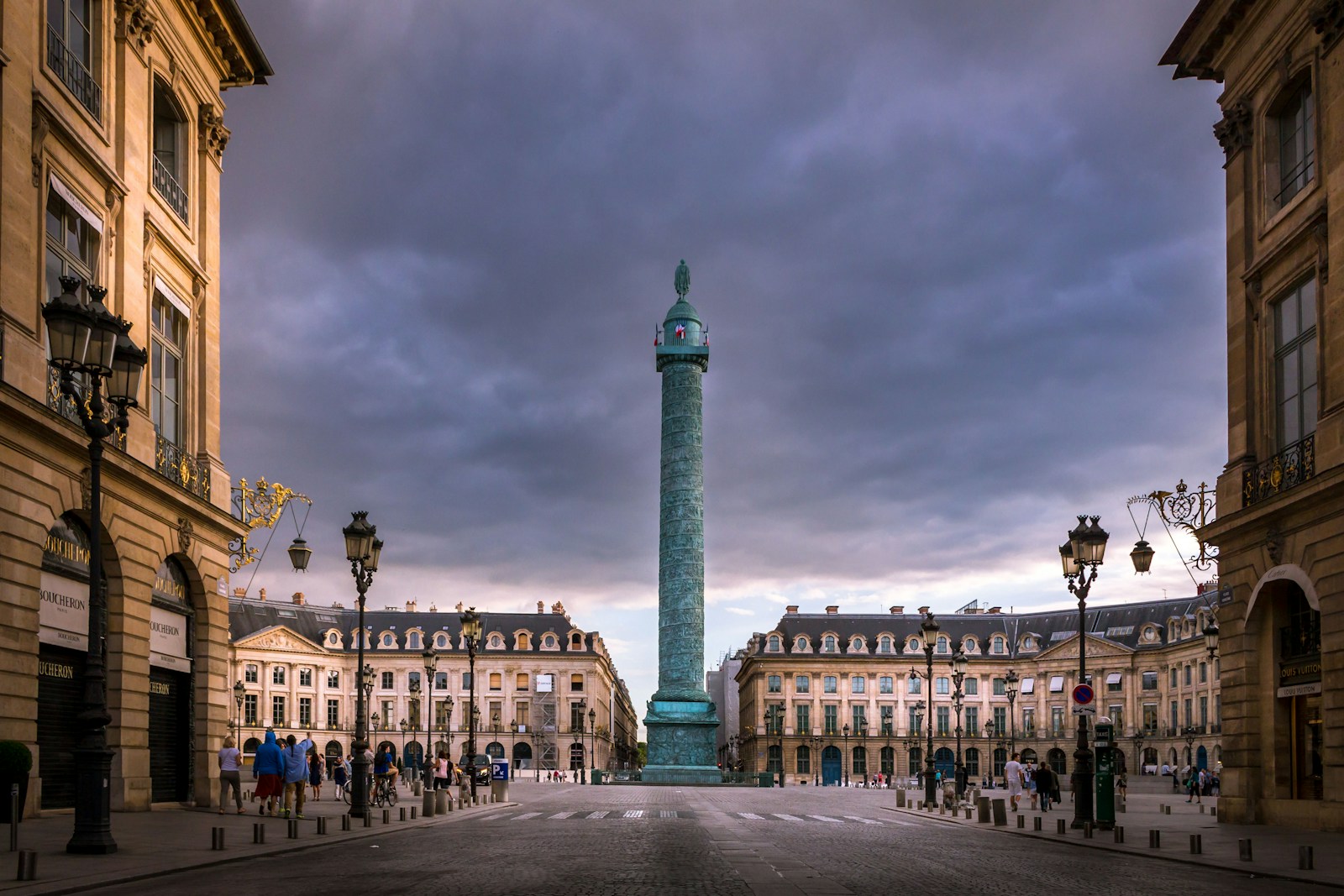
Place Vendôme. An octagon of gray-gold palaces, the Ritz on one side, jewelers everywhere else. In the middle, a giant bronze column with a little Napoleon on top, dressed as a Roman emperor. The square is so quiet and so expensive it feels like the money itself is asking you to lower your voice.
Start with the column, because the column has died and come back more times than most religions. After Napoleon won the battle of Austerlitz, he had the enemy's captured cannons hauled to Paris and melted down. The bronze became this — forty-four meters of victory column, wrapped in a spiral ribbon of battle scenes. Rome's emperors had columns like it. That was the point. Then Napoleon fell, and the statue on top was pulled down. Then a new statue went up. Then THAT one changed. The column spent half a century as a weathervane for French politics — check what's on top, know who's in charge.
And in eighteen seventy-one, Paris pulled the whole thing down. That spring, after a lost war and a st
arving winter, the city rose up and briefly governed itself as the Paris Commune. To the Communards, this column glorified war and tyranny, so they made a public event of it. Bands played. Thousands watched. Workers winched the column off its base and it crashed onto a bed of sand and brush laid out to catch it, snapping into pieces. Inside, the original spiral staircase survived the fall intact —