Welcome to the Louvre. See that glass pyramid? When it was announced in the early nineteen eighties, ninety percent of Parisians were against it. One member of the Academie Francaise wrote simply: Poor France. At the planning meeting, an expert shouted at the architect, I-M Pei, You are not in Dallas now. They also called him Japanese. He's Chinese-American. Paris was not having a great day.
The pyramid has six hundred and seventy-three glass panes — not six hundred and sixty-six, despite what Dan Brown wrote. Dan Brown was wrong. Dan Brown is often wrong. Moving on.
The Louvre itself started in eleven ninety as a defensive fortress — thick walls, a moat, built to keep the English out. The medieval foundations are still down in the basement, and you can visit them. Over the centuries, kings turned the fortress into a palace, and then the Revolution turned the palace into a museum. Today it holds over three hundred and eighty thousand objects, of which about thirty-five thousand are o
n display. That's nine percent. If you spent thirty seconds looking at every displayed piece, it would take over a hundred days. You are not going to see the whole Louvre. Nobody sees the whole Louvre. The Louvre hasn't seen the whole Louvre.
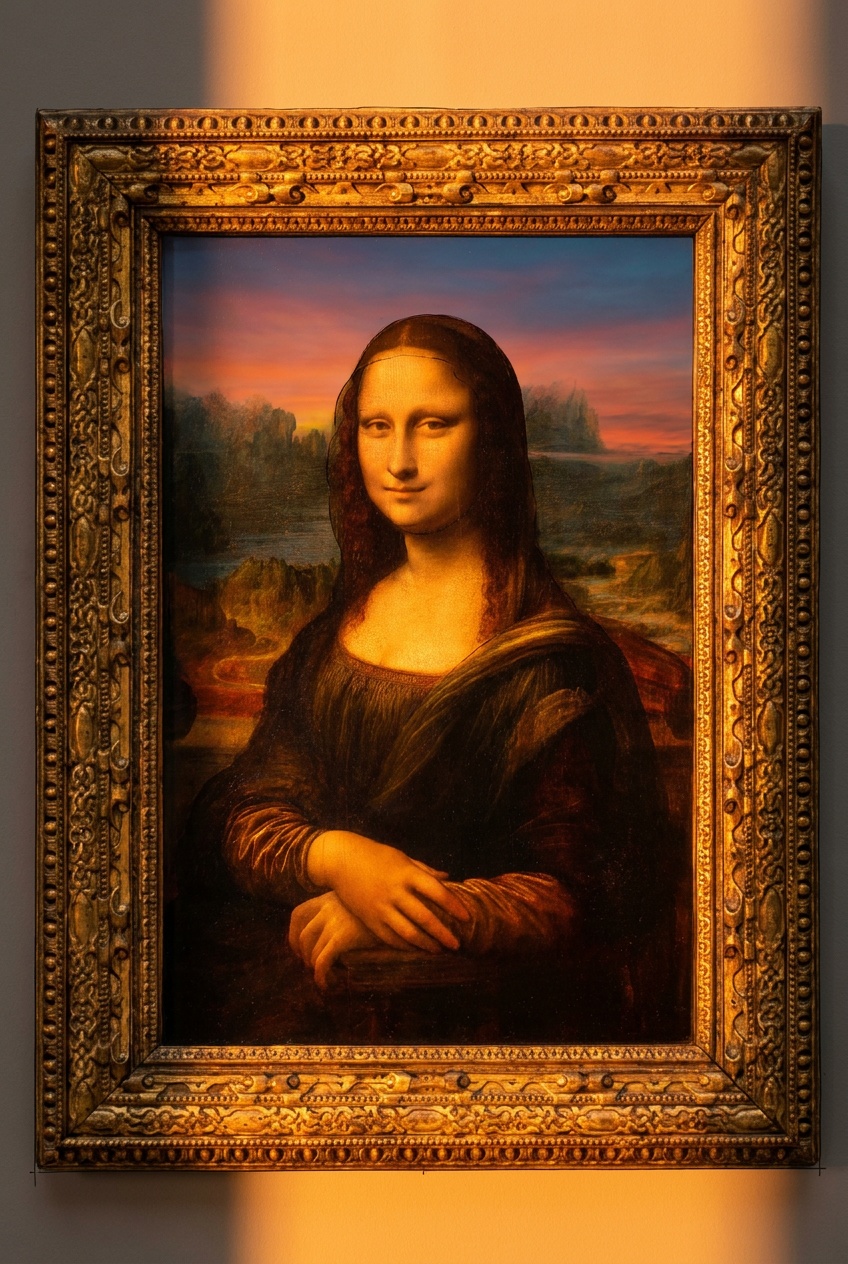
But you're here for ONE painting. Everyone is. The Mona Lisa. And here's the thing — before nineteen eleven, almost nobody cared about the Mona Lisa.
I'm e