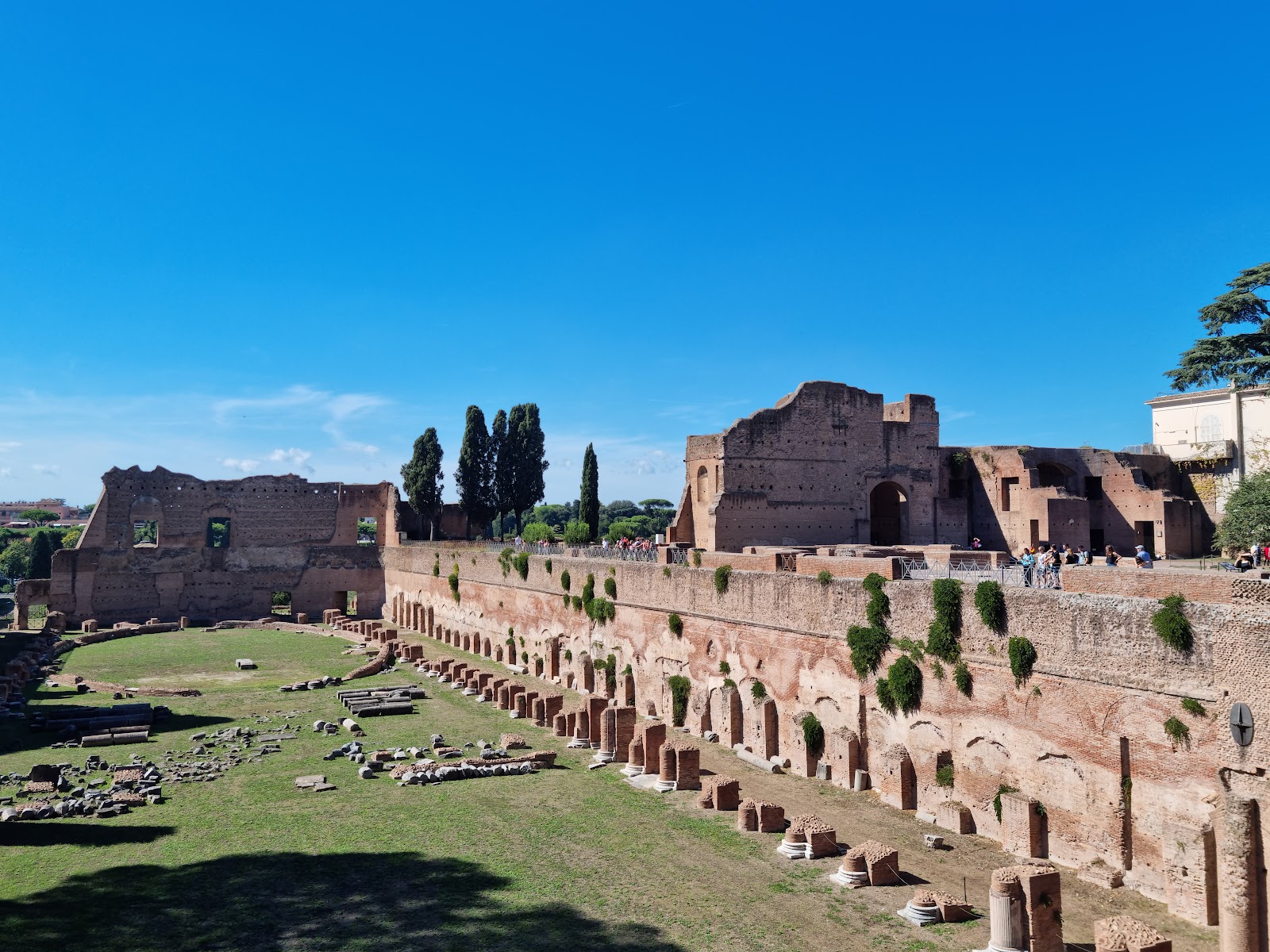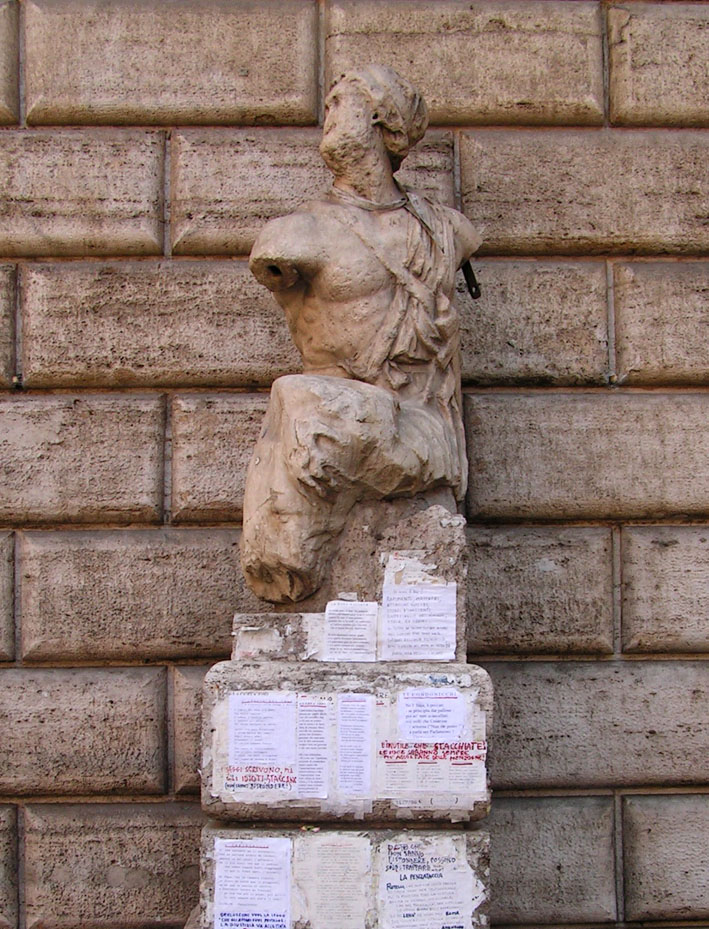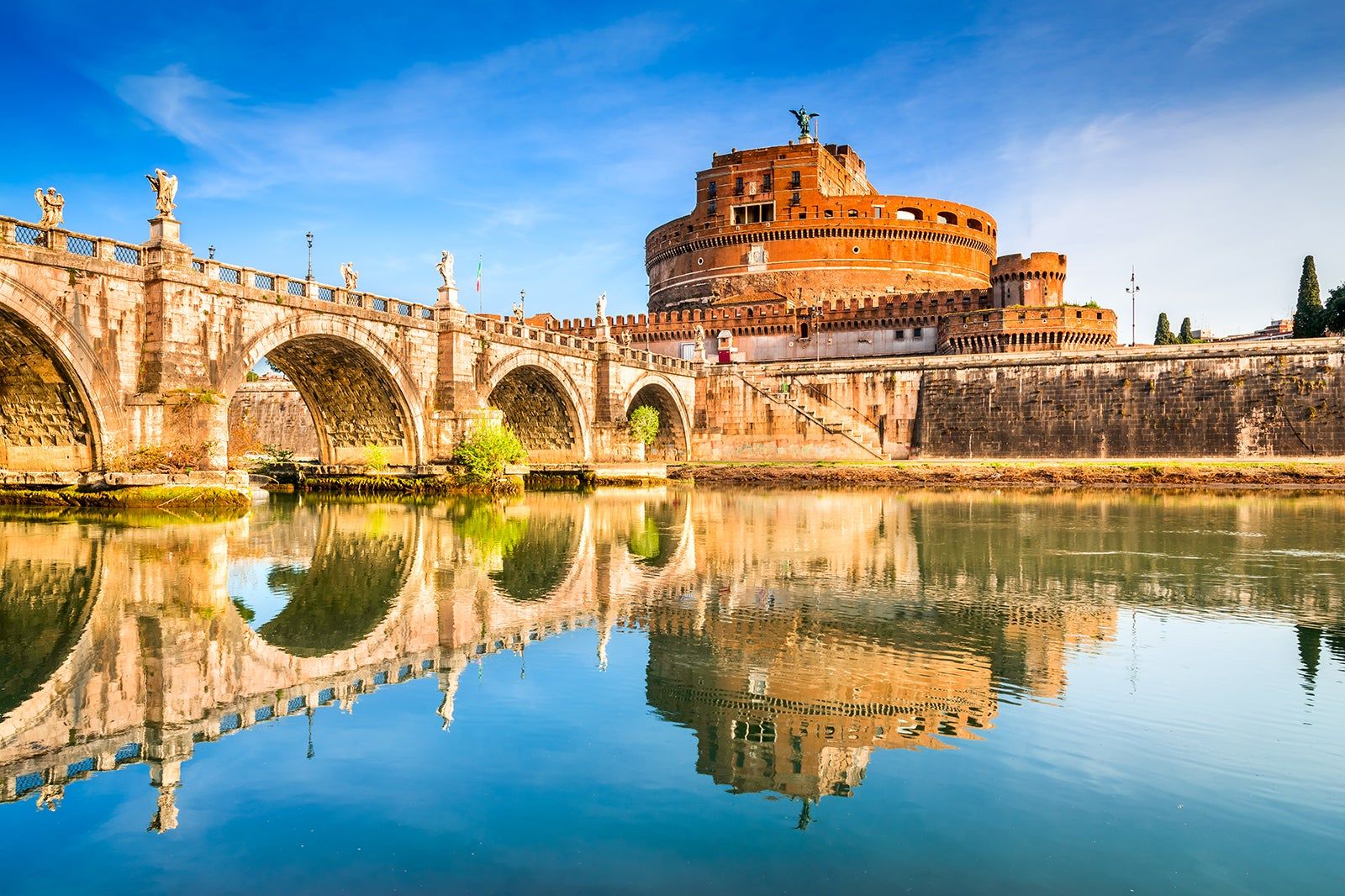
That massive round fortress by the river is Castel Sant'Angelo, and it has had more careers than anyone you know. It started as a tomb — the emperor Hadrian built it as a giant mausoleum for himself around nineteen hundred years ago. Then it became a fortress. Then a prison. Then, most usefully, the Pope's panic room.
The name comes from a vision. Around the year five ninety, a savage plague was tearing through Rome, and Pope Gregory led a procession begging for it to end. As he passed this fortress, he looked up and saw the Archangel Michael standing on the roof, sliding his sword back into its sheath — a sign the plague was finished. It faded soon after. So they crowned the building with a huge bronze angel putting away its sword, and renamed the whole thing the Castle of the Holy Angel. A tomb, a fortress, and a miracle, in one lump of brick.
Because running along the top of the wall between here and the Vatican is a raised, covered corridor called the Passetto — an escape route a
bout half a mile long, connecting the Pope's palace directly to this fortress. When things went wrong, the Pope could sprint along the top of the city wall, above everyone's heads, straight into the safest building in Rome. And it kept the corridor stocked with a few days' food and wine at all times, with a junior priest assigned to rotate the supplies so nothing ever spoiled.
It got used for rea